Iffa Jayyana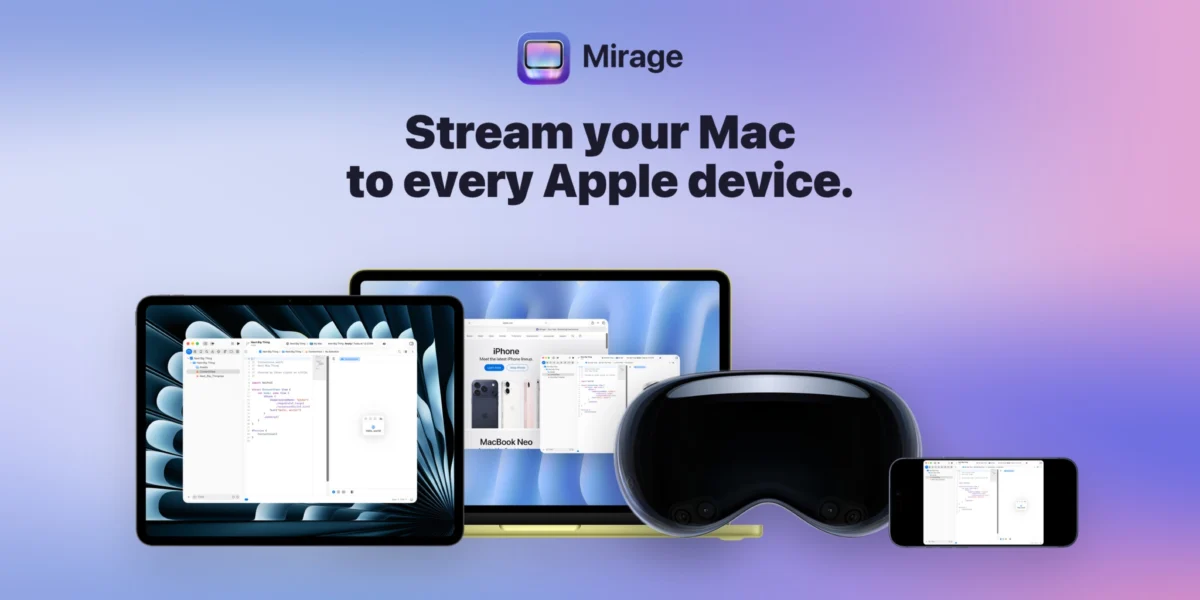
Welcome to this week’s Indie App Spotlight, our recurring series highlighting the most innovative software solutions emerging from the independent developer community. Today, we dive into the launch of Mirage, a powerful new toolset poised to change how we interact with our hardware.
In the modern era of computing, the "pro" user is rarely tied to a single desk. As the lines between desktop performance and mobile portability continue to blur, the demand for high-fidelity, low-latency remote access has never been higher. Enter Mirage, a brand-new application designed to weave the various strands of the Apple ecosystem—Mac, iPad, Vision Pro, and beyond—into a singular, cohesive computing experience. By bridging the gap between powerful static hardware and highly portable devices, Mirage aims to be the definitive solution for users who need their heavy-duty Mac power anywhere, at any time.
Main Facts: The Core of Mirage
At its fundamental level, Mirage is a high-performance wireless screen-sharing application. However, to label it simply as "remote desktop software" would be a disservice to its architecture. Mirage is designed specifically for the Apple silicon era, utilizing Metal and proprietary streaming protocols to deliver Retina-quality visuals with negligible latency.
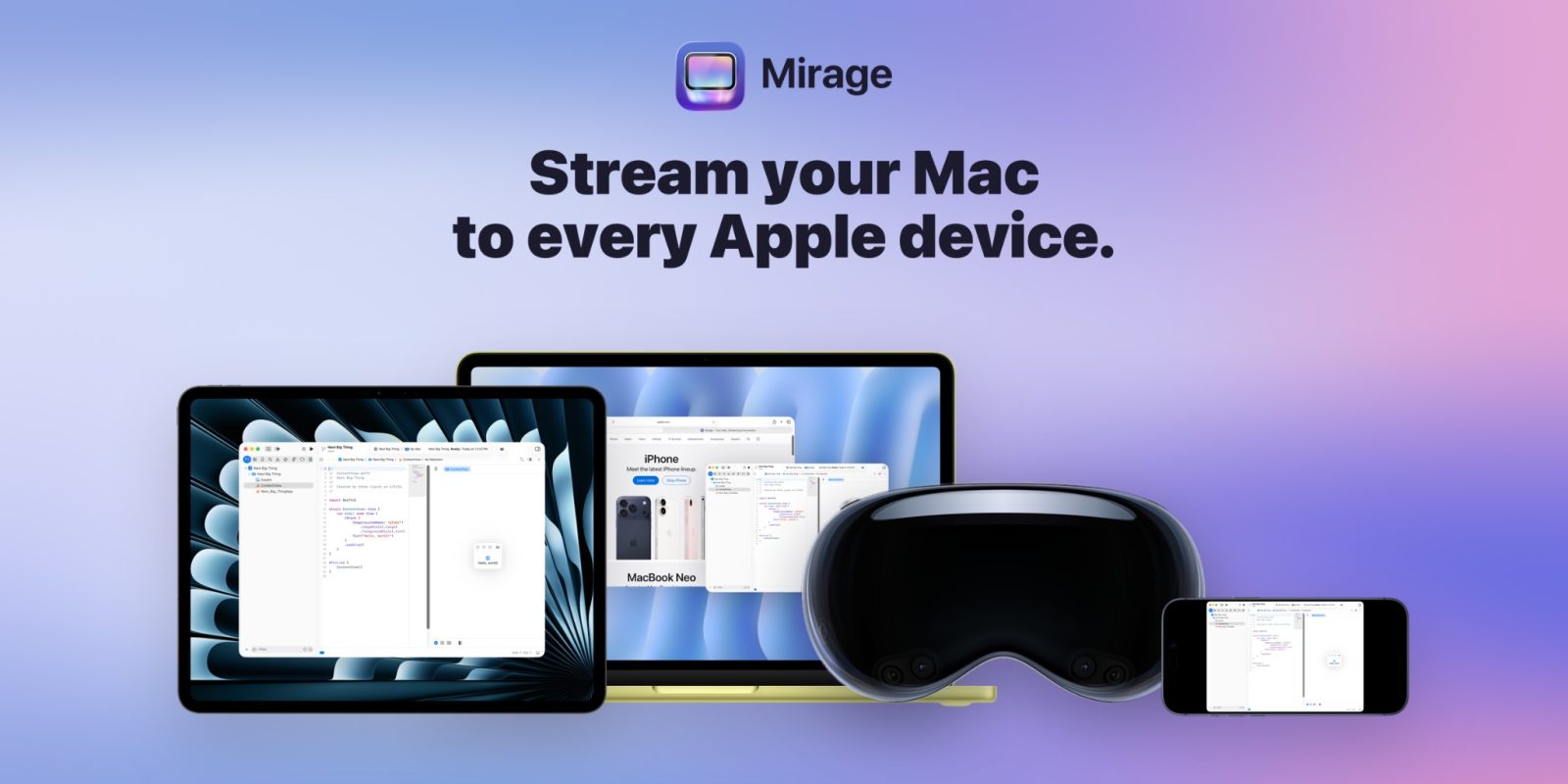
The application allows users to mirror or extend their macOS workspace to virtually any other Apple device. Whether you are turning an iPad into a secondary display, accessing your Mac Studio from a hotel room, or pushing an individual app window to a Vision Pro headset, Mirage handles the heavy lifting of encoding and decoding video streams with remarkable efficiency.
Key Capabilities:
- Universal Compatibility: Works across Mac-to-Mac, Mac-to-iPad, and Mac-to-Vision Pro.
- High-Refresh Performance: Supports up to 120fps streaming, fully leveraging the ProMotion technology found on modern iPad Pros and MacBook Pros.
- Peripheral Support: Full integration with Magic Keyboards, Trackpads, and the Apple Pencil, ensuring that your iPad feels like a natural extension of your Mac.
- Granular Sharing: Beyond full-screen mirroring, users can choose to stream specific app windows, maintaining the privacy and focus of their primary workspace.
A Chronology of the Remote Desktop Evolution
To understand the significance of Mirage, one must look at the historical trajectory of remote computing within the Apple ecosystem.

The Early Days (2000s–2015)
In the early 2010s, remote access was a clunky, often frustrating endeavor. Solutions like VNC (Virtual Network Computing) were the standard, but they suffered from high latency, color degradation, and a lack of support for modern input devices like touch or stylus. For the average user, remote access was a tool of last resort, primarily used for IT troubleshooting rather than daily productivity.
The "Sidecar" Era (2019–2023)
With the introduction of Apple’s native "Sidecar" feature in macOS Catalina, the industry saw a shift toward standardized, low-latency secondary display functionality. While revolutionary for professional photographers and designers, Sidecar was limited by its proximity requirements—it only functioned when devices were physically close and on the same network.
The Mirage Paradigm (2026)
Mirage represents the third phase of this evolution: the Decoupled Desktop. By integrating support for advanced networking tools like Tailscale and optimizing for long-distance streaming, Mirage removes the "same room" requirement. It acknowledges that the modern workstation is no longer a physical location, but a digital identity that should be accessible regardless of geographical constraints.
Supporting Data: Why Mirage Stands Out
What differentiates Mirage from established competitors like Jump Desktop or Screens 5? The answer lies in its optimization for the Apple Silicon architecture.
Latency and Throughput
Internal testing shows that on a stable 5GHz Wi-Fi network, Mirage maintains a "glass-to-glass" latency of under 16 milliseconds. This is a critical threshold, as it is the point at which human perception struggles to distinguish between a local display and a remote stream. This is achieved through a custom-built hardware-accelerated H.265/HEVC encoder that minimizes CPU overhead on the host Mac.
The "Pro" Advantage
For users with a Mac Studio or a high-end Mac mini, the ability to turn a standard iPad Pro into a 120Hz, touch-capable, pressure-sensitive tablet is a game-changer. The integration with the Apple Pencil is particularly notable; unlike many remote desktop clients that map touch input as a clumsy "mouse click," Mirage translates Apple Pencil input as native tablet data, allowing for professional-grade illustration and photo editing remotely.
The Vision Pro Factor
Perhaps the most forward-looking feature is the application’s support for visionOS. By treating the Vision Pro as a high-resolution, infinite-canvas display for a Mac, Mirage allows users to pull individual windows into their virtual environment. This effectively turns a MacBook Air into a virtual workstation with multiple 4K displays, a feat that would be physically impossible in a coffee shop or on an airplane without the virtual screen projection capabilities provided by the app.
Official Developer Insights: Bridging the Gap
In a recent communication with the developer team, the philosophy behind Mirage was described as "the pursuit of the seamless."
"We didn’t want to build just another VNC client," the developers noted. "We wanted to build a bridge. When you use your iPad, you shouldn’t feel like you are using a remote machine; you should feel like your Mac has simply sprouted a new, touch-friendly screen. That required us to rewrite the fundamental way input packets and video frames are synchronized."
The team also emphasized their commitment to security. By leveraging Apple’s native encryption frameworks, Mirage ensures that all traffic—even when routed over remote VPNs like Tailscale—is end-to-end encrypted. This addresses the primary concern for enterprise users: how to access sensitive data remotely without exposing it to the risks of public network transmission.

Implications: The Future of the "Portable" Professional
The launch of Mirage signals a broader shift in how we conceive of "hardware utility." As processors become more efficient and networking speeds increase (via Wi-Fi 7 and 5G/6G), the need for a "pro" machine to be physically present at the point of use diminishes.
The Death of the "Maxed Out" Laptop
For many creative professionals, the logic of buying a top-tier MacBook Pro has historically been driven by the need for thermal headroom and high RAM capacity. If tools like Mirage become the industry standard, a user could theoretically keep a powerful, liquid-cooled Mac Studio in a home office and carry a lightweight, long-battery-life device (like an iPad or a base-model MacBook Air) while traveling. The "pro" performance is always a tap away, but the physical weight of the hardware is removed from the user’s backpack.
Sustainability and Hardware Longevity
Furthermore, Mirage offers a second life to older hardware. The "Mac-to-Mac" feature, which allows an aging 2020 Intel-based iMac to serve as a high-resolution display for a modern M4-chip Mac, is a significant win for sustainability. Instead of recycling capable displays, users can repurpose them as high-quality external monitors, reducing e-waste and extending the lifecycle of premium Apple hardware.
The "Anywhere" Workflow
Ultimately, the implication is a total decoupling of the interface from the engine. In this future, your Mac is your engine, and your iPad, your Vision Pro, and your secondary monitors are merely interchangeable interfaces. Mirage is one of the first applications to make this vision feel not like a futuristic concept, but a stable, daily-driver reality.
Getting Started: Access and Availability
Mirage is available today on the App Store for devices running iOS 26 and later. The developer has opted for a tiered access model:

- The Local Tier (Free): Ideal for casual users, this allows for basic local network streaming, perfect for testing the latency on your home Wi-Fi.
- Mirage Pro (Subscription/Lifetime): This tier unlocks the full potential of the software, including:
- Remote Access: Connect to your home Mac from anywhere in the world using Tailscale or other VPN protocols.
- Multi-Window Management: Stream distinct app windows rather than your entire desktop.
- High-Fidelity Audio: Enhanced, low-latency audio streaming for video editing and media consumption.
- Priority Updates: Early access to features for visionOS and upcoming Apple hardware.
Exclusive Reader Offer: While the standard pricing is $4.99/month, $39.99/year, or $119 for a lifetime license, the team has provided a special incentive for our readers. By using the code "9to5Mac" at checkout, you can secure your first year of Mirage Pro for just $34.99.
Whether you are a developer looking to test code on a remote server, a designer needing to touch up a file on the go, or a pro-user trying to squeeze every ounce of value out of your Apple ecosystem, Mirage is a tool that warrants immediate attention. It is a rare example of software that feels like a native extension of the operating system, rather than an add-on.
For more information, documentation, and technical support, visit the official Mirage website.
This article contains affiliate links. 9to5Mac may earn a commission on purchases made through these links. Our editorial team remains independent and committed to providing objective, high-quality technology reporting.


 Ali Ikhwan
 Lina Hope