Nila Kartika Wati
For over two decades, the architecture of the internet has been defined by a singular, persistent goal: proximity. Whether through the massive expansion of hyperscale data centers or the strategic placement of edge computing nodes, the objective has been to shave milliseconds off the time it takes for a user to access a file or an AI model to process a query. However, the relentless surge in artificial intelligence workloads is beginning to break this model.
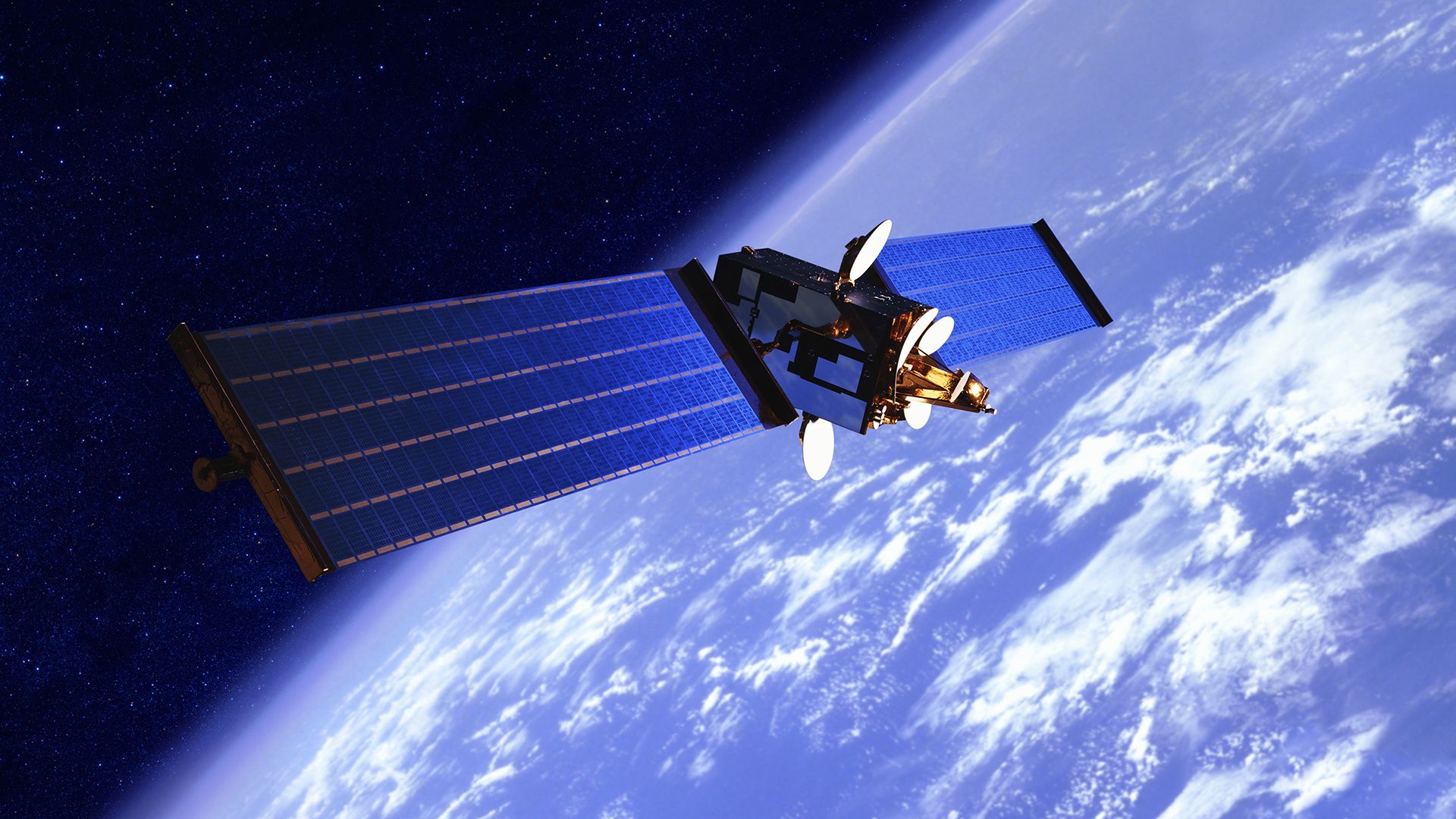
As land availability vanishes, power grids groan under unprecedented strain, and water consumption for cooling becomes a flashpoint for local opposition, the digital infrastructure industry is being forced to think outside the terrestrial box. The solution, increasingly discussed as a serious engineering proposition rather than science fiction, is moving data centers into Earth’s orbit.
The Breaking Point: Why AI Demands a New Frontier
The fundamental issue is one of physical scarcity. AI training requires immense computational density, which in turn demands vast amounts of electricity and highly efficient cooling. On Earth, these resources are finite. We are reaching a point where building another sprawling, energy-hungry campus in a tech hub like Northern Virginia or Dublin is not just expensive—it is becoming logistically and environmentally unsustainable.
"We can’t simply keep building more data centers," explains Ivo Ivanov, CEO of Internet exchange operator DE-CIX. "They need access to land, power, cooling, transport links, and connectivity. As AI continues to grow, some of those resources will become harder to secure at the pace the industry wants to move."
This friction is driving a shift toward non-terrestrial alternatives. Orbit offers two primary, massive advantages: virtually unlimited access to solar energy—unfiltered by the atmosphere—and the potential for passive cooling in the vacuum of space. By shifting the most energy-intensive "heavy lifting" of AI training to space, companies could theoretically bypass the land-use conflicts and grid constraints that plague terrestrial expansion.
Chronology: From Sci-Fi Dream to Infrastructure Roadmap
The journey of orbital compute has evolved through several distinct phases, moving from the fringe to the boardroom.
- The Conceptual Era (2000–2015): During this period, the idea of space-based computing was relegated to the realm of speculative science fiction. While satellite communications were well-established, the notion of placing server racks in space was dismissed due to the prohibitive cost of rocket launches and the immaturity of space-hardened hardware.
- The Reusable Rocket Revolution (2015–2020): The advent of reliable, reusable rocket technology—spearheaded by companies like SpaceX—drastically reduced the cost per kilogram of lifting mass into low-Earth orbit (LEO). This economic shift fundamentally changed the calculus for orbital infrastructure.
- The AI Boom (2020–2023): The sudden, explosive demand for AI training clusters created a "compute crisis." Industry leaders began evaluating non-traditional environments as the limitations of Earth-based energy and land became acute.
- The Research & Pilot Phase (2023–Present): Today, we are in the era of active research. Projects like Google’s Project Suncatcher (focusing on solar energy harvesting) and the European Space Agency’s OFELIAS (exploring optical feeder links) represent the first concrete steps toward building an orbital ecosystem.
Networking: The "Make or Break" Factor
While the allure of solar power and limitless space is strong, the primary obstacle to orbital compute is the same one the internet has spent twenty years trying to minimize: latency.
In our current "instant economy," a data center is useless if it cannot exchange information reliably. Terrestrial networks rely on dense fiber-optic backbones. In space, that physical infrastructure is absent. Any orbital data center will be entirely dependent on wireless transmission across hundreds of miles of atmosphere and vacuum.
"The moment you put a data center into orbit, networking becomes the make-or-break factor," says Ivanov. "In orbit, that ecosystem of fiber routes and Internet exchanges doesn’t exist yet."
The challenge is not just speed, but predictability. Optical and laser-based communications hold the promise of high bandwidth, but they are subject to atmospheric turbulence, cloud cover, and the complex mechanics of satellite handovers. To make this work, the industry must develop an "interconnection layer" that treats orbital, cloud, and edge infrastructure as a single, unified ecosystem.
Supporting Data and Technical Realities
The technical hurdles are significant, but they are increasingly viewed as engineering challenges rather than physical impossibilities.
- Latency Constraints: For many AI inference tasks, the 20–40 milliseconds of delay inherent in communicating with LEO is acceptable. However, for real-time, ultra-low-latency applications, orbital compute will never replace local edge nodes.
- Environmental Stability: Space provides a unique cooling advantage. Without convection, heat management in a vacuum is difficult, but the extreme cold of space offers a constant "heat sink" that could be exploited through advanced heat-pipe designs.
- Predictable Interconnection: The current focus is on optical feeder links. The European Space Agency’s OFELIAS project is a cornerstone of this effort, partnering with organizations like DE-CIX to test how laser communication can maintain stable links between space-based servers and ground-based stations.
Official Perspectives and Industry Strategy
Industry leaders, including DE-CIX and various aerospace organizations, emphasize that orbital compute should not be viewed as an "outright replacement" for terrestrial infrastructure. Instead, the consensus is that the future will be a hybrid, multi-layered architecture.
"Digital infrastructure has a long history of adding new layers rather than replacing existing ones," Ivanov notes. "Cloud computing didn’t eliminate enterprise data centers, and edge computing didn’t eliminate the cloud. Orbital compute will follow this path."
The strategy is to create a tiered ecosystem:
- Orbital Data Centers: Optimized for massive AI training workloads that are energy-intensive but not strictly time-sensitive.
- Terrestrial Hyperscale Centers: Serving as the backbone for general cloud services and large-scale data storage.
- Edge Computing: Positioned close to the end-user to handle latency-sensitive inference and real-time processing.
Implications: A New Era of Digital Infrastructure
The long-term implication of this shift is the potential "disappearance" of infrastructure from our daily consciousness. In the same way that we no longer think about the complex web of undersea cables or power grids that facilitate our daily digital lives, we may eventually reach a point where the location of a server—whether it is in a bunker in the desert or orbiting 500 kilometers above the planet—becomes irrelevant to the end-user.
If we succeed, we will move toward an era where workloads are dynamically routed to wherever they can be processed most efficiently. A machine learning model might be trained using solar power in orbit, while its output is served to a user via an edge node in their home city.
The success of this transition will be measured by the seamlessness of the experience. We are currently in the "infrastructure construction" phase, where the focus is on overcoming the physical and regulatory barriers. Once those are bridged, the focus will shift entirely to the applications and innovations that this new, distributed, and truly global infrastructure can enable.
Ultimately, the move to space is not just about the technology itself; it is a reflection of a societal pivot. We are moving from a world where we force the environment to conform to our infrastructure to one where we adapt our infrastructure to the constraints of the planet—and eventually, the planet’s orbit. As we look toward the next decade, the success of orbital compute will depend on collaboration between network operators, cloud giants, and the aerospace sector to ensure that our digital future is not just faster, but fundamentally more sustainable.


 Jia Lissa
 Neng Nana