

Introduction: A New Chapter in Adult Comedy
In the landscape of modern television, few creators have left as indelible a mark on adult animation as Raphael Bob-Waksberg. Best known as the visionary behind the genre-defining BoJack Horseman, Bob-Waksberg returned to the spotlight in August 2025 with his latest venture, Long Story Short. The series, which premiered on Netflix, arrived with significant industry momentum, securing a second-season renewal before the first episode even aired—a testament to the confidence executives and critics alike placed in the project.
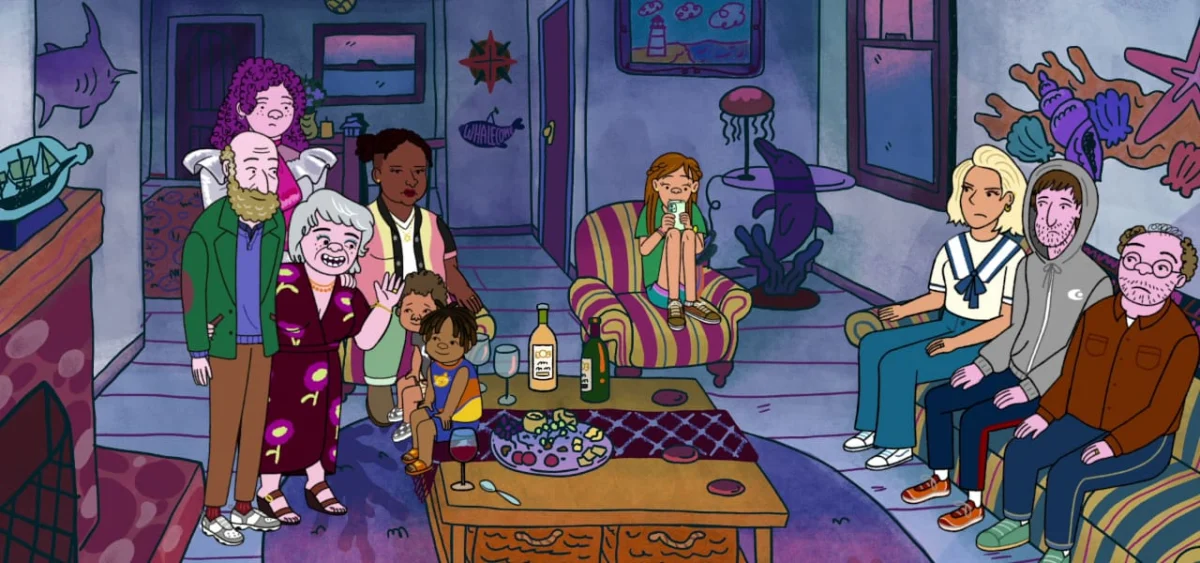
Reuniting with long-time creative partner and production designer Lisa Hanawalt, Bob-Waksberg has shifted gears from the anthropomorphic satire of Hollywoo to a grounded, deeply human exploration of family dynamics. Long Story Short centers on the Schwooper siblings—brought to life by the vocal talents of Ben Feldman, Abbi Jacobson, and Max Greenfield—as it navigates the messy, non-linear progression of a middle-class West Coast Jewish family across several decades.
The Core Narrative: A Multi-Generational Mosaic
At its heart, Long Story Short is an ambitious study of time. By leaping back and forth through the decades, the series chronicles the triumphs, quiet disappointments, and inevitable tragedies that define a family unit. Unlike the episodic nature of many adult animated comedies, the show prioritizes long-form character development, allowing the audience to witness how the small compromises of youth ripple into the existential crises of middle age.
The choice of the "Schwooper" family as the focal point serves as a vessel for universal themes: the weight of legacy, the shifting nature of sibling bonds, and the struggle to maintain one’s identity within the tight-knit, often suffocating, structure of a family. By grounding the show in a specific cultural and regional setting, Bob-Waksberg invites viewers into a world that feels both hyper-specific and strikingly familiar.
Chronology and Production: The Wisdom of Time
One of the most notable aspects of the series is its nuanced portrayal of the COVID-19 era. While many productions rushed to capitalize on the zeitgeist of the pandemic, Long Story Short benefited from the naturally long gestation period inherent to high-quality animation.
"I think that actually helped us," Bob-Waksberg noted in a recent interview. "The few years that passed from the height of COVID to when we started conceptualizing the show let us be deliberate in a way the shows in production during the height of it couldn’t be."
This deliberate pacing allowed the creative team to step back and ask what the era truly meant for the human experience, rather than merely reacting to the "breaking news" cycle. In the world of animation, where every frame is a curated choice, this pause afforded the production a level of introspection that often eludes live-action comedy.
Supporting Data: The Evolution of Satire
Bob-Waksberg’s approach to satire has evolved significantly since the early, biting days of BoJack Horseman. Reflecting on his past work, he admits that the initial drive to "push the envelope" was, in part, a response to his own lack of experience with network boundaries.
"At the beginning [of BoJack], it was: ‘Okay, what can I get away with? When are they going to tell me to stop?’" he recalled. "I realized very quickly they weren’t going to, and I thought, I need some self-control. Now that I know that, what do I actually want to say?"
This transition from "trolling" for effect to searching for emotional truth is evident in Long Story Short. While the show retains the dark, edgy wit associated with his brand, it avoids the "ain’t I a stinker" energy. Instead, the humor is rooted in character behavior. In a grounded setting, a single, questionable decision by a character carries more narrative weight and audience impact than a dozen high-concept, zany gags in a more surreal environment.
.png)
Visual Identity: Breaking the "BoJack" Mold
One of the most persistent criticisms leveled at the current state of adult animation is the homogeneity of visual styles. Many series, often hailing from the same production houses, lean into a singular, recognizable aesthetic. Long Story Short serves as a deliberate departure from this trend.
"It was a priority from the start," Bob-Waksberg explained regarding the show’s distinct visual look. "How do we make this not feel like it’s just BoJack or Tuca & Bertie?"
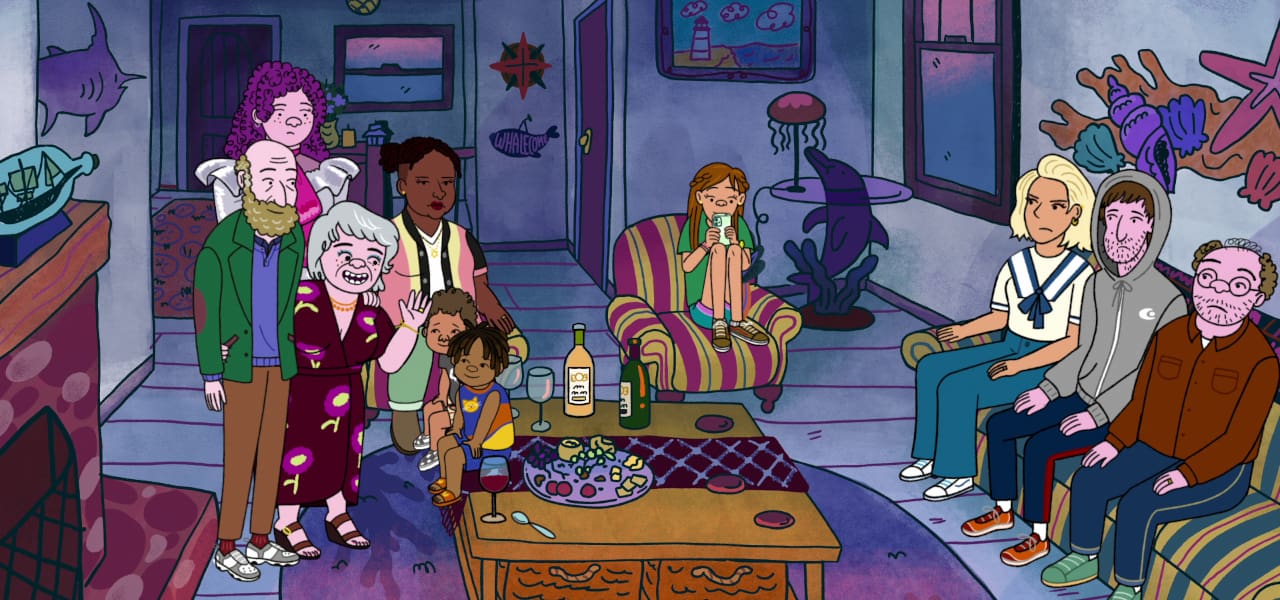
Working with Lisa Hanawalt, who is renowned for her distinct, vibrant, and often surreal artistic voice, the production team consciously sought to evolve their visual language. The result is a series that feels warmer and more intimate, reflecting a decade of growth since the two first broke into the industry. The visual departure is not an act of rebellion, but one of artistic maturity—the confidence to break the rules they once spent years learning.
Official Responses and Industry Implications
The industry’s reception to the show highlights a growing tension between creative long-term planning and the short-term metrics of streaming platforms. Bob-Waksberg remains vocal about the necessity of giving complex animated series the time to find their audience.
"My experience with BoJack was that it grew over time," he stated. "Every season was bigger than the last… I’d hope Netflix heeds that lesson and gives this show time to grow. If they’re looking for the next BoJack, they can’t assume the initial numbers are indicative of the heights it can reach."
This plea touches on a broader industry debate regarding the "three-season curse" in streaming. Many creators argue that in the modern era, high-concept, character-driven animation requires multiple seasons to build the necessary rapport with an audience. By forcing cancellations based on immediate, short-term data, platforms may be stifling the very "prestige" animation that defines their catalogs.
Implications: The Future of Adult Animation
The success of Long Story Short suggests that there is a significant, untapped audience for adult animation that prioritizes emotional resonance over shock value. As the medium continues to mature, the focus is shifting from simple parodies of sitcom tropes to complex, serialized dramas that use the medium of animation to explore the human condition in ways live-action cannot.
For Bob-Waksberg, the future is clear: as long as the studio allows for the creative freedom he has enjoyed, he intends to keep digging deeper into the lives of the Schwooper family. "This is a very deep world, and these characters and relationships are complicated and interesting," he said. "Maybe at some point I’ll get bored, but for now, I feel like we’re just at the beginning."
As the series continues its run, it stands as a reminder that animation is not a genre, but a medium—one capable of capturing the most subtle, heartbreaking, and hilarious aspects of the middle-class experience. Whether Long Story Short achieves the same cultural ubiquity as its predecessor remains to be seen, but it has already succeeded in proving that there is life, and depth, after the horse.
Conclusion
Raphael Bob-Waksberg has successfully navigated the daunting task of following up a modern classic. By trading the high-stakes world of Hollywood satire for the deeply personal, time-jumping saga of the Schwooper family, he has demonstrated a capacity for growth that is as rare as it is commendable. As Long Story Short settles into its second season, it serves as a beacon for the potential of adult animation—an invitation to viewers to engage with stories that are, above all else, profoundly human.










No comments yet. Be the first to join the conversation!