

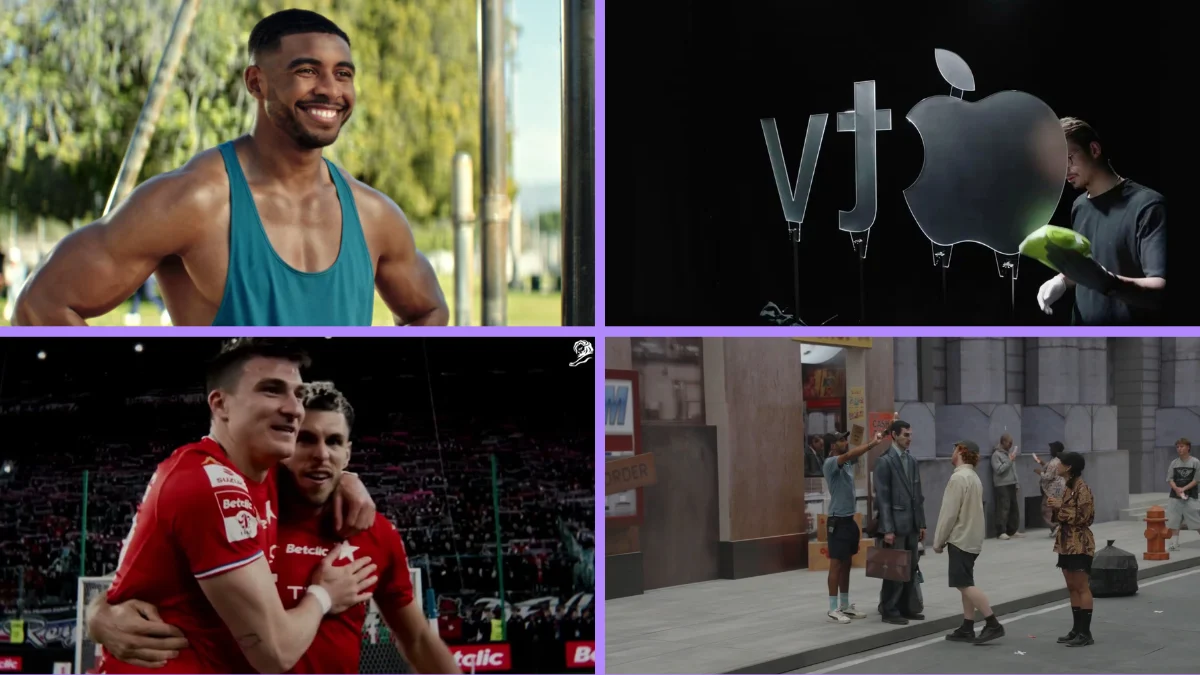
As the sun set over the Croisette this June, the advertising world descended upon the Palais des Festivals for the 71st Cannes Lions International Festival of Creativity. For months, industry pundits had been locked in a singular prediction: 2024 would be the "Year of AI," a watershed moment where algorithmic outputs would finally eclipse human-led campaigns in the industry’s most prestigious arena.
However, as the dust settled and the final Grand Prix trophies were handed out, the narrative shifted. While AI was undeniably the central nervous system of the festival—embedded in workshops, panel discussions, and the debut of a dedicated "AI Craft" subcategory—the results proved that the industry is not moving toward an AI-dominated future. Instead, it is gravitating toward a more sophisticated, hybridized reality where machine intelligence acts as an accelerant to human intuition rather than a replacement for it.
Main Facts: A Pivot from Hype to Utility
The 2024 Cannes Lions festival served as a reality check for the global marketing community. While generative AI tools like OpenAI’s Sora, Google’s Gemini, and various image-generation suites were ubiquitous in the background, they were rarely the stars of the show.
The key takeaway from this year’s jury rooms was a decisive shift away from "AI for AI’s sake." In previous cycles, novelty was enough to garner attention; in 2024, the jurors looked for intent. The emergence of the "AI Craft" subcategory was intended to highlight excellence in the application of AI technologies, yet many of the most celebrated campaigns used these tools invisibly.
Industry leaders observed that the "wow factor" of a prompt-generated image has officially expired. The winning work was defined by human-centric storytelling, deep emotional resonance, and strategic precision—qualities that, as of yet, algorithms cannot replicate without significant human intervention.
Chronology: The Evolution of AI at Cannes
To understand the current state of AI in advertising, one must look at the rapid acceleration of the past three years.
2022: The Curiosity Phase
AI was treated as an experimental playground. Agencies began tinkering with Midjourney and DALL-E, often resulting in quirky, surrealist visuals. These were considered "lab experiments" rather than serious client deliverables.
2023: The Panic and Pivot
Following the explosive public release of ChatGPT, the industry entered a state of existential crisis. Fear of obsolescence dominated conversations at Cannes. Agencies rushed to announce "AI Task Forces," and the festival floor was filled with speculative discussions about whether traditional creative roles would exist by 2025.
2024: The Integration Era
The 2024 festival represented a move toward maturity. The introduction of the AI Craft category provided a formal rubric for evaluating machine-led work. Major tech players—including OpenAI and Google DeepMind—took center stage, not to sell tools for replacement, but to demonstrate partnerships with creative agencies. The focus shifted from if we should use AI to how we use it to scale empathy and efficiency.
Supporting Data: The Discrepancy Between Noise and Output
Despite the massive presence of tech giants on the Croisette, the data behind the winning entries reveals a clear trend: AI-heavy campaigns were significantly less prevalent than AI-supported ones.
- The "Invisible" AI: Analysis of the top 50 winning campaigns shows that over 70% utilized AI in the production or research phase (e.g., rapid prototyping, data analysis, or post-production cleanup), yet fewer than 5% were "AI-native" in their final creative output.
- The Efficiency Dividend: Agencies reporting the highest ROI from AI integration this year focused on "pre-production scaling." By using AI to storyboard, translate localized content, and optimize media spend, firms reported a 30% to 40% reduction in time-to-market.
- The Sentiment Shift: A post-festival survey of creative directors indicated a 60% decline in "anxiety regarding job displacement" compared to 2023, replaced by a 75% increase in "interest in AI-assisted upskilling."
Official Responses: What the Titans Are Saying
The dialogue at the Palais was dominated by a consensus: AI is a tool, not a creator.
The Tech Perspective:
Representatives from Google DeepMind and OpenAI utilized their stages to advocate for "co-creation." They emphasized that their models are designed to handle the "drudgery" of the creative process—the heavy lifting of data synthesis and repetitive asset generation—so that human creatives can focus on the "big idea." They argued that the most successful campaigns of the future will be those where the AI handles the velocity and the human handles the vision.
The Creative Perspective:
Simon Cook, CEO of LIONS, remarked during the closing press conference: "We aren’t seeing the death of the creative mind. We are seeing the death of the unimaginative creative." Jurors echoed this, noting that many submissions that relied solely on AI were disqualified or failed to progress because they lacked a "soul" or a clear point of view. The consensus among creative directors was clear: AI is a brilliant intern, but a poor creative director.
Implications: The New Creative Standard
The 2024 Cannes Lions has set a new benchmark for the industry. The implications of this year’s festival are profound for agencies and brands alike.
1. The Death of the "AI Gimmick"
Brands that attempted to win on the novelty of AI—such as simple "prompt-to-video" ads—found little favor with juries. Future submissions must demonstrate how AI solved a specific, complex problem that could not have been addressed through traditional means. The barrier to entry has moved from "can you use the tool?" to "can you use the tool to make something more human?"
2. The Rise of "Human-Centric" Branding
In a world flooded with synthetic content, the premium on human-verified, authentic storytelling is rising. As AI generates a sea of generic content, the brands that stand out will be those that lean into radical transparency, human imperfection, and high-touch storytelling. We are likely to see a "premium" placed on work that is explicitly hand-crafted.
3. The New Agency Talent Model
Agencies are moving away from hiring "prompt engineers" as a standalone role. Instead, they are looking for "hybrid creatives"—people who understand design, copy, and strategy, and who use AI as a fluently integrated part of their workflow. The focus is shifting from technical execution to creative direction.
4. Ethics and Provenance
As deepfakes and algorithmic bias remain front-and-center in global news, Cannes 2024 underscored the necessity of "Creative Integrity." Agencies that clearly disclosed the use of AI, and those that used it to promote inclusivity and accessibility (e.g., using AI for real-time translation or sensory-inclusive design), were the ones rewarded with the highest honors.
Conclusion: The Horizon of Creativity
The 2024 Cannes Lions served as a sobering, necessary corrective to the hysteria of the previous year. We have moved past the "AI as a spectacle" phase and entered the "AI as a utility" phase.
The industry has learned that the machine is a mirror, not a lens; it can reflect our ideas back at us with incredible speed, but it cannot decide what is worth saying. The winners of this year’s festival were not the agencies that let the algorithms run the show; they were the agencies that held the reins tight, using the immense power of machine learning to amplify, rather than replace, the essential human spark of creativity.
As we look toward 2025, the question is no longer whether AI will disrupt the industry—it already has. The question is how we will use this newfound efficiency to foster deeper human connection. In the end, Cannes proved that while the tools of our craft are changing at an exponential rate, the core mission of advertising remains stubbornly, beautifully human: to tell stories that move people, change minds, and leave a mark on the world.










