Azzam Bilal Chamdy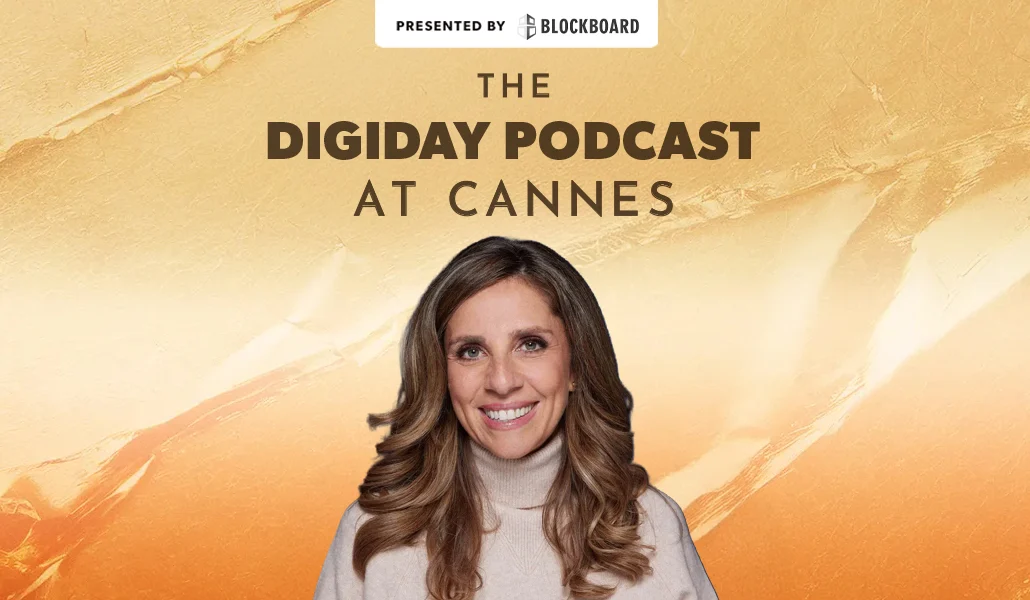
By Kimeko McCoy | June 25, 2026
The annual Cannes Lions International Festival of Creativity has long served as the industry’s barometer for the shifting power dynamics between global platforms and the agency holding companies that represent the world’s biggest brands. In 2026, the temperature at the Croisette suggests a profound evolution: the era of the human-managed campaign is rapidly giving way to an era of agentic, AI-driven automation.
As platforms like Meta roll out increasingly sophisticated automated tools, the barrier to entry for advertisers has collapsed, allowing them to manage complex, high-performing campaigns with minimal manual oversight. For agency executives, this shift has sparked a palpable sense of anxiety. However, at this year’s festival, Meta’s leadership took to the stage with a clear mandate: to redefine, rather than replace, the role of the agency in an AI-first world.
Main Facts: Meta’s AI Offensive
The core of Meta’s 2026 strategy centers on a suite of "agentic" marketing tools designed to handle everything from creative generation to performance optimization. During the festival, the tech giant announced several key updates, including:
- Unified Creator Marketplace: A centralized hub designed to streamline partnerships between brands and influencers.
- End-to-End AI Creative Solutions: A suite that allows creative and media teams to co-manage campaigns within a single software environment.
- "Brand Memory" Technology: Perhaps the most significant development, this feature allows Meta’s AI to ingest a brand’s historical performance and visual identity, ensuring that newly generated creative assets remain consistent with the brand’s established DNA.
- WPP Integration: In a landmark partnership, Meta announced it would integrate its revamped AI suite directly into WPP Open, the holding company’s proprietary agentic marketing platform.
These moves signal that Meta is moving beyond simple ad-buying automation toward a holistic, "agentic" ecosystem where the software doesn’t just buy the ad—it understands the business objectives, the creative history, and the competitive landscape of the advertiser.
Chronology: The Road to the AI Threshold
The trajectory of Meta’s digital dominance has been a steady climb, but the acceleration toward AI has been meteoric over the last 24 months.
- Early 2025: Meta begins testing "Advantage+" in earnest, facing immediate criticism from agency leads regarding the "black box" nature of the platform. Advertisers complained that the lack of transparency in algorithmic decision-making made it difficult to justify budget allocation to clients.
- Late 2025: Despite the friction, performance metrics for Advantage+ begin to outperform manual bidding strategies by significant margins. Revenue starts to tilt heavily toward automated placements.
- June 2026 (Cannes Lions): Meta officially crosses the "AI Threshold." The company moves from testing to full-scale enterprise adoption, launching the "Brand Memory" feature and finalizing the integration with WPP.
- The Present: Meta is projected to surpass Google in annual digital ad revenue, a historic milestone that validates their pivot toward an automated, AI-reliant business model.
Supporting Data: The Financial Shift
The numbers provide a stark context for the strategic pivots occurring at the festival. According to data from eMarketer, 2026 marks a historic turning point in the digital advertising landscape.
Meta is on track to generate $243.46 billion in digital ad revenue this year, edging past Google’s projected $239.54 billion. This shift in revenue is not merely a result of more users or better engagement; it is a direct result of the platform’s ability to prove a superior Return on Ad Spend (ROAS) through its automated suite.
For enterprise advertisers, the allure of these figures is impossible to ignore. Even as agencies express frustration over the "black box" nature of these tools, the performance data is consistently high enough to keep clients committed to the ecosystem. Meta’s strategy is clear: by lowering the friction of ad creation and management, they are capturing a larger share of the marketing wallet, effectively turning the platform into a "one-stop-shop" for both media and creative.
Official Responses: Reassuring the Ecosystem
The elephant in the room at Cannes was the fear of agency disintermediation. If a brand can use Meta’s AI to generate, place, and optimize ads, what happens to the agency of record?
Nicola Mendelsohn, Meta’s head of global business group, addressed these concerns directly during the Digiday Podcast. Her message was one of partnership rather than competition.
"Agencies are our critical partners here," Mendelsohn stated. "How they see it as an acceleration of getting more insights for their creative will help them more with their advertisers."
Mendelsohn framed the AI tools as a "force multiplier" for agencies. By offloading the grunt work of audience segmentation, bidding, and asset iteration to the AI, agencies are ostensibly freed to focus on high-level strategy, brand positioning, and complex creative concepts that AI cannot yet master. Her rhetoric suggests that Meta views agencies as the essential navigators who will guide clients through the complexity of an automated system, rather than as intermediaries the platform intends to bypass.
Implications: The New Agency Mandate
The shift toward agentic AI has profound implications for the agency world. The days of charging for manual media buying are effectively numbered. Agencies must now pivot their business models to reflect this new reality.
1. From Execution to Curation
As AI tools handle the execution of ad campaigns, the agency’s value proposition shifts toward curation. Agencies will be expected to curate the inputs for the AI—the brand guidelines, the target audience parameters, and the creative seeds—that allow the software to perform effectively.
2. The Rise of "Agentic" Agency Platforms
The partnership between Meta and WPP is a blueprint for the future. Agencies will increasingly build their own proprietary software (like WPP Open) that sits on top of platform APIs. This allows agencies to maintain a layer of control and provide their clients with a "single pane of glass" view across multiple platforms, effectively wrapping Meta’s black box in a layer of agency-provided transparency and strategy.
3. The Talent Gap
The skills required for the modern agency professional are changing. Data science, prompt engineering, and algorithmic oversight are becoming just as important as traditional copywriting or art direction. Agencies that fail to upskill their staff to manage these AI agents will find themselves obsolete, as advertisers will prefer to interact directly with the platform’s interface.
4. The Transparency Tension
Despite Meta’s push for AI adoption, the tension regarding transparency remains unresolved. The industry is currently in a "wait and see" period. As more enterprise brands entrust their creative identity to Meta’s "Brand Memory," the pressure on the platform to provide clearer performance attribution will only grow. If an AI makes a creative decision that damages a brand’s reputation, the question of accountability remains a legal and operational gray area that the industry has yet to fully address.
Conclusion
As the sun sets on the 2026 Cannes Lions festival, the narrative is clear: we have entered the age of the autonomous ad ecosystem. Meta’s bet on AI is no longer a speculative experiment; it is the engine driving the largest ad business in the world.
For agencies, the path forward is not to fight the automation, but to integrate it. The platforms have built the infrastructure, but they still lack the human context, brand empathy, and strategic long-term vision that agencies provide. The successful agencies of the next decade will be those that act as the architects of this AI-driven landscape, ensuring that while the machines do the heavy lifting, the brand’s unique voice remains front and center. The barrier to entry has indeed been lowered, but the barrier to excellence—the ability to tell a story that resonates—remains as high as ever.


 Asro
Asro
 Ali Ikhwan