


For decades, the fitness industry has been dominated by the image of the floor-bound athlete. From the rhythmic crunching of high-school gym classes to the grueling, sweat-soaked endurance of the plank, core training has historically been synonymous with the floor. Many seasoned gym-goers, weightlifters, and runners have viewed standing ab exercises as “watered-down” variations—pleasant alternatives for those who find getting on a mat inconvenient, but hardly a substitute for the intensity of a traditional core circuit.
However, a growing movement in physical therapy and functional fitness suggests that this floor-centric philosophy may be missing a critical component of human movement. If the goal of training is to support the body in its daily functions—standing, walking, reaching, and carrying—why do we spend so much time horizontal?
I decided to put this theory to the test. After two decades of heavy lifting, marathon running, and the inevitable postural decay that accompanies hours of desk-bound writing, I committed to a seven-day experiment: replacing my floor-based core routine with five specific standing core exercises. The goal was to determine whether standing stability training could bridge the gap between "gym-strength" and "real-world posture."

The Core Disconnect: Why Floor Training Isn’t Enough
The disconnect I experienced is common among high-performance athletes. I could easily hold a plank for several minutes and execute hundreds of sit-ups, yet after a four-hour writing block, I would inevitably catch my reflection in a window—shoulders slumped, spine curved, and neck craned forward in a classic “shrimp” posture.
The issue is one of specificity. Traditional floor exercises are exceptional at isolating abdominal muscles for hypertrophy or absolute endurance, but they do little to train the nervous system to maintain spinal alignment against gravity while the body is upright.
"Standing core exercises are beneficial because they train the body in positions we naturally use throughout the day," explains Abbie Watkins, a Certified Personal Trainer (CPT) with OriGym. "When you perform standing exercises, your core has to stabilize your spine while you balance or shift weight, which mirrors real-life movement patterns."

The Seven-Day Protocol
To test the efficacy of this transition, I replaced my usual crunches and leg raises with a 15-minute standing circuit. The focus was not on speed or rep count, but on control and "time under tension."
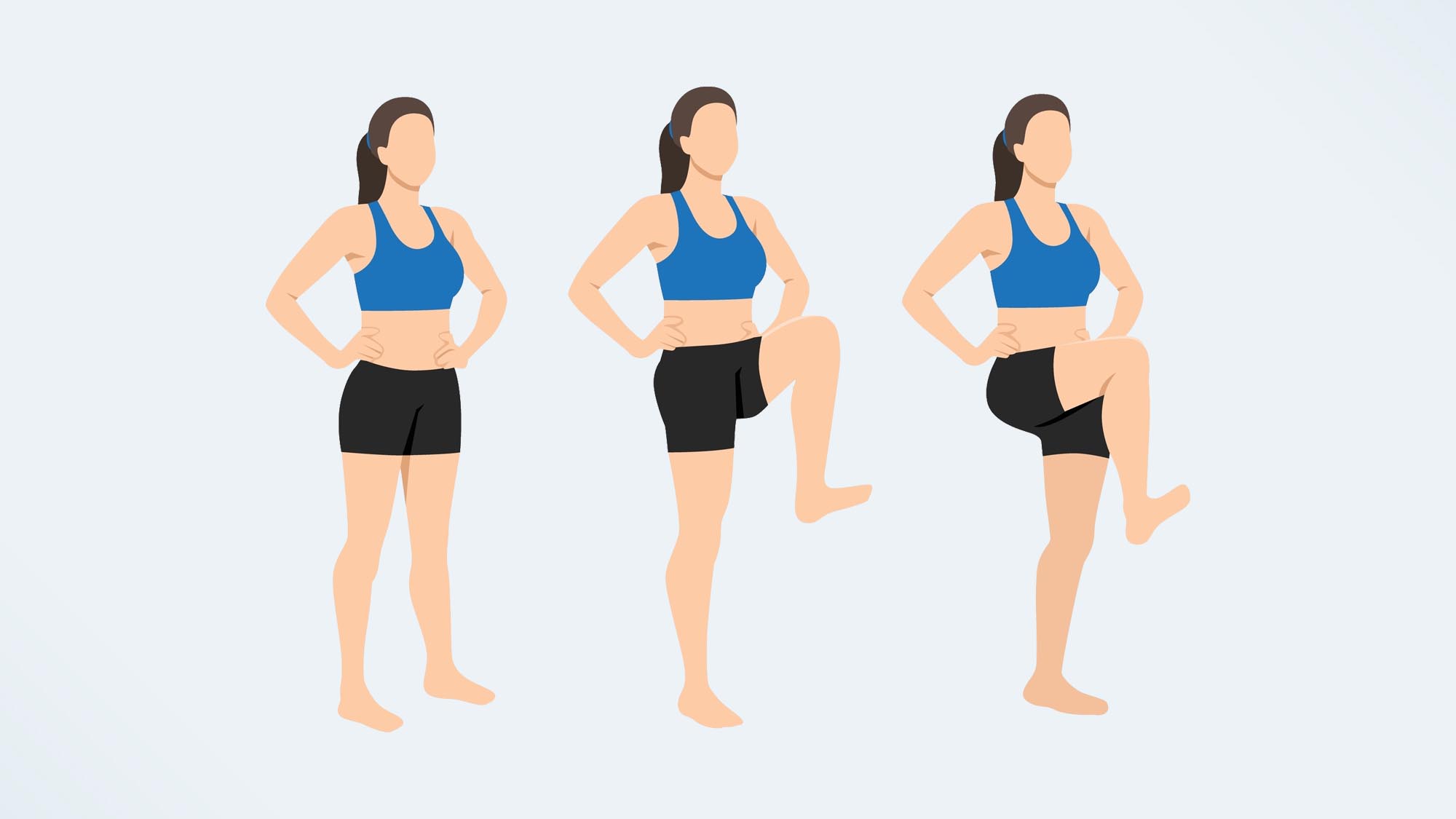
1. Standing Knee Drives
This movement requires balancing on one leg while driving the opposite knee toward the chest. It acts as an immediate test of hip stability and lower abdominal engagement. By day three, the initial shakiness subsided, replaced by a deep, burning sensation in the lower abs and hip flexors.
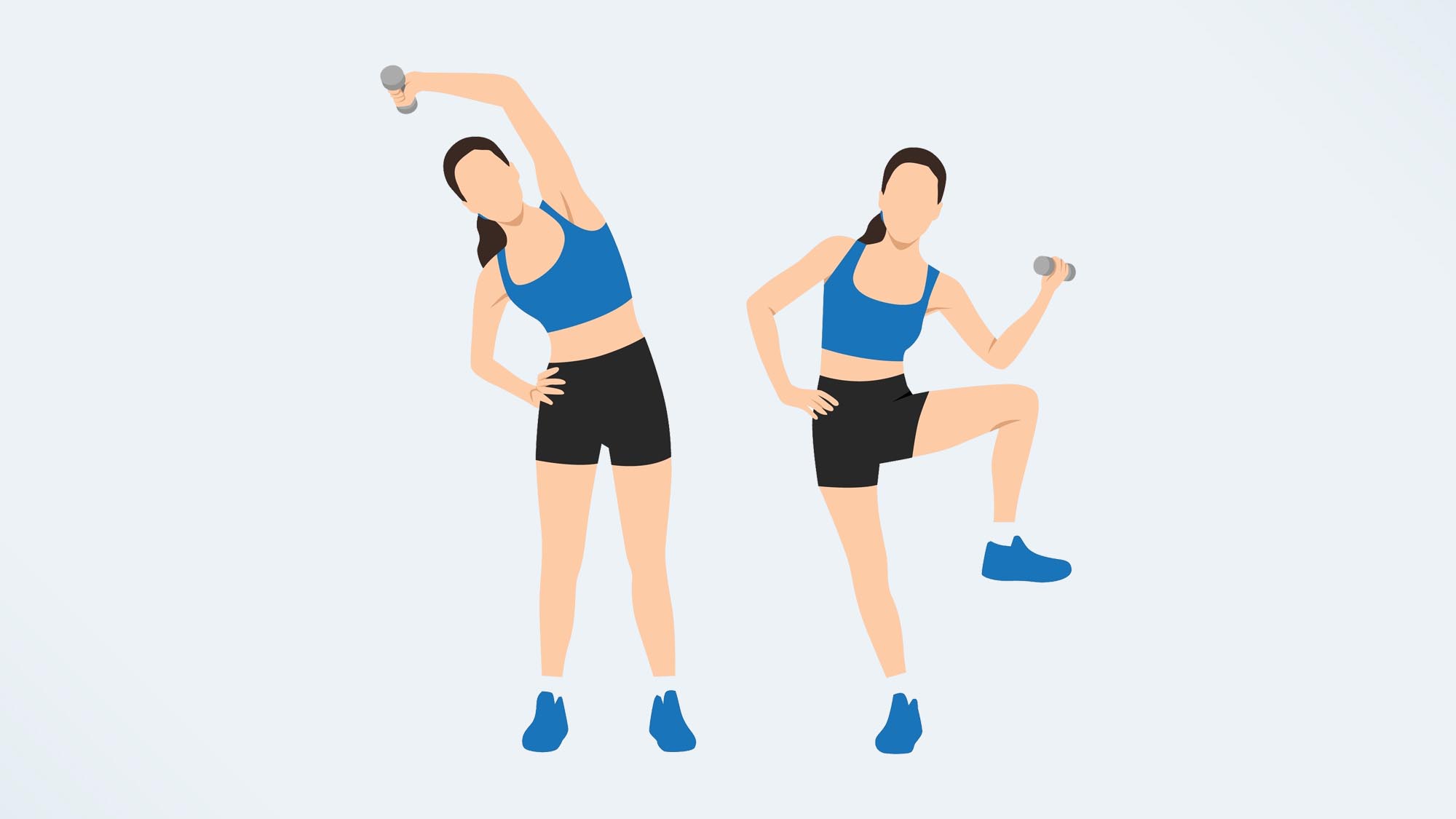
2. Standing Oblique Crunches
Rather than the rapid, jerky motions often seen in gym classes, I performed these with extreme slowness. By controlling the lateral flexion, I found that my obliques had to fight to stabilize the torso, turning a simple movement into a challenging exercise in balance and coordination.
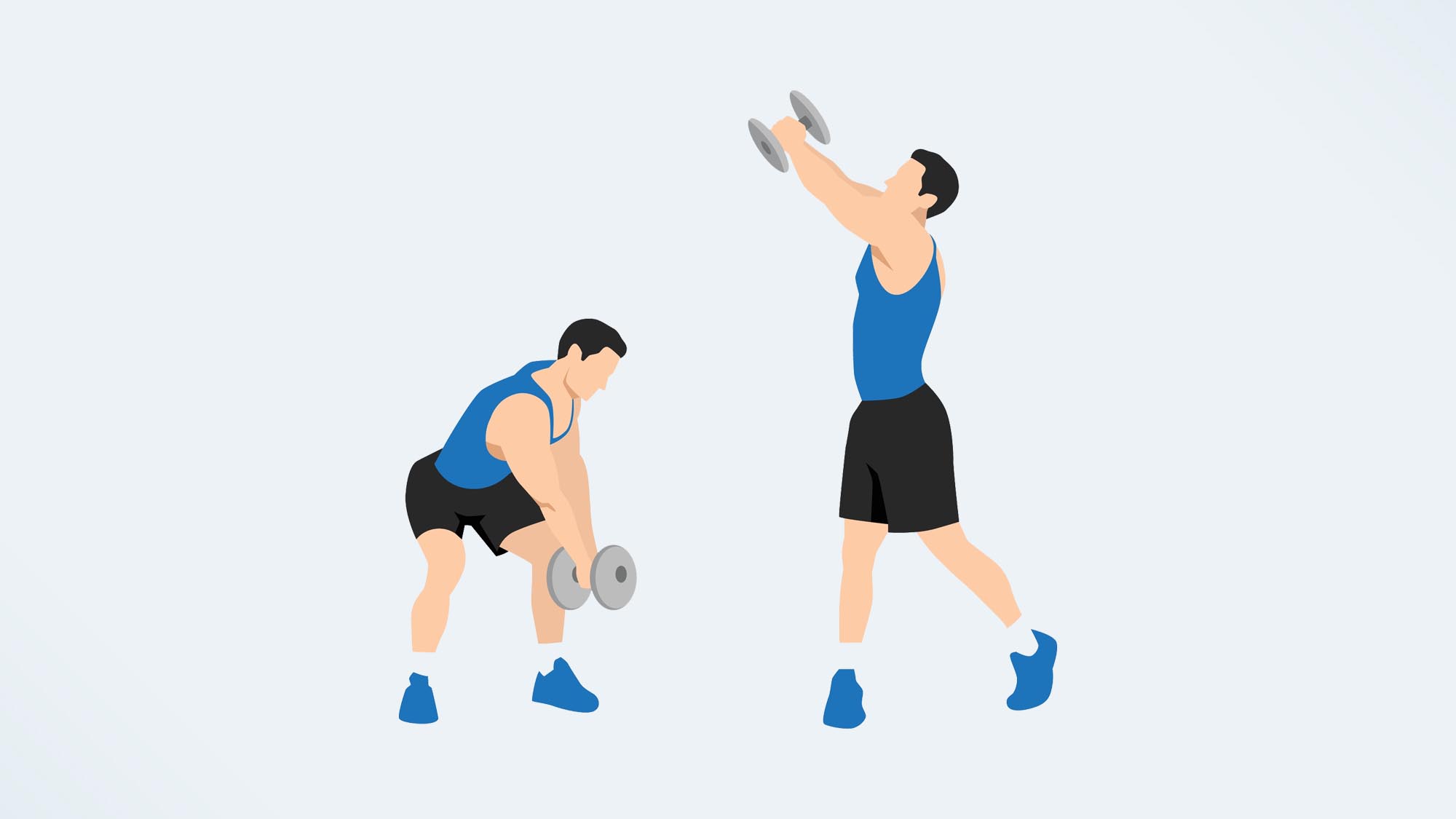
3. Woodchoppers
The woodchopper is a masterclass in rotational stability. It forces the core to resist the momentum generated by the arms moving diagonally across the body. This movement specifically targets the transverse abdominis and the obliques, muscles that are often neglected in standard sagittal-plane (forward/backward) exercises.
4. Standing Marches with Overhead Reach
This movement adds a layer of complexity by forcing the core to stabilize the spine while the arms are extended overhead. It highlights a common struggle for desk workers: thoracic mobility. The movement forced me to engage my core to keep my ribcage from flaring as I reached upward.
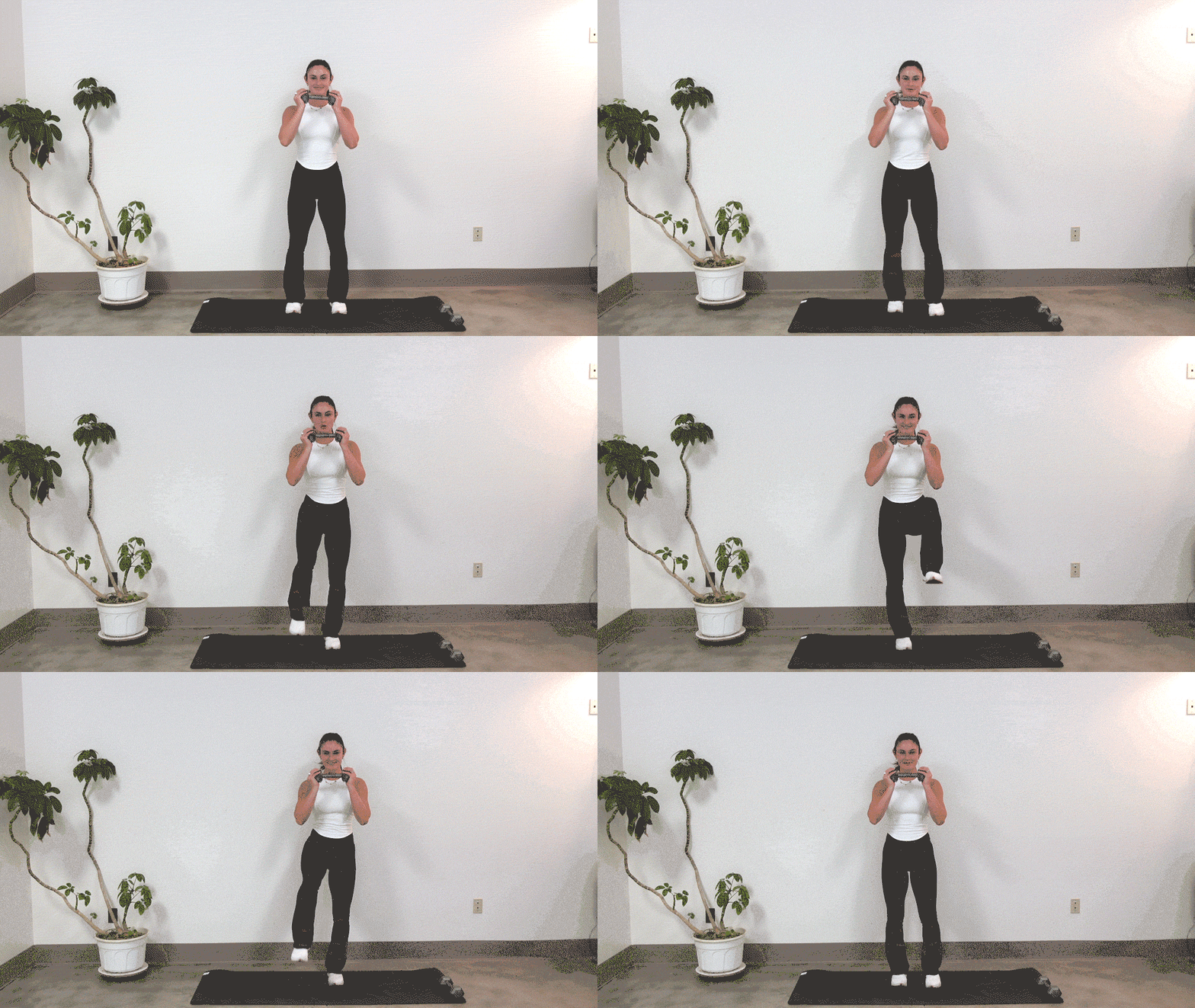
5. The Standing Pallof Press
The undisputed king of the routine, the Pallof press involves holding a resistance band anchored to a wall, pushing it straight out from the chest, and resisting the band’s attempt to pull the torso into rotation. This exercise is the gold standard for "anti-rotation" training, requiring the entire core canister to fire in unison.
Chronology of the Experiment
- Days 1-2: Initial frustration. I felt "wobbly" and found it difficult to maintain balance. The exercises felt less intense than my usual heavy-weighted floor work, leading to skepticism about their efficacy.
- Days 3-4: The learning curve flattened. My proprioception improved; I began to notice my body "finding" the stability naturally rather than forcing it. I felt a subtle but constant engagement in my deep core throughout the day.
- Days 5-6: The "aha" moment. While sitting at my desk, I found myself subconsciously correcting my slouch. The muscles in my midsection felt more "awake," and the tendency to collapse into my lower back decreased significantly.
- Day 7: A noticeable shift in awareness. While the physical changes weren’t dramatic enough to be visible in a mirror (this isn’t a bodybuilding program), the qualitative change in how I carried my body was undeniable.
The Science of Stability: Supporting Evidence
The effectiveness of standing core training lies in the concept of "neuromuscular control." When you are on the floor, the ground provides a stable base of support that does much of the stabilization work for you. Standing, however, removes that support, forcing the central nervous system to recruit deep stabilizing muscles—specifically the multifidus and the transverse abdominis—to protect the spine.
According to research in functional biomechanics, standing exercises better mimic the "bracing" action required during daily tasks like picking up a toddler, carrying groceries, or walking on uneven terrain. By training the core to resist force while standing, you are essentially "programming" the body to maintain better posture during the other 23 hours of the day.
Expert Insight: Why Real-Life Movement Matters
"Exercises that involve resisting rotation, maintaining balance, or controlling posture force the body to engage the abdominals, obliques, and lower back muscles together," notes Watkins. "This ‘co-contraction’ is what helps reinforce better alignment over time."
The implication here is that we have been prioritizing the "aesthetic" of the core (the six-pack) over the "utility" of the core (the spinal support system). For most people, the goal shouldn’t be the ability to do 100 sit-ups, but the ability to stand, sit, and move without the progressive degradation of posture that leads to chronic back pain.
Implications for Future Training
Does this mean we should abandon the floor entirely? Not necessarily. Traditional core work is still vital for building raw strength and hypertrophy in the rectus abdominis. However, the results of this experiment suggest that for the average person, a "hybrid" approach is the most beneficial.
Recommendations for Implementation:
- Prioritize Quality over Quantity: Standing core work is about precision. If you are rushing through the reps, you are missing the stability benefits.
- Integrate into Warm-ups: Use these five exercises as a 10-minute warm-up before your main lifting or cardio session. This will "activate" the core, making your heavier movements safer.
- Mindful Standing: Throughout the day, periodically perform a "check-in." Engage your lower abs, tuck your ribs, and elongate your spine. This is the ultimate, non-exercise application of the standing core principle.
Conclusion: A New Perspective on Core Strength
At the end of my seven-day experiment, I did not have a new set of six-pack abs, nor did I break any personal records in the gym. What I did gain, however, was a profound shift in awareness. I realized that my core strength was a "siloed" attribute—something I turned on in the gym and turned off the moment I sat down.
Standing core exercises bridged that gap. They turned the core into a 24/7 stabilizer rather than a temporary muscle group used only during crunches. While I will continue to perform floor work for its specific benefits, I have permanently integrated these standing movements into my daily routine. For anyone struggling with desk-related posture issues or a general feeling of "instability," the answer may not be more crunches—it may be getting off the floor and standing your ground.












No comments yet. Be the first to join the conversation!