

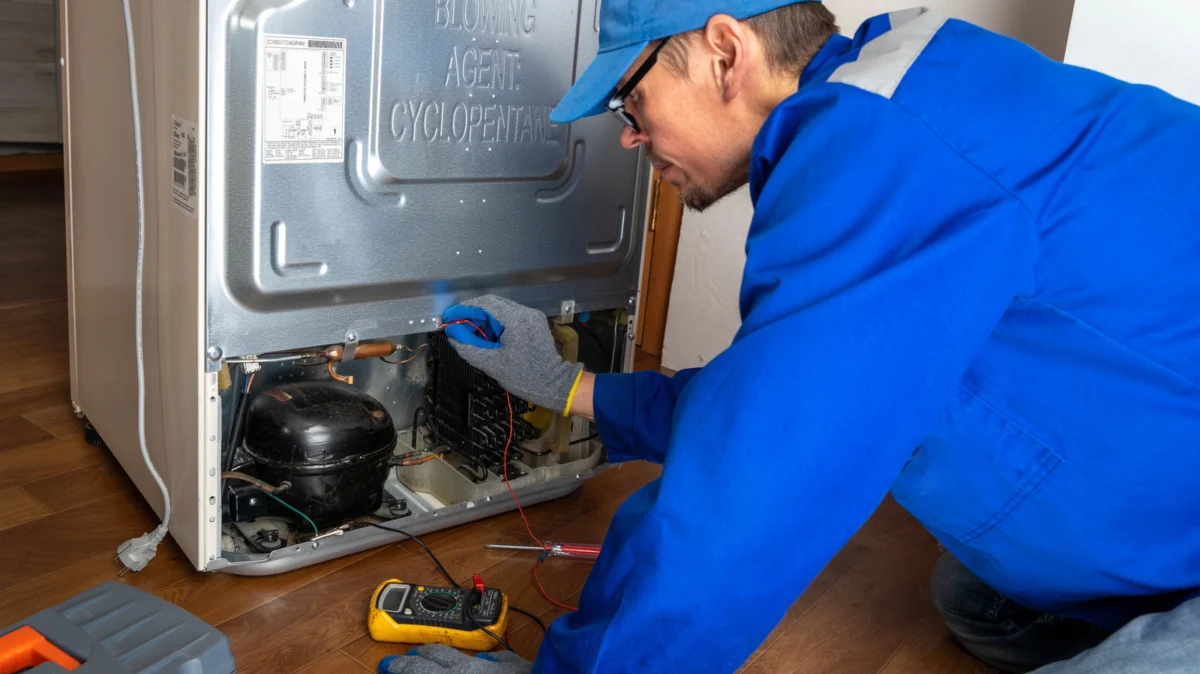
The sudden failure of a household appliance is a universal stressor. Whether it is a refrigerator leaking water across the kitchen floor or a washing machine that has ceased its agitation cycle, the immediate instinct is often one of frustration followed by a pressing economic dilemma: Is it time to call a repair technician, or is it time to head to the showroom?
For homeowners navigating these waters, industry experts often point to a heuristic known as the "50% Rule." This guideline serves as a critical decision-making framework, suggesting that if the cost of a repair exceeds half the price of a brand-new unit, replacement is typically the more prudent financial path. However, as supply chains fluctuate and technology evolves, applying this rule requires more than just a quick calculation.
Main Facts: Defining the 50% Rule
At its core, the 50% rule is a simple mathematical ratio. If you possess a $1,000 dryer and the service technician quotes you $600 for a motor replacement and labor, you have surpassed the 50% threshold. Under this logic, the investment in the repair is considered disproportionate to the residual value of the machine.
However, the "50% Rule" is not a rigid law of physics; it is a financial guideline. To apply it effectively, one must consider the "Total Cost of Ownership" (TCO). While the raw cost of the repair is the primary variable, the secondary variables—such as energy efficiency, future reliability, and the hidden costs of installation—are what truly tip the scales.
Chronology: The Lifecycle of an Appliance
To understand when to repair versus when to replace, one must first understand where the appliance sits in its expected lifecycle. Most major home appliances follow a predictable trajectory of wear and tear.
Early Life (Years 0–3)
During the initial years, any failure is usually a result of a manufacturing defect rather than wear. In this phase, the 50% rule should be ignored in favor of warranty claims. Most manufacturers offer a one-year limited warranty, and retailers often provide extended protection plans. If your appliance is in this window, your primary goal is to ensure the manufacturer or retailer covers the cost entirely.
Mid-Life (Years 4–8)
This is the "Golden Zone" for repair. If a mid-life appliance suffers a component failure—such as a broken heating element or a faulty sensor—the 50% rule is a highly effective tool. Because the machine is still relatively modern in terms of energy efficiency and features, paying 30% to 40% of the replacement cost to keep it running for another five years is a sound economic strategy.
Late Life (Years 9+)
Once an appliance crosses the decade mark, the 50% rule becomes more aggressive. Even if a repair costs only 30% of a new unit, it is often wise to replace it. By this stage, parts may become scarce, and the internal components (belts, seals, hoses) are likely nearing the end of their material fatigue life. A repair today does not guarantee immunity from a different, more expensive failure tomorrow.
Supporting Data: Efficiency and Long-Term Value
When deciding whether to repair or replace, the "hidden" cost of energy consumption is frequently overlooked. Modern appliances are held to significantly higher energy efficiency standards than those manufactured even ten years ago.
For instance, the U.S. Department of Energy reports that a modern, Energy Star-certified washing machine can use up to 25% less energy and 33% less water than older models. If you are paying $600 to repair a fifteen-year-old machine, you are not just paying for the repair; you are "locking in" the higher utility costs of an inefficient machine for the duration of its remaining life.
Furthermore, consider the "opportunity cost" of your time. Researching, purchasing, and coordinating the delivery and installation of a new unit is labor-intensive. If a repair can be performed within 48 hours, the convenience factor may justify spending slightly more than the 50% threshold.
Official Guidance and Industry Best Practices
Industry organizations, including the Better Business Bureau (BBB) and various consumer advocacy groups, emphasize that the decision-making process should begin long before a breakdown occurs.
The Importance of Documentation
Maintain a "home appliance file." This should include the original receipt, the user manual, and any service records. When a technician arrives, having a documented history of the machine allows them to provide a more accurate diagnosis. A technician who knows a unit has already undergone three previous repairs will likely advise you that it is a "lemon," regardless of the current repair cost.
Vetting Your Repair Service
The quality of the repair is just as important as the cost. A cheap, unskilled repair can lead to a "re-do" visit, effectively doubling your costs and rendering your original calculation useless.
- Manufacturer Networks: Many major brands (Whirlpool, Samsung, LG) maintain a list of factory-authorized service providers. These technicians are trained specifically on the brand’s proprietary technology.
- BBB Accreditation: The Better Business Bureau remains a gold standard for vetting. Checking the BBB’s "Appliance Repair" directory allows you to see if a company has a history of unresolved complaints or deceptive pricing practices.
- Referrals: There is no substitute for a trusted recommendation. Local community groups, neighborhood apps, and direct feedback from friends often yield more reliable technicians than a blind internet search.
Implications: The Environmental and Economic Impact
The implications of the 50% rule extend beyond the individual household. We live in an era of "planned obsolescence," where appliances are increasingly difficult to service.
The Sustainability Factor
Repairing an appliance is inherently more environmentally friendly than replacing it. The manufacturing process of a new refrigerator requires significant raw materials, energy, and transportation emissions. By extending the life of an existing appliance, you are reducing your personal carbon footprint and minimizing landfill waste. If the 50% rule is borderline, consider the environmental impact as the "tie-breaker" that encourages repair.
The Economic Reality
If you choose to replace, the initial sticker price is only the beginning. Consumers must account for:
- Removal Fees: Many retailers charge a fee to haul away the old unit.
- Installation/Modification: If your new, modern dryer requires a different electrical hookup or venting than the old one, you may need to hire an electrician or plumber, adding hundreds of dollars to the "replacement" side of the ledger.
- Inflationary Pressure: As manufacturing costs rise, the replacement units you see today are often more expensive—and sometimes less durable—than the units they are replacing.
Conclusion: Making the Final Call
The 50% rule is an essential compass, but it should not be the only instrument you use to navigate the repair-or-replace dilemma.
To summarize the decision process:
- Calculate the 50% threshold: Compare the estimate against the cost of a comparable new model.
- Evaluate the age: If the appliance is near the end of its typical lifespan (10–12 years), lean toward replacement.
- Assess the "Efficiency Gap": If the new unit will significantly lower your utility bills, factor those long-term savings into the replacement cost.
- Consider the "Hassle Factor": If the repair is quick and the unit has been reliable until now, it is often better to fix it.
Ultimately, the goal is to balance immediate fiscal responsibility with long-term reliability. By approaching appliance failure with a methodical, data-driven mindset, you can avoid the trap of impulse buying while ensuring your home remains functional, efficient, and comfortable.












No comments yet. Be the first to join the conversation!