

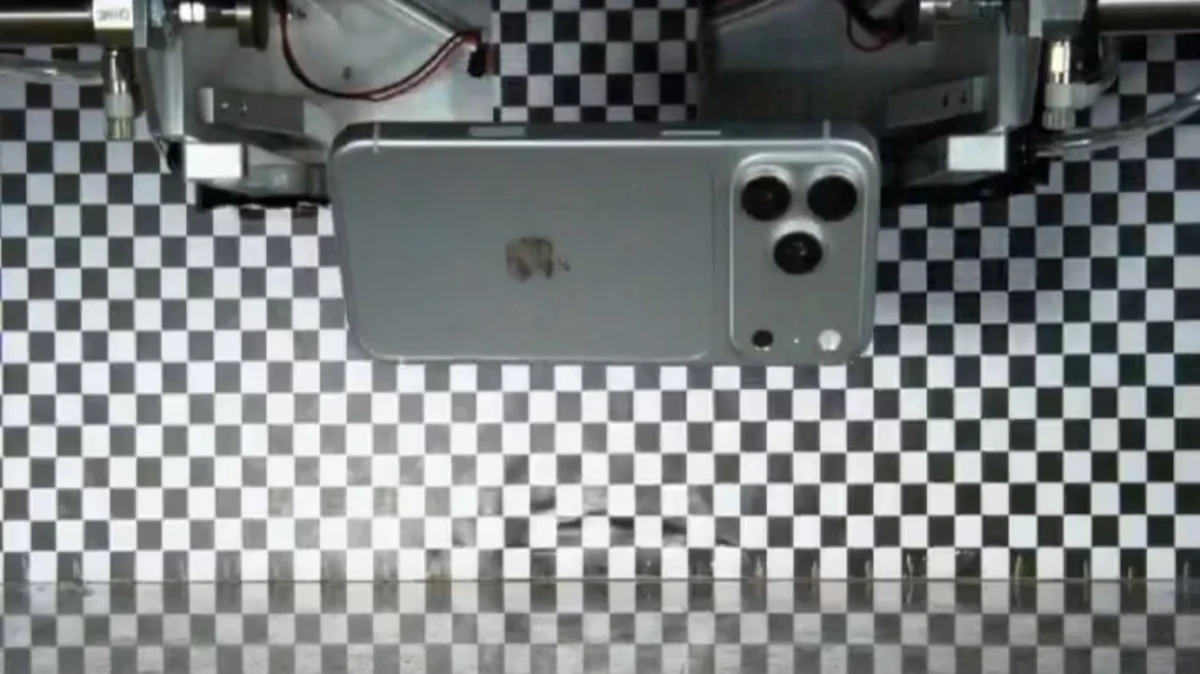
In what is being described as one of the most significant security lapses in Apple’s modern history, confidential data belonging to the tech giant has been leaked to the dark web following a massive cyber breach at Tata Electronics. The breach, which has sent shockwaves through the global supply chain, has done more than just expose sensitive internal communications; it has provided the public with an unprecedented, raw look at the internal durability testing of the unreleased iPhone 18 Pro.
The incident marks a departure from the usual cycle of rumors and leaks. While Apple is accustomed to high-resolution CAD renders or grainy photos of dummy units surfacing on social media, this breach provides a window into the proprietary, high-stakes environment of Apple’s Quality Assurance (QA) labs.
Main Facts: The Scope of the Exposure
The leaked data, which originated from a compromise at Tata Electronics—a key manufacturing partner for Apple—contains thousands of proprietary documents. Among the roughly 200,000 files circulating on illicit forums are not just administrative records, but visual evidence of the iPhone 18 Pro’s physical resilience testing.
Prominent tech analyst and leaker Evan Blass was among the first to confirm the authenticity of the visual content, sharing clips that depict the iPhone 18 Pro undergoing rigorous drop tests. The footage reveals a device that appears to be in the late stages of prototyping, finished in a sleek silver hue with the signature flat, industrial-grade sides that have become a hallmark of the Pro line.
The device shown in the footage retains the familiar triangular camera array, housed within a rectangular module with rounded corners. The placement of the LED flash and the LiDAR sensor appears consistent with the current design language of the iPhone 17 Pro, suggesting that Apple is opting for iterative refinement in its external aesthetics for the 18-series, rather than a radical chassis overhaul.
Chronology of the Breach
The timeline of the disaster began in late June 2026, when suspicious activity was detected within the internal servers of Tata Electronics.
- June 22, 2026: Initial reports emerge regarding a cyber breach at Tata Electronics. Early speculation suggests that trade secrets involving several major multinational corporations, including Apple and Tesla, may have been compromised.
- June 24, 2026: Forensic teams from Tata and third-party cybersecurity firms begin identifying the extent of the exfiltrated data. It is confirmed that the breach includes "confidential watermarked" files belonging to Apple.
- June 26, 2026: Tata Electronics initiates an emergency lockdown of its internal systems, restricting access to all non-essential personnel and launching a full-scale forensic audit to contain the fallout.
- June 29, 2026: News outlets, including Reuters, confirm that the leaked files contain detailed supplier maps, component lists, and, most alarmingly, video files showcasing the iPhone 18 Pro’s durability testing in a laboratory setting.
- July 2026 (Present): The files remain active on various corners of the dark web, prompting ongoing investigations by international law enforcement and private security contractors hired by Apple.
Supporting Data: Beyond the Hardware
While the video footage of the iPhone 18 Pro drop tests has garnered the most headlines, the technical data contained within the leak is arguably more damaging to Apple’s competitive standing. The stolen documents include a comprehensive "supplier map," which provides an granular breakdown of which manufacturers are responsible for individual components.
This includes:
- Silicon and Chipset Sourcing: Detailed specs on the next-generation processors and their manufacturing origin.
- Energy Storage: Technical schematics for the iPhone 18 Pro’s battery modules, which rumors suggest will outperform the upcoming Samsung Galaxy S26 Ultra.
- Optical Modules: Proprietary data on camera lens assembly, which Apple considers a critical trade secret given the intense competition in mobile photography.
The leak effectively provides competitors with a roadmap of Apple’s supply chain, potentially allowing rivals to identify and pressure the same suppliers, or at the very least, gain insight into Apple’s procurement strategies and cost structures.
Official Responses and Internal Investigations
Apple’s response to the crisis has been characteristically guarded. While the company rarely acknowledges rumors, the severity of the breach necessitated an internal probe. Sources close to the investigation state that Apple’s Legal and Security teams are working in tandem with the FBI and international agencies to trace the origin of the attack.
Tata Electronics has issued a series of statements confirming the breach and expressing their commitment to "tightening internal controls." The company has reportedly suspended several high-level administrative accounts and is undergoing a complete overhaul of its data handling protocols.
"We are treating this incident with the utmost seriousness," a Tata spokesperson stated in an internal memo leaked to the press. "The security of our clients’ intellectual property is the bedrock of our business, and we are working tirelessly to remediate the vulnerabilities that allowed this to happen."
Implications for the iPhone 18 Pro Launch
The most immediate question on the minds of investors and consumers is how this will affect the iPhone 18 Pro’s official unveiling. Historically, Apple has managed to maintain a "veil of secrecy" that acts as a marketing engine. When that veil is torn prematurely, it can impact the "wow factor" of the launch keynote.
However, the bigger concern is the potential for the "foldable iPhone Ultra." This device, widely considered the crown jewel of the 2026 lineup, is the one piece of hardware that Apple has successfully kept under wraps. With 200,000 files now floating in the digital ether, there is a legitimate fear that technical schematics for the foldable phone could still emerge. If such data exists within the stolen cache, it is likely only a matter of time before it is uncovered, indexed, and leaked.
The Durability Factor
The leaked drop-test videos provide an unexpected insight into Apple’s focus on durability. By watching the device survive multiple impacts on a controlled laboratory surface, industry observers have noted that Apple appears to be doubling down on material science. The use of advanced titanium alloys and reinforced glass remains central to their durability strategy. While the videos are short, they confirm that the iPhone 18 Pro is being engineered to withstand the rigors of daily life, perhaps even more effectively than its predecessors.
Long-term Supply Chain Consequences
The exposure of supplier maps could lead to a permanent shift in how Apple manages its relationships. The company may move toward a more decentralized supply chain to minimize the risk of a single point of failure—like the one experienced at Tata—exposing their entire product roadmap. This would likely increase costs and complicate logistics, but it may be a necessary price to pay to ensure that the iPhone 19 and beyond do not face similar security catastrophes.
Conclusion
The Tata Electronics data breach represents a significant failure in the security infrastructure that protects the world’s most valuable tech company. While the iPhone 18 Pro drop-test videos have provided the public with an early look at the hardware, the true cost of this incident will be measured in the months to come as the full extent of the leaked supplier data is analyzed.
For now, the iPhone 18 Pro remains the focal point of the scandal. As Apple prepares to finalize its 2026 roadmap, the company finds itself in the uncomfortable position of having to innovate under a microscope, with its most intimate manufacturing secrets now a matter of public record. Whether this leads to a shift in their security culture or a change in their product design remains to be seen, but one thing is certain: the era of total secrecy for Apple’s flagship products has been dealt a staggering, and perhaps permanent, blow.











