Layla Zulfa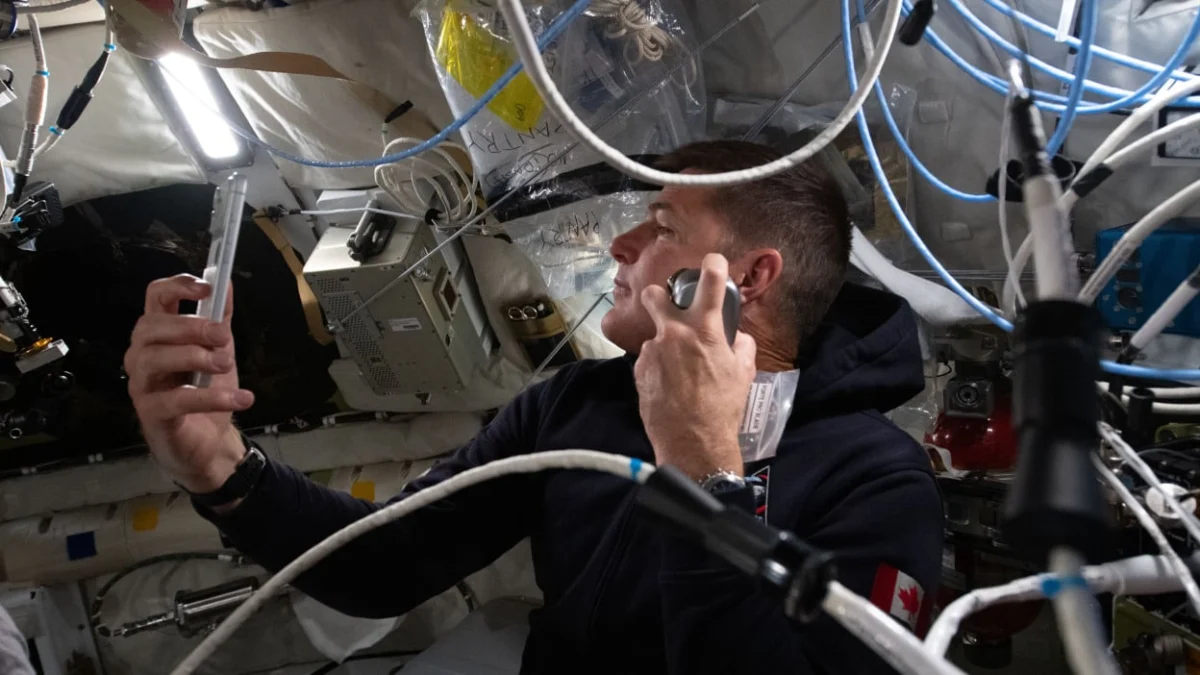
For the first time in over half a century, humanity is once again venturing toward the moon. Yet, as the Orion spacecraft carries the Artemis II crew—Commander Reid Wiseman, Pilot Victor Glover, and Mission Specialists Christina Koch and Jeremy Hansen—into the deep reaches of lunar space, the mission is being defined by something far more modern than the monumental rockets propelling them: the iPhone 17 Pro Max.
In a profound shift from the era of grainy, monochromatic broadcasts and tightly scripted mission control updates, the Artemis II crew is documenting their journey with the same tools used by billions on Earth. This is space exploration for the digital age, where the profound silence of the cosmos is punctuated by the familiarity of high-definition social media content.
The Mission: A New Paradigm for Human Spaceflight
The Artemis II mission, which marks the first crewed flight to lunar space since Apollo 17 in 1972, is inherently historic. Its primary scientific objectives remain rigorous: testing the life-support systems of the Orion spacecraft, ensuring crew safety for future deep-space endeavors, and performing critical flybys that will lay the groundwork for the Artemis III lunar landing.
However, the "cultural footprint" of this mission is evolving in real-time. NASA has integrated personal technology into the crew’s manifest, authorizing the use of four iPhone 17 Pro Max devices. These units, stripped of internet and Bluetooth connectivity to maintain the integrity of the spacecraft’s sensitive avionics, are being used as advanced photography and videography tools. The result is a stream of content that feels paradoxically intimate—a perspective of our home planet captured through the same front-facing lenses that define modern social interaction.
Chronology: From Launch to Viral Stardom
The timeline of the mission has been punctuated by milestones that bridge the gap between scientific achievement and internet culture:
- Launch Day: The mission departed from Kennedy Space Center, marking the start of a multi-day trek into deep space.
- Flight Day 2-4: As the crew transitioned from Earth orbit to lunar trajectories, they began sharing raw, unfiltered glimpses of their daily lives. These included the now-famous "shave in space" video featuring Jeremy Hansen, which provided a relatable, humanizing look at life in microgravity.
- Flight Day 5: The crew achieved global attention with the release of a "Full House" style parody Reel on Instagram. The video, which utilized quick, rhythmic cuts and the iconic 90s sitcom theme, garnered over 13 million views within 48 hours.
- The Lunar Flyby: As the mission reaches its climax near the moon on April 6, 2026, the world is watching not just through traditional NASA telecasts, but through a dedicated Netflix livestream—further evidence of the mission’s transition from a government project to a global cultural event.
Supporting Data: The Power of Accessibility
The efficacy of this social-first strategy is supported by staggering engagement numbers. NASA’s Instagram account, which has long served as a repository for technical imagery, has seen its engagement rates skyrocket during the Artemis II mission.

Analysts point to the "selfie-cam" aesthetic as the primary driver. By utilizing the iPhone’s front-facing camera to capture the astronauts gazing out of the Orion window, the crew has effectively collapsed the distance between the viewer and the astronaut. It is no longer "a NASA astronaut in space"; it is "Reid and Christina looking at Earth." This shift in framing has allowed the agency to reach demographics that historically showed little interest in aerospace engineering or orbital mechanics.
Official Responses and Strategic Intent
NASA’s decision to allow smartphones on the Orion spacecraft was a calculated strategic pivot. In previous decades, media relations were handled through terrestrial press conferences and curated video feeds. For Artemis II, the agency has leaned into transparency and authenticity.
"We want the public to feel like they are coming along for the ride," a NASA spokesperson noted during a recent briefing. The goal is to cultivate a generation of future scientists, engineers, and dreamers who see themselves in the crew. By allowing the astronauts to curate their own "vlogs" and photos, NASA is moving away from the "distant hero" archetype toward a more relatable, collaborative model of exploration.
Critics and skeptics occasionally raise concerns about the distraction of social media creation, but mission control has maintained that the content creation is strictly secondary to the scientific mission. The "tech-savvy" nature of this crew is viewed as an asset, not a liability, as their comfort with digital tools ensures that the mission’s legacy will be preserved in high-resolution, shareable formats.
Implications: The Democratization of Space
The implications of the "Artemis II Effect" are significant for the future of space travel.
1. The Death of the "Distant Astronaut"
The era of the astronaut as an untouchable, god-like figure is coming to an end. By showing the mundane—shaving, eating, sleeping, or even the awkwardness of adjusting to zero-G—the crew has made the impossible seem attainable. This humanization is crucial for the public’s continued support of high-cost, long-term space programs.

2. The Feed as the New Broadcast
The fact that the lunar flyby is being livestreamed on Netflix, alongside traditional social media channels, confirms a fundamental change in how we consume information. Apollo was the age of television; Artemis is the age of the "Feed." The shift toward algorithmic discovery means that space news is no longer competing with newspapers, but with TikTok trends and influencer content. NASA’s ability to compete in this arena is a masterclass in modern digital communication.
3. The Tech Stack of the Future
The successful integration of commercial, off-the-shelf technology like the iPhone into a space mission signals a new efficiency in space logistics. Instead of developing bespoke, multi-million dollar cameras for every mission, agencies can now leverage the rapid innovation cycle of consumer electronics. This "Commercial-Off-The-Shelf" (COTS) strategy is likely to become the standard for the upcoming Artemis III and Mars-bound missions.
Looking Ahead: Sustaining the Momentum
As the Artemis II mission concludes and the crew prepares for their return to Earth, the challenge for NASA will be sustaining this level of cultural relevance. The viral nature of their content has provided a significant tailwind for the agency, but long-term engagement requires a consistent narrative.
The success of these digital efforts suggests that the next generation of space exploration will be characterized by a continuous, real-time feedback loop between those on the spacecraft and those on the ground. We are moving toward a future where "being in space" is a shared, communal experience rather than a spectacle to be watched from afar.
In the final assessment, the Artemis II crew has accomplished more than just a lunar flyby. They have successfully bridged the gap between the cold, vacuum-sealed reality of space and the warm, connected landscape of the modern internet. They have proven that whether you are in your living room or 240,000 miles from Earth, the instinct to capture, share, and connect remains the most powerful human trait of all.
As we look toward the future of human exploration, one thing is clear: the journey to the stars is no longer just about the rocket engines or the fuel. It is about the story we tell, the images we share, and the digital thread that connects us all to the great beyond. Artemis II has shown us that space belongs to everyone, provided we have the right lens to capture it.

 Basiran
 Nana
Nana