

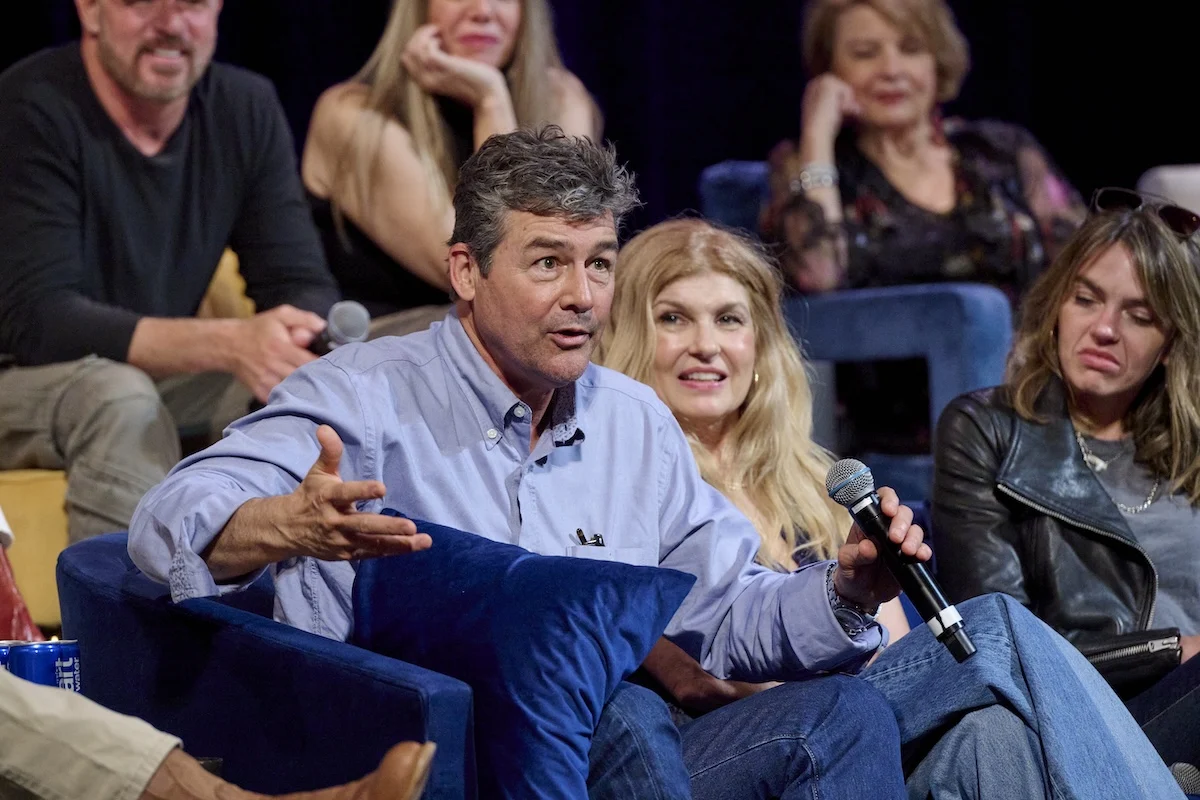
Twenty years after the fictional town of Dillon, Texas, first graced television screens, the cast and crew of Friday Night Lights gathered at the ATX Television Festival to celebrate a milestone that few dramas achieve: the preservation of a near-perfect legacy. Amidst the cheers, the nostalgic musical performances, and the reflection on a cultural touchstone, one thing became abundantly clear: the "Dillon magic" was a lightning-in-a-bottle moment that its creators are in no hurry to replicate.
The centerpiece of the anniversary event was a revelation from Kyle Chandler, the man whose portrayal of Coach Eric Taylor became synonymous with integrity and quiet strength. During the panel, Chandler pulled back the curtain on a moment he had previously kept private, shedding light on the immense pressure the production faced during its final stretch—and his own firm commitment to leaving that legacy untouched.
The Night the Door Was Shut
It is a rare feat for a series to conclude with the same level of critical acclaim as its inception. Yet, for Friday Night Lights, the final season was widely considered a triumph of narrative discipline.
"That night when I did win the award [an Emmy for the final season], it only serves as credit to the way you guys ended the show," Chandler told the packed Paramount Theater in Austin. "It was so obvious that it was the best way to end the show. It was the perfect way to end the show."
Chandler then shared a story that underscored the show’s volatile history with network executives. "It was just so intrinsically obvious that we had gotten away with murder. They tried to shut us down, they’d done this, they’d tried that, blah blah blah, all this crap, right?"
He revealed that, mere seconds after stepping off the stage with his Emmy in hand, he was approached by an industry player with a proposition: "Do you want to do a movie?" The offer for a Friday Night Lights feature film extension was immediate, yet Chandler’s reaction was instantaneous and final. "I just immediately said, ‘No.’ We really did something. I knew it was something great. It was damn hard work."

A Chronology of a Cult Classic
The journey of Friday Night Lights was never linear. Based on Buzz Bissinger’s seminal 1990 work of investigative journalism and the subsequent 2004 feature film, the television series had to overcome significant hurdles from the start.
The Early Days and the "Crucifictorious" Spirit
The reunion event kicked off with a performance by Crucifictorious, the fictional garage band fronted by Jesse Plemons’ character, Landry Clarke. Plemons, who has since become a powerhouse of modern cinema, joined Stephanie Hunt to perform "Walking in a TV" and a cover of Tony Lucca’s "Devil Town." The performance served as a poignant reminder of the show’s unique ability to weave music and mood into the fabric of small-town life.
The "Landry" Stumble
The panel did not shy away from the darker, more polarizing chapters of the show’s history. Most notable was the Season 2 subplot involving the murder of a man who attempted to assault Tyra Collette (Adrianne Palicki). Both Plemons and Palicki reflected on the narrative choice, which remains a sore spot for fans who felt it betrayed the show’s grounded, slice-of-life identity.
"Remember when Landry killed a guy?" Palicki quipped, drawing laughter from the crowd. "Did you see that coming?" Plemons admitted the twist was as surprising to the actors as it was to the audience.
The Near-Death Experience
The show’s survival was precarious. The 2007-2008 Writers Guild of America strike crippled production, leading NBC to effectively cancel the series. For showrunner Jason Katims, this was a moment of profound professional agony. "The show was canceled for a number of weeks, and it tortured me like nothing else in the world," Katims recalled. He noted that the truncated Season 2, ending on an "odd little episode," lacked the narrative closure the writers had meticulously planned.
Only a "miraculous" eleventh-hour deal with DirecTV allowed the show to survive for three additional seasons, giving the writers the runway to build the series into the critically acclaimed masterpiece it is today.

Protecting the "Taylor" Marriage
A recurring theme of the discussion was the conscious effort by the cast and writers to subvert standard television tropes. Central to this was the relationship between Coach Taylor and Tami Taylor (Connie Britton).
Britton, reflecting on her early conversations with Chandler, noted that they both felt a deep responsibility to portray a healthy, realistic marriage. "We don’t want our characters to have affairs," Britton recalled telling the creative team. "We don’t want it to be about pitting the two of them against each other. Most marriages, the couples are just trying to make it work with each other, and get through life with each other."
This mandate to avoid "over-dramatized" relationship conflict proved to be the show’s secret weapon. It allowed the audience to anchor themselves in the stability of the Taylor household, even as the world around them—the football team, the town’s economy, the students’ futures—remained in flux. Jason Katims acknowledged that the actors’ input was vital, adding with a smile, "Yes, you made it very clear."
The Reboot Question: No Rush
Thirteen years after the series finale, the specter of a reboot has occasionally surfaced in industry trades. With Universal Television exploring pitches involving original producers like Brian Grazer and creator Peter Berg, fans have speculated whether a return to Dillon is inevitable.
However, the mood at the 20th-anniversary panel was one of extreme caution. Katims, while confirming that conversations are happening, emphasized that there is no mandate to rush. "I know that came out in the trades, but the idea of doing another incarnation of the show is much more of a conversation [right now]," he said.
He stressed that the legacy of the original work—the book, the film, and the series—is too significant to risk with an inferior follow-up. "We wouldn’t do anything until the point we feel we can do a show that will be able to live up to that legacy. There’s no reason to do it until that happens."

Implications for the Future of Television
The 20th-anniversary celebration of Friday Night Lights serves as a case study in the value of artistic integrity. In an era of television defined by endless sequels, reboots, and franchise mining, the Friday Night Lights team stands as a bastion of the "quality over quantity" ethos.
The primary implication is that for a show to maintain its cultural relevance two decades later, it must be treated as a finite, precious work. The cast’s refusal to dilute the story—whether by rejecting a movie proposal at the height of their success or by being selective about a modern-day revival—demonstrates a respect for the audience that is increasingly rare in the streaming age.
As the ATX TV Festival concludes, the message from the cast is clear: they are proud of the work they did, they are grateful for the fans who still watch, and they are perfectly content letting the story of the Dillon Panthers exist in the past, where it remains, for many, the gold standard of dramatic storytelling.
Friday Night Lights is currently available for streaming on Paramount+. The ATX TV Festival continues in Austin, Texas, through May 31.











No comments yet. Be the first to join the conversation!