

By João Silva
Updated: June 2026
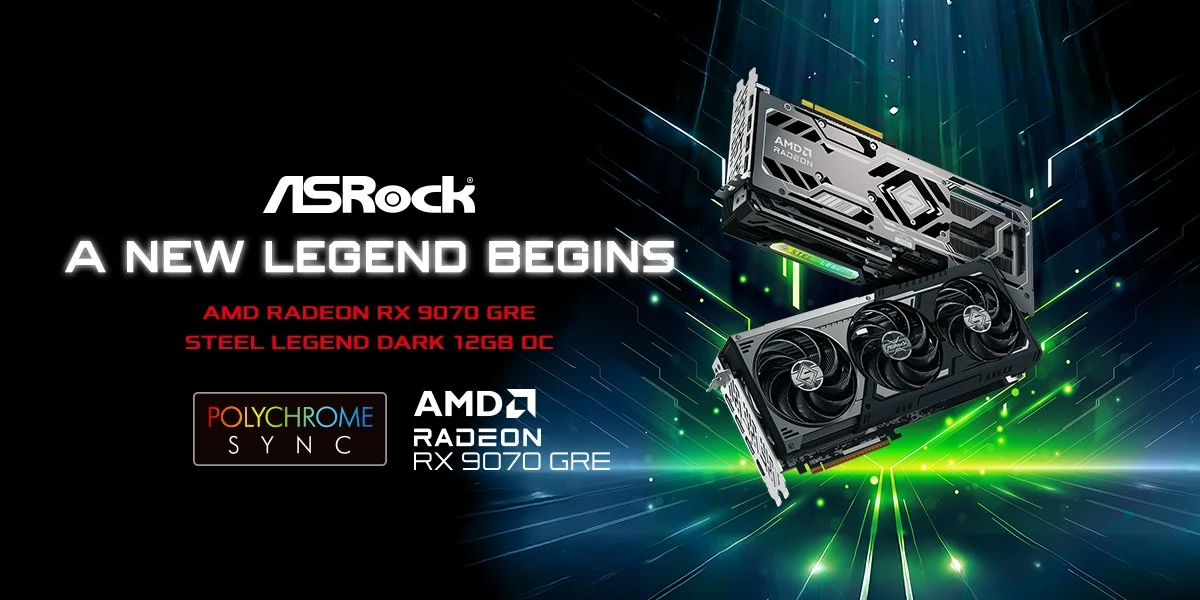
The annual pilgrimage to Computex Taipei serves as the global stage for the most significant hardware innovations of the year, and the 2026 iteration has proven to be no exception. Among the flurry of announcements, ASRock has captured the attention of enthusiast builders by unveiling the Radeon RX 9070 GRE Steel Legend Dark 12GB OC. This new entrant to the graphics market marks a significant expansion of the AMD RDNA 4 ecosystem, blending high-end performance with a refined, monochromatic aesthetic that deviates from the traditional, brighter “Steel Legend” branding.
Main Facts: The Specifications of Power
The Radeon RX 9070 GRE Steel Legend Dark is more than just a aesthetic overhaul of previous generation hardware; it is built upon the foundational strength of the newly minted AMD RDNA 4 architecture. Designed for high-refresh-rate 1440p gaming and capable entry into 4K environments, the card offers a robust balance of efficiency and raw compute power.
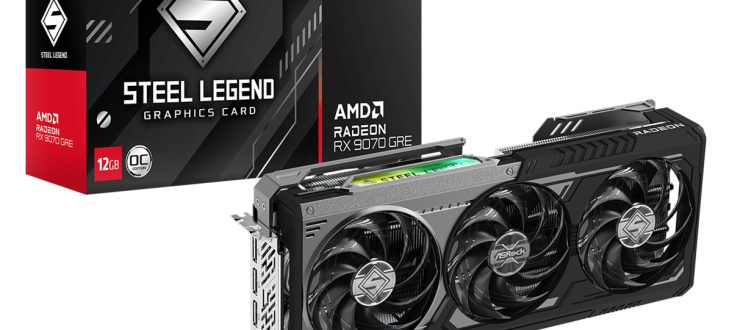
At its core, the card features 48 AMD RDNA 4 Compute Units (CUs). ASRock has pushed the silicon beyond its reference specifications, equipping the card with a factory boost clock of up to 2920MHz. This aggressive overclocking profile is supported by a 12GB GDDR6 memory configuration, ensuring that modern texture-heavy titles remain fluid under high loads.
The "Dark" iteration of the Steel Legend series moves away from the silver-and-white motifs traditionally favored by the sub-brand. Instead, it utilizes a sleek, black-and-grey industrial design. The card is cooled by a sophisticated triple-fan array, featuring ASRock’s proprietary Striped Ring Fans, which are engineered to focus airflow and reduce turbulence. Coupled with an Air Deflecting Fin array and Ultra-fit Heatpipes, the thermal solution is designed to maintain peak clock speeds for extended gaming sessions without thermal throttling.
Chronology of Development
The road to the RX 9070 GRE’s debut at Computex 2026 began long before the doors opened in Taipei.
- Q1 2026: AMD formally announced the shift toward the RDNA 4 architecture, focusing on significant leaps in raytracing efficiency and AI integration.
- April 2026: Industry leaks began to surface regarding a "GRE" (Golden Rabbit Edition) variant of the 90-series, aimed at bridging the gap between mainstream performance and the flagship enthusiasts tiers.
- Late May 2026: ASRock finalized the design of the Steel Legend Dark, specifically targeting the growing trend of "stealth builds"—PC setups that emphasize clean, blacked-out aesthetics without the distractions of excessive white trim.
- Computex 2026 (June): The official unveiling took place, with ASRock demonstrating the card’s capabilities in real-time raytracing and AI-upscaling scenarios.
Supporting Data: Architectural Advantages
The RX 9070 GRE is not merely a numbers game; it represents a tangible shift in how AMD approaches graphical processing. The architecture introduces 3rd Gen Raytracing accelerators, which show marked improvements in lighting and reflection calculations compared to the RDNA 3 series.
Furthermore, the integration of 2nd Gen AI accelerators is a cornerstone of the 9070 GRE’s value proposition. These hardware blocks are essential for the effective deployment of AMD FSR Redstone, the latest iteration of AMD’s upscaling technology. Early benchmarks suggest that FSR Redstone provides a more stable image reconstruction and superior motion vectors compared to previous versions.
Additionally, the card fully supports AMD Fluid Motion Frames (AFMF). By utilizing the 9070 GRE’s onboard AI accelerators, AFMF can generate additional frames between rendered ones, significantly boosting perceived smoothness in frame-limited scenarios. This combination of hardware and software makes the 9070 GRE a highly competitive option for those looking to maximize performance without the price tag of a top-tier enthusiast card.
Structural Integrity and Aesthetics
ASRock has long been praised for the build quality of its Steel Legend line, and the Dark variant maintains this reputation. The card is encased in a reinforced metal frame that serves both as a structural support and a passive heatsink for the VRAM and VRM modules. A sturdy metal backplate is included as standard, which serves a dual purpose: it protects the delicate underside of the PCB from accidental damage and, more importantly, provides necessary rigidity to prevent “VGA sag,” a common issue with modern, heavy cooling solutions.
Aesthetically, the card features an ARGB LED panel integrated into the side of the shroud. While the card leans into a monochromatic "dark" theme, the inclusion of Polychrome Sync lighting allows users to integrate the GPU into their existing RGB ecosystem. Whether the user prefers a subtle glow or a synchronized light show, the integration is seamless and highly customizable via ASRock’s software suite.
Official Responses and Industry Context
During the Computex press briefing, ASRock representatives emphasized that the Steel Legend Dark was created in direct response to feedback from the gaming community.
"Our users were asking for the performance and reliability of the Steel Legend series, but with a color palette that fits the modern, minimalist desk setup," said an ASRock spokesperson. "By focusing on a darker aesthetic, we are allowing the user’s build to feel more cohesive, while the engineering under the hood ensures that the 9070 GRE is pushed to its absolute potential."
Industry analysts have noted that the 9070 GRE fills a vital "sweet spot" in the current market. As game developers continue to push the boundaries of visual fidelity, the cost of entry for high-performance hardware has risen significantly. The GRE variant, by offering a balance of high-end features and cost-effective manufacturing, positions itself as the go-to card for the "smart gamer"—someone who demands high fidelity but wants to avoid the diminishing returns of the absolute flagship tiers.
Implications for the Market
The launch of the Radeon RX 9070 GRE, particularly ASRock’s Steel Legend Dark implementation, has several implications for the broader graphics card market throughout the remainder of 2026.
- Mainstream Democratization: By delivering features previously reserved for flagship cards—such as advanced raytracing and dedicated AI acceleration—to the mid-to-high-end segment, AMD is forcing competitors to improve their offerings at similar price points.
- The "Stealth Build" Trend: ASRock’s focus on the black-and-grey aesthetic highlights a shift in consumer demand. Builders are moving away from “gamer-centric” designs and toward hardware that is professional, sleek, and unassuming. Expect other manufacturers to follow suit with "Dark" or "Black Edition" refreshes of their own portfolios.
- Longevity through AI: With the inclusion of 2nd Gen AI accelerators, the RX 9070 GRE is better positioned for future-proofing than its predecessors. As developers integrate more AI-driven features into game engines, the capability of this hardware to handle upscaling and frame generation will likely extend the lifespan of the card for the average user.
Conclusion: Is the 9070 GRE for You?
The ASRock Radeon RX 9070 GRE Steel Legend Dark 12GB OC is a compelling piece of engineering. It manages to successfully marry the technical prowess of the new RDNA 4 architecture with a design philosophy that is both durable and stylish.
For the gamer who is currently running hardware from three or four years ago, the 9070 GRE offers a massive leap in performance, particularly in titles that take advantage of modern raytracing and FSR technologies. Whether you are looking to build a new system from the ground up or upgrade an aging rig, the Steel Legend Dark stands out as a reliable, powerful, and visually versatile choice.
As the industry moves deeper into 2026, the success of the 9070 GRE will depend on its availability and the continued refinement of its driver suite. However, if this Computex debut is any indication, ASRock has a winner on its hands—a card that is not just about raw power, but about the balance of performance, cooling, and the refined aesthetics that modern PC enthusiasts demand.










No comments yet. Be the first to join the conversation!