In a significant move that highlights the increasing influence of South Korean webtoons on global cinema, Lezhin Entertainment announced a star-studded cast for their upcoming feature film project, Concrete Utopia (working title). The film, an adaptation of the popular webtoon Happy Boy by creator Kim Sung Nyung, has tapped three of South Korea’s most celebrated actors—Lee Byung-hun, Park Seo-joon, and Park Bo-young—to headline the production. This casting coup, confirmed by Lezhin Entertainment on August 5th, signals the studio’s ambitious push to leverage its massive intellectual property library for the big screen.
The Foundation: From Webtoon to Silver Screen
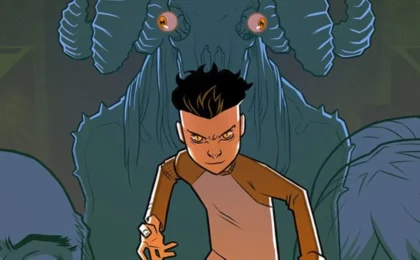
At the heart of the project lies the gripping narrative of Happy Boy. The original webtoon is a bifurcated story that explores the darker facets of human nature under duress. The first segment centers on a harrowing scenario: a group of high school students trapped within the skeleton of their collapsed school following an unforeseen, cataclysmic disaster. Through the eyes of the protagonist, Donghyun—a social outcast—the narrative delves into the psychological erosion of the students as they confront the primal fear of confinement.

The second part, titled "Pleasant Neighbors," serves as the primary inspiration for the film’s screenplay. While the first arc focuses on the immediate survival instincts of youth, "Pleasant Neighbors" expands the scope, examining how ordinary individuals undergo radical, often unsettling transformations when the veneer of civilized society is stripped away. The film aims to capture these shifting power dynamics, exploring the morality of survival and the fragility of social constructs.
A Chronology of Development
The path to Concrete Utopia has been marked by a deliberate strategy of vertical integration by Lezhin Studios.

- 2018: Lezhin Entertainment formally establishes Lezhin Studios, a dedicated film production arm, with the express purpose of translating its extensive catalog of South Korean webtoons into multimedia experiences.
- Early 2020: The studio gains momentum with the production of hit dramas such as Method and Chomi’s Interest for TVN, establishing a track record of successful narrative adaptation.
- August 5, 2020: The official announcement is made confirming the casting of Lee Byung-hun, Park Seo-joon, and Park Bo-young. This date marks the pivot from development to active pre-production.
- Late 2020: As of August 25, 2020, the project is firmly in pre-production, with the studio simultaneously juggling other major projects, including the Netflix original series Hell and the development of the film adaptation of D.P Dog’s Day.
- 2021 (Projected): Principal photography is scheduled to commence, with anticipation building for what is expected to be a benchmark production for the studio.
The Creative Powerhouse
The decision to entrust the director’s chair to Uhm Tae-hwa is widely seen as a strategic masterstroke. Known for his keen ability to weave tension and emotional depth in works like The Hidden Time and The Fighting, Uhm is uniquely positioned to handle the claustrophobic and ethically complex atmosphere of Concrete Utopia.
The cast selection further cements the film’s status as a marquee release. Lee Byung-hun, a veteran of both Korean and international cinema, brings a gravitas that is essential for the film’s exploration of power. He is joined by Park Seo-joon and Park Bo-young, two of the industry’s most bankable stars, whose involvement ensures not only high-level performances but also significant commercial appeal across domestic and international markets.

Supporting Data: The Rise of Webtoons as IP Goldmines
Lezhin Studios’ pivot to film is not an isolated trend but a reflection of the massive shift in the media landscape. With over 10 million readers worldwide, Lezhin Entertainment possesses a data-rich environment that allows them to identify stories with pre-existing, loyal fanbases.
The webtoon format, characterized by vertical scrolling and episodic cliffhangers, has proven to be an ideal laboratory for developing cinematic pacing. Unlike traditional graphic novels, webtoons are often storyboarded in a way that translates directly to cinematic sequences. By focusing on titles like Happy Boy and D.P Dog’s Day, Lezhin is effectively creating a pipeline where successful digital comics serve as the "proof of concept" for high-budget theatrical releases.

This model is increasingly supported by the participation of major distributors like Lotte Entertainment. The partnership with Lotte ensures that the production quality will meet the standards expected of a blockbuster, a necessity for a story that relies on high-stakes visuals and intense emotional drama.
Official Perspectives and Creator Intent
The creator of Happy Boy, Kim Sung Nyung, has expressed deep satisfaction with the direction the project has taken. In a recent statement, Kim noted, "I’m looking forward to seeing how the movie depicts the change people go through when placed in extreme situations and the themes of preserving one’s humanity in the process."

This statement highlights the central thesis of the film: the preservation of humanity in the face of absolute collapse. The production team is tasked with balancing the visceral, thriller-like elements of a disaster movie with the philosophical inquiries that have made the original webtoon a staple of the medium. For the studio, the goal is to create a film that is as thought-provoking as it is pulse-pounding.
Societal and Industry Implications
The production of Concrete Utopia carries significant implications for the South Korean entertainment industry:

- Validation of the Webtoon-to-Film Pipeline: The success of this project could set a new industry standard, encouraging more studios to acquire and aggressively adapt webtoons.
- Global Exportability: With streaming giants like Netflix investing heavily in South Korean content, projects like Concrete Utopia are well-positioned to reach a global audience, further solidifying the "Hallyu" wave in the cinematic arts.
- Humanizing the "Extreme" Genre: By grounding the survival narrative in the emotional arcs of characters rather than just the spectacle of disaster, the film aims to elevate the genre, moving away from simple action toward character-driven psychological drama.
- The Shift in Power Dynamics: As the industry moves toward digital-first content, the role of legacy publishers is changing. Lezhin’s model proves that the owners of the intellectual property are now, more than ever, the architects of the production landscape.
Conclusion
As 2021 approaches, all eyes are on the production of Concrete Utopia. With a high-caliber cast, a visionary director, and a source material that resonates with contemporary anxieties about societal collapse, the film is poised to be more than just an adaptation—it is a potential cultural touchstone.
By carefully balancing the intense, dark themes of Kim Sung Nyung’s work with the high-production values of Lezhin Studios, the project stands as a testament to the maturation of webtoons as a dominant force in modern storytelling. Whether it will succeed in capturing the same emotional resonance as the original remains to be seen, but the intent—to explore what remains of us when everything else is stripped away—is a timeless cinematic pursuit that promises to keep audiences on the edge of their seats.