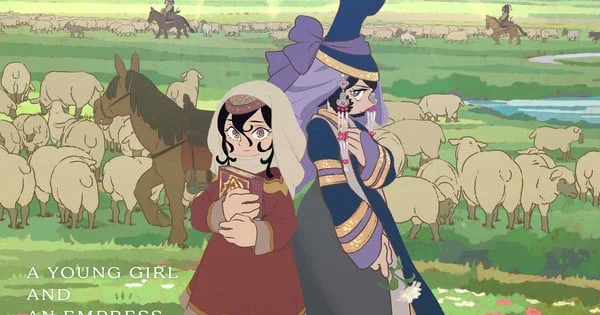
New York, NY – [Date of Publication] – In a significant move for international anime enthusiasts, Crunchyroll has announced the immediate availability of the first two English-dubbed episodes for the highly anticipated television anime adaptation, "Jaadugar: A Witch in Mongolia." This release marks a pivotal moment for the series, which is based on the critically acclaimed manga "A Witch’s Life in Mongol" by Tomato Soup. The anime, known in Japan as "Tenmaku no Jādūgaru," has already garnered significant attention for its unique premise, stunning animation, and impressive creative team.
The English dub is now accessible to Crunchyroll subscribers worldwide, offering a gateway for a broader audience to immerse themselves in the rich historical tapestry and captivating narrative of the series. This release follows the anime’s Japanese premiere on July 4th, and its subsequent international festival screenings, underscoring a strategic push to capitalize on the growing global demand for high-quality anime content.
Unveiling a World of Intrigue: The Premise of "Jaadugar: A Witch in Mongolia"
"Jaadugar: A Witch in Mongolia" transports viewers to the 13th century, a period of immense upheaval and expansion for the Yeke Mongol Ulus, the vast empire that dominated the known world. At the heart of this epic saga is Fatima, a brilliant physician hailing from Persia, a land renowned for its advanced medical and scientific knowledge. Driven by a desire to utilize her considerable skills on a grand stage, Fatima embarks on a journey that leads her to the opulent and politically charged court of the Mongols.
Her path converges with that of Töregene, the formidable sixth wife of Ögedei, the second Great Khan. Töregene, a woman of significant influence and complex emotions regarding the empire’s trajectory, becomes Fatima’s patron. The synopsis, as detailed by Yen Press, the English publisher of the manga, vividly sets the scene: "Fatima’s desire for a stage where she can put her knowledge to work has brought her to the palace of the Mongols, where she falls under the wing of Töregene, the sixth wife of Ögedei, the second Great Khan—a mighty woman with complicated feelings about the direction of the empire. These two women are the axel upon which the politics of the palace, and soon the very world, will turn…"
This central dynamic between two powerful women from disparate backgrounds, navigating the treacherous currents of imperial politics, promises a narrative rich in character development, historical intrigue, and potentially world-altering consequences. The series is poised to explore themes of cultural exchange, the clash of scientific understanding with traditional beliefs, and the often-unseen forces that shape empires.
A Stellar Creative Team Behind the Magic
The production of "Jaadugar: A Witch in Mongolia" boasts a roster of highly respected industry veterans, a testament to the project’s ambitious scope and artistic vision. Leading the directorial charge is Naoko Yamada, a celebrated filmmaker known for her emotionally resonant and visually distinctive works such as "The Heike Story," "A Silent Voice," and the recent "The Colors Within." Yamada’s involvement immediately signals a commitment to nuanced storytelling and profound character exploration.
Steering the series as director is Abel Góngora, whose recent work on projects like "DAN DA DAN" season 2, "Scott Pilgrim Takes Off," and "Star Wars: Visions" demonstrates a versatile and dynamic directorial style. The animation itself is being brought to life by the acclaimed Studio Science SARU, a powerhouse known for its fluid animation, unique artistic direction, and willingness to tackle unconventional narratives. Their previous projects, including "Devilman Crybaby" and "Keep Your Hands Off Eizouken!", have cemented their reputation as innovators in the animation landscape.
Further strengthening the creative core, Kenichi Yoshida, the renowned character designer and animation director behind iconic series like "Eureka Seven" and "Gundam: Reconguista in G," is responsible for the character designs and serves as the animation chief. This ensures a visually striking and cohesive aesthetic for the series. Overseeing the series scripts is Kanichi Katō, a seasoned writer with experience on popular titles like "Black Clover" and "The Eminence in Shadow," guaranteeing a well-paced and engaging narrative. The musical score, an integral component of any epic production, is being composed by Kōshirō Hino, adding another layer of auditory depth to the series.
A Symphony of Sound: Music and Voice Acting
The auditory experience of "Jaadugar: A Witch in Mongolia" is further enhanced by its captivating theme songs. The electrifying opening theme, "Stella," is performed by the popular Japanese band SEKAI NO OWARI, known for their distinctive blend of pop, rock, and electronic influences. Complementing this is the evocative ending theme, "Hoshi" (Star), delivered by the critically acclaimed artist Queen Bee, whose powerful vocals and unique artistic flair are sure to leave a lasting impression.
While the specifics of the English voice cast were not fully detailed in the initial announcement, the availability of a dubbed version on Crunchyroll is a significant step towards making the series accessible to a global audience. The quality of the dub will undoubtedly play a crucial role in how the nuanced performances of the Japanese cast are translated and interpreted for international viewers. Fans will be eager to learn about the actors who will bring Fatima, Töregene, and the rich supporting cast to life.
A Journey Through Festivals and Screenings: The Road to Global Release
The path of "Jaadugar: A Witch in Mongolia" to its international debut has been marked by a series of high-profile screenings and festival appearances, building anticipation and critical acclaim. The anime had its world premiere screening of the first three episodes on June 13th at United Cinemas Aqua City Odaiba, offering early audiences a glimpse into its grandeur.
Its international recognition was further cemented with a screening in competition at the prestigious Annecy International Animation Film Festival in France, a globally renowned event for animated cinema. This inclusion in a competitive category speaks volumes about the artistic merit and potential impact of the series. More recently, Anime Expo, a cornerstone event for anime fans in the United States, hosted the U.S. premiere screening of the anime on July 3rd, generating considerable excitement within the American anime community.
The original Japanese broadcast began on July 4th within the "IMAnimation W" programming block on TV Asahi and its affiliated channels, as well as on BS Asahi. The premiere was a special one-hour event featuring the first two episodes, setting a strong narrative foundation from the outset. Crunchyroll’s simultaneous streaming ensures that fans across the globe can follow the series as it unfolds.
From Critically Acclaimed Manga to Animated Spectacle
The anime’s success is deeply rooted in the critical and commercial triumph of its source material, the "A Witch’s Life in Mongol" manga by Tomato Soup. Launched on Akita Shoten’s "Souffle" website in September 2021, the manga quickly garnered a dedicated following and significant critical praise. Yen Press has been instrumental in bringing this compelling narrative to English-speaking audiences, publishing the manga and further expanding its reach.
The manga’s impact is underscored by its consistent presence in prestigious rankings and awards. It notably topped the "Kono Manga ga Sugoi!" 2023 rankings for female readers, a significant indicator of its appeal and storytelling prowess. It also secured a #11 ranking in the 2024 edition of the same list, demonstrating sustained popularity. Furthermore, the manga received nominations for the esteemed Manga Taisho Awards in both 2023 and 2024, a testament to its artistic merit and narrative depth. Its international recognition extended to a nomination for the Best New Manga category in the second American Manga Awards. Most recently, the manga was honored with the grand prize in the Comic division of the 55th Japan Cartoonists Association Awards, a prestigious accolade within the Japanese manga industry.
The manga’s publication journey has also seen various phases, including simultaneous serialization in Akita Shoten’s "Mystery Bonita" magazine. It was initially published bimonthly before going on hiatus for the creator’s maternity leave. The series has since resumed its publication, ensuring that fans of the manga can continue to follow Fatima’s story.
Implications for the Future of Historical Anime and Global Distribution
The robust international rollout of "Jaadugar: A Witch in Mongolia," spearheaded by Crunchyroll’s English dub release, has significant implications for the future of historical anime and global content distribution. The success of this series could pave the way for more niche or historically focused anime to find a wider audience internationally.
The strategic decision to prioritize an English dub from the outset indicates a growing understanding of global market demands. While some anime fans prefer original Japanese audio with subtitles, a high-quality dub significantly broadens accessibility, particularly for viewers who may not be as accustomed to reading subtitles for extended periods or for younger audiences. This approach aligns with Crunchyroll’s mission to be a central hub for anime worldwide, catering to diverse viewing preferences.
Furthermore, the anime’s strong foundation in a critically acclaimed manga, coupled with its festival success, provides a solid base for its international reception. The narrative’s exploration of historical events through the lens of compelling female characters offers a unique selling point that can resonate with a diverse demographic. As the anime industry continues to expand its global footprint, "Jaadugar: A Witch in Mongolia" stands as a prime example of how well-crafted storytelling, exceptional animation, and strategic distribution can unite audiences across cultural and geographical boundaries. The series is not just an anime; it’s a potential bridge to understanding different historical eras and the enduring power of human stories.