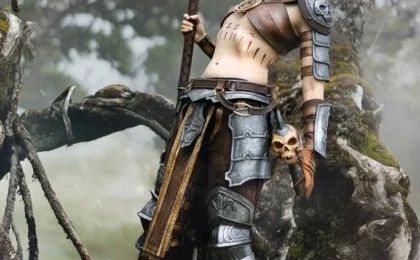

Since the global phenomenon of Genshin Impact launched in 2020, the game has redefined the standard for character design in the digital age. Among its most iconic figures is Beidou, the formidable Captain of the Crux Fleet and protector of Liyue. When HoYoverse reached out to renowned prop-maker and costume designer Svetlana Quindt—better known in the global community as Kamui Cosplay—to bring this seafaring warrior to life, the result was more than just a costume; it was a masterclass in modern artisanal engineering.

Over the course of an intensive eight-week production cycle, Quindt and her partner, Benni, transformed a digital 3D model into a wearable, high-fidelity suit of armor and regalia. This article explores the technical precision, artistic vision, and logistical hurdles required to translate one of Liyue’s most beloved characters into the physical world.

The Foundation: Digital Research and Patterning
In the modern era of cosplay, the barrier between digital art and physical textiles is thinning. Quindt’s journey began not with needles, but with data. Utilizing the Games Fashion Archive, which hosts high-fidelity 3D models of video game assets, the team meticulously studied the intricacies of Beidou’s outfit.

The primary challenge in recreating Genshin Impact characters lies in the "deceptive simplicity" of their designs. While they appear streamlined in-game, the actual construction of the garments requires complex tailoring to maintain mobility while achieving the silhouette of a warrior.

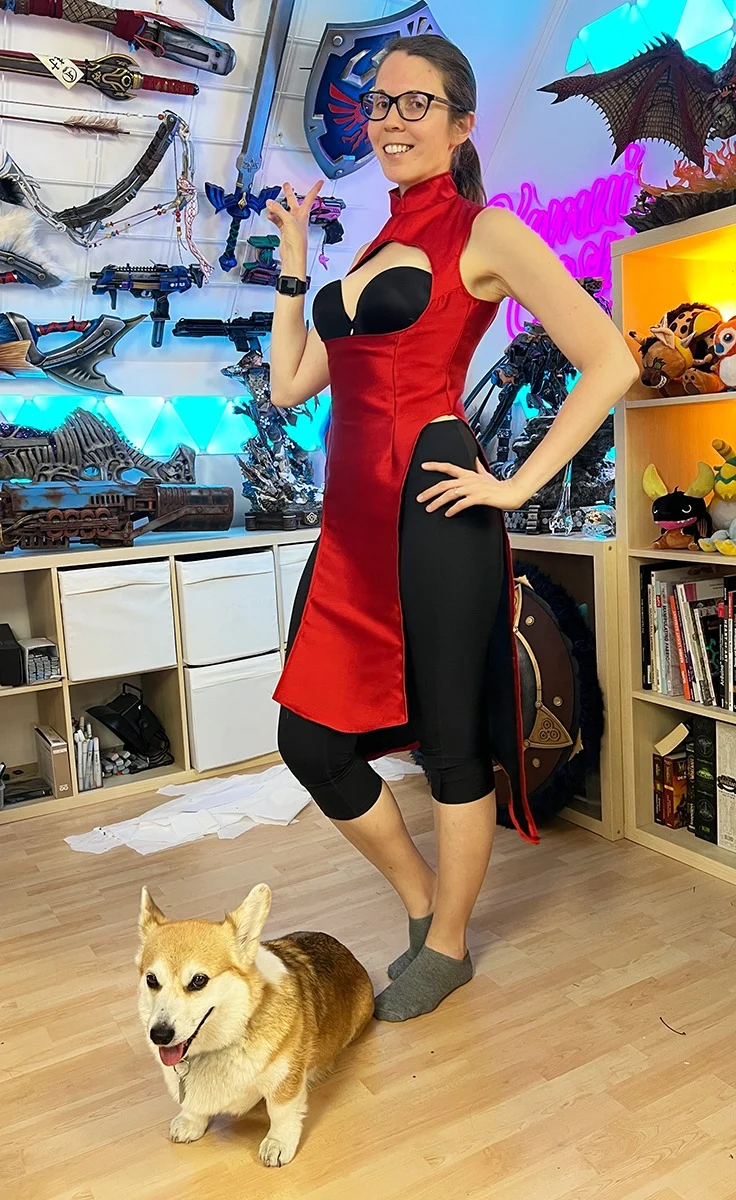
For the base dress, Quindt employed the "duct tape pattern" technique. This traditional method involves wrapping the subject in duct tape, drawing the desired seam lines directly onto the body-form, and then cutting the shell away to create a custom-fit template. This ensures that the garment conforms to the wearer’s proportions, a critical factor for long-duration wear at high-traffic conventions like Gamescom.

Chronology of Construction: An Eight-Week Sprint
The project was divided into distinct phases, each requiring specialized equipment and material sourcing.

Phase 1: Textile Engineering (Weeks 1-3)
After establishing the patterns, the search for the perfect fabric began. Eschewing the convenience of online mass-market fabric stores, Quindt prioritized local brick-and-mortar vendors in Düsseldorf. She opted for a heavy, shimmering silk that offered the weight and texture necessary to capture the premium aesthetic of a Captain’s attire.

The assembly was handled by two professional-grade Brother sewing machines. While Quindt emphasizes that the quality of the sewing machine is secondary to the quality of the pattern, her efficiency was bolstered by the use of a professional dress form. To add depth to the costume, she opted for hand-stitched purple lining throughout the dress and cape, prioritizing the clean, invisible aesthetic of bespoke tailoring over rapid machine stitching.

Phase 2: The Fusion of Digital and Physical (Weeks 4-6)
A standout feature of Beidou’s design is the intricate, ornate detailing on her armor and accessories. To meet their production deadline, the team utilized a Flux laser cutter to process vinyl and foam elements. By creating vector files from the original game assets, they were able to achieve surgical precision on the golden accents that define the character’s look.

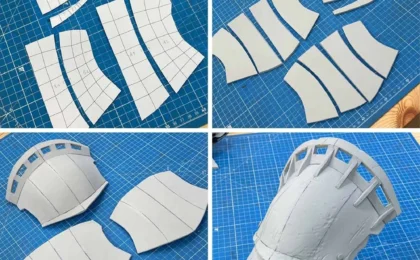
Simultaneously, the structural elements—the silver and gold metallic details—were 3D printed. Working with files provided by Dangerous Ladies, the team spent two weeks running two Zortrax M200 printers continuously. This phase highlights the modern "hybrid" approach to cosplay: using FDM (Fused Deposition Modeling) printers for large, lightweight structural props, and reserving manual craft for the delicate finishing touches.

Phase 3: Assembly and Finishing (Weeks 7-8)
The final stage focused on the "Blackcliff Slasher," Beidou’s signature claymore. The sword was a massive engineering undertaking. Following a scaling test with a paper dummy to ensure it didn’t overwhelm the wearer’s frame, the sword was printed, sanded, primed, and painted using a combination of airbrushing and traditional acrylic techniques.

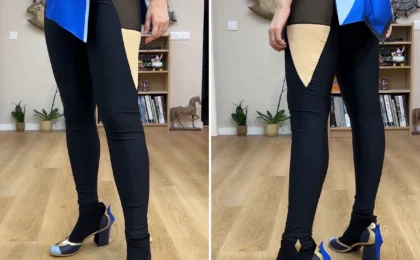
The project concluded with the integration of specialized materials. Quindt utilized "Ultrapreme," a high-stretch pleather, for the gloves and tights, ensuring that the costume could endure the physical strain of movement without tearing.

Supporting Data: Tools of the Trade
The success of this project relied on a specific set of tools and materials that have become standard in professional-grade cosplay production:

- Adhesives: The project relied heavily on Guetermann HT2 fabric glue, a staple in Quindt’s workshop for over a decade. Its versatility allows for the bonding of fabric to foam, which is essential for the armor-textile hybrid parts of the costume.
- Wig Styling: Collaboration with professional wig artist Florence from Bakka Cosplay allowed for a complex hairstyle that remained durable through the rigors of convention floors.
- Accessibility Modifications: A critical and often overlooked aspect of this build was the decision to "mirror" the character’s design. Due to a visual impairment in her right eye, Quindt requested—and received—approval from HoYoverse to flip the character’s design, including the eyepatch and hair accessories. This allowed her to keep her "good" eye unobstructed, prioritizing safety and comfort without compromising the visual integrity of the character.
Official Responses and Industry Impact
While the Genshin Impact developers, HoYoverse, rarely comment on individual fan projects, the commissioning of professional creators like Kamui Cosplay represents a shift in how game companies engage with their communities. By supporting and highlighting the effort involved in professional-grade cosplay, companies are effectively validating the "cosplay economy"—the ecosystem of 3D printing, prop-making, and textile artistry that has grown around their intellectual properties.

The use of Unreal Engine to create a virtual, high-fidelity backdrop for the final photo shoot represents the next frontier in the medium. By combining real-world photography with digital environment rendering, creators can now "transport" their characters into the game world, effectively merging the two mediums of video games and physical costume art.

Implications for the Future of Cosplay
The Beidou project serves as a case study for the professionalization of the cosplay hobby. Several key takeaways emerge for both aspiring and veteran creators:

- The Shift to Digital Workflow: The use of 3D printing and laser cutting is no longer a luxury but a necessity for projects of this scale. The ability to work with vector files and 3D models significantly reduces manual error and allows for a level of detail that would be nearly impossible to achieve by hand.
- The Importance of "Ready-to-Wear" Engineering: By focusing on the structural integrity of items like the tights and the shoes (using two separate pairs of footwear for durability and aesthetics), Quindt highlights that a costume is a functional piece of clothing, not just a static sculpture.
- Community and Collaboration: No project of this magnitude exists in a vacuum. The involvement of specialized 3D artists, wig stylists, and technical partners underscores that professional cosplay is an ensemble effort.
Ultimately, the eight weeks of labor invested into this version of Captain Beidou demonstrate that the value of a costume is not solely in its appearance, but in the engineering, problem-solving, and sheer technical stamina required to build it. Whether one chooses to craft a costume from scratch or purchase a pre-made version, the work of creators like Kamui Cosplay continues to raise the bar, pushing the boundaries of what is possible when human creativity meets digital imagination. As the industry evolves, the intersection of software (Unreal Engine, 3D modeling) and hardware (laser cutting, 3D printing) will undoubtedly define the next decade of cosplay history.