

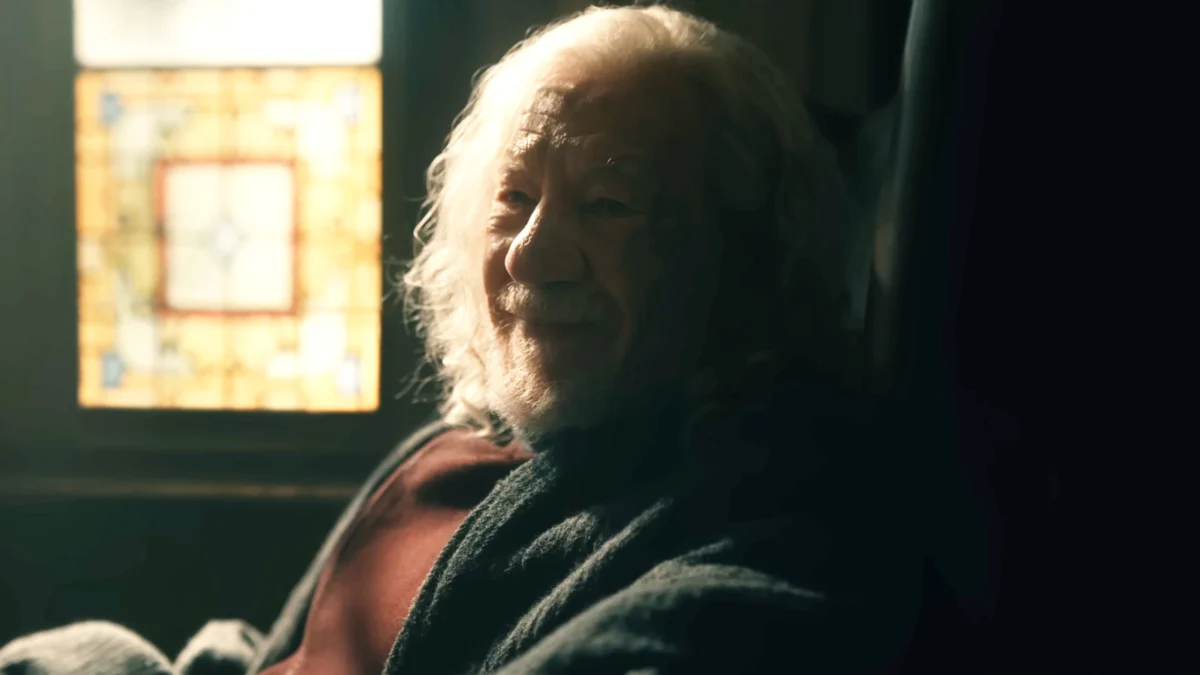
It is one of the great ironies of modern pop culture: Sir Ian McKellen, a man who once dismissed the entire medium of film as "despicable" and "insulting," is now an indelible fixture of the world’s most massive cinematic universes. As the industry prepares for his return to the role of Magneto in the highly anticipated Avengers: Doomsday, it is worth reflecting on a time when the legendary British thespian considered the camera his greatest artistic adversary.
The Foundations of a Stage Titan
To understand McKellen’s early disdain for film, one must first understand his devotion to the theater. Born in 1939 in Burnley, Lancashire, McKellen’s formative years were defined by the intimacy of the stage. He did not merely act; he studied the craft of live performance with the rigor of a scholar.
By 1961, when he made his professional debut in A Man for All Seasons at the Belgrade Theatre, the foundation for his lifelong philosophy was laid. For McKellen, acting was a communal, breathing experience. It was the immediate feedback of the audience, the nuance of a live monologue, and the physical presence of a performer in real-time that defined "true" art. Throughout the 1960s and 70s, his work in Shakespearean roles—most notably Richard II and Edward II—cemented his reputation as a master of the stage. During these decades, he viewed the film industry with a healthy dose of professional skepticism, seeing it as a fragmented, technician-driven process that stripped the actor of their autonomy.
The 1991 Controversy: "The Worst of All"
The friction between McKellen’s theatrical ideals and the realities of film production reached a breaking point in the early 1990s. In a 1991 issue of Cable Guide, a publication that documented the landscape of British television and film, McKellen famously launched a scathing critique of the medium.
"Films are absolutely the worst of all," he stated. "The actor is never told anything. It is so insulting, so rude, and so despicable."
At the time, this was not viewed as a controversial "hot take" by his peers, but rather a reflection of the frustration felt by many classically trained actors transitioning into the erratic, stop-start nature of film sets. On stage, an actor owns their performance from the curtain rise to the final bow. In film, the actor is a piece of a puzzle—often filmed out of sequence, beholden to the editor’s cut, and subject to the whims of lighting technicians and directors. For a man who had mastered the art of the sustained performance, the cinematic process felt like a dilution of his craft.
A Career in Transition: From Shakespeare to Superheroes
The transition from stage purist to blockbuster icon was not immediate. It was a gradual erosion of his skepticism, catalyzed by a string of roles that challenged his perceptions of what film could achieve.
The Mid-90s Pivot
By the mid-1990s, McKellen began appearing in more prominent Hollywood productions, such as Six Degrees of Separation (1993), Last Action Hero (1993), and the cult classic The Shadow (1994). His performance in the 1995 film adaptation of Richard III proved to be a pivotal bridge; by transposing his legendary stage performance into a modern, cinematic setting, he demonstrated that the intensity of theater could indeed survive the lens of a camera.
The Turn of the Millennium: Global Stardom
The true shift occurred at the turn of the millennium, when two massive franchises fundamentally altered his career trajectory: X-Men (2000) and The Lord of the Rings: The Fellowship of the Ring (2001). As Magneto and Gandalf, McKellen brought a Shakespearean gravity to fantasy and comic book genres, elevating the material and proving that these "popcorn" movies were capable of profound emotional resonance. He did not just join the blockbuster machine; he gave it a soul.
The Implications of "Avengers: Doomsday"
Now, as we look toward the release of Avengers: Doomsday, the narrative has come full circle. The man who once called film "despicable" is set to reprise his role as the master of magnetism, Erik Lehnsherr.
This return is significant not just for the Marvel Cinematic Universe, but for the legacy of the character itself. McKellen’s presence in Doomsday represents a convergence of classical prestige and modern spectacle. Industry analysts suggest that his return is a strategic move by Marvel to ground the multiversal chaos of the film in a performance of genuine gravitas.
Interestingly, rumors have swirled regarding the extent of his character’s impact in the upcoming sequel. McKellen himself has hinted at the destructive power his character might unleash, with some fan theories suggesting he could play a role in the cataclysmic events that shape the film’s narrative. Regardless of the specifics, his involvement confirms that the "stage snob" of 1991 has fully embraced the power of the cinematic medium, acknowledging its capacity for scale and reach that the stage simply cannot replicate.
Why Actors Evolve: The Technical vs. The Creative
McKellen’s evolution provides a fascinating case study for the acting profession. What changed between 1991 and the present day?
- Collaborative Evolution: Film sets have become more actor-friendly, with directors often working more closely with performers to maintain continuity of character across fragmented shooting schedules.
- Cultural Shift: The distinction between "high art" (theater) and "pop culture" (film) has largely dissolved. The most talented actors of the 21st century move fluidly between the West End, Broadway, and the multiplex.
- The Legacy Factor: Through film, McKellen has reached audiences in the billions—an impossible feat for any stage play. The permanence of his performances in The Lord of the Rings and X-Men has ensured his place in the cultural canon for generations to come.
Conclusion: A Master of All Mediums
Sir Ian McKellen’s journey from a critic of the cinematic medium to its most celebrated statesman is a testament to the growth of an artist. While he remains a creature of the theater at heart—constantly returning to the boards to hone his craft—he has mastered the very medium he once feared.
As he prepares to step back into the helmet of Magneto, audiences are reminded that the best performers are those who are never truly satisfied with their current boundaries. McKellen’s career proves that while theater may be the home of the actor, cinema is the playground of the icon. Whether he is reciting Shakespeare in the Old Vic or manipulating metal on the big screen, his commitment to the truth of a character remains constant. The industry, and the audience, are all the better for his change of heart.









No comments yet. Be the first to join the conversation!