In a landmark move that signals the intensifying global competition for animation production capacity, the Oscar-winning visual effects and animation giant DNEG has officially announced the acquisition of Anima Kitchent, a premier studio based in Spain’s Canary Islands. This strategic merger marks a significant milestone in the consolidation of Europe’s animation landscape, positioning the Canary Islands as a central pillar in the international high-end production pipeline.
The deal, while shrouded in the typical nondisclosure agreements regarding specific financial valuations, is underpinned by a robust €24.9 million ($28.8 million) investment from SETT, Spain’s state-backed technology investment vehicle. This capital infusion is earmarked to supercharge production capabilities, accelerate the development of original intellectual property (IP), and facilitate an aggressive recruitment drive within the archipelago’s rapidly maturing animation sector.
The Strategic Rationale: Why the Canary Islands?
The Canary Islands have long been hailed as a "best-kept secret" for production, but the secret is now firmly out. Over the past decade, the region has cultivated a reputation as a powerhouse for both VFX and animation, driven by one of the most competitive incentive frameworks in the world.
For a company of DNEG’s stature—responsible for high-profile hits like Nimona, The Garfield Movie, and the upcoming Bad Fairies—the move is as much about logistics as it is about creative infrastructure. The regional government offers tax credits of up to 54% on the first €1 million of eligible expenditure, and 45% thereafter, capped at €36 million ($41.8 million) per feature film. For television series, the cap stands at €18 million ($20.9 million) per episode.
These fiscal incentives, combined with a decade of concerted government effort to build a local talent pool, have transformed the islands into a thriving hub. According to local officials, the regional animation workforce now exceeds 2,000 skilled professionals, a demographic shift that has attracted heavy-hitting players from across the Atlantic and mainland Europe.
Chronology of Growth: From Boutique to Global Hub
The emergence of the Canary Islands as a top-tier animation destination was not an overnight occurrence; it was the result of a deliberate, decade-long strategy.
- Early 2010s: The regional government begins to aggressively market the islands as a film-friendly zone, introducing specific tax incentives to lure service production work.
- Mid-2010s: Local studios, including the nascent Anima Kitchent, begin to establish themselves, moving beyond simple service work to create their own original digital-native brands.
- Late 2010s: The "cluster effect" takes hold. As major international productions arrive to take advantage of tax credits, a symbiotic relationship develops between local talent and global workflows.
- 2023–2025: The shift from small-scale service provision to high-end, long-form content production becomes the norm, as studios like Anima Kitchent prove their ability to manage complex international pipelines.
- June 2026: DNEG officially enters the market, signaling the maturation of the region from a "production-for-hire" locale to a strategic node in the global animation chain.
The Role of Anima Kitchent: A Proven Success Story
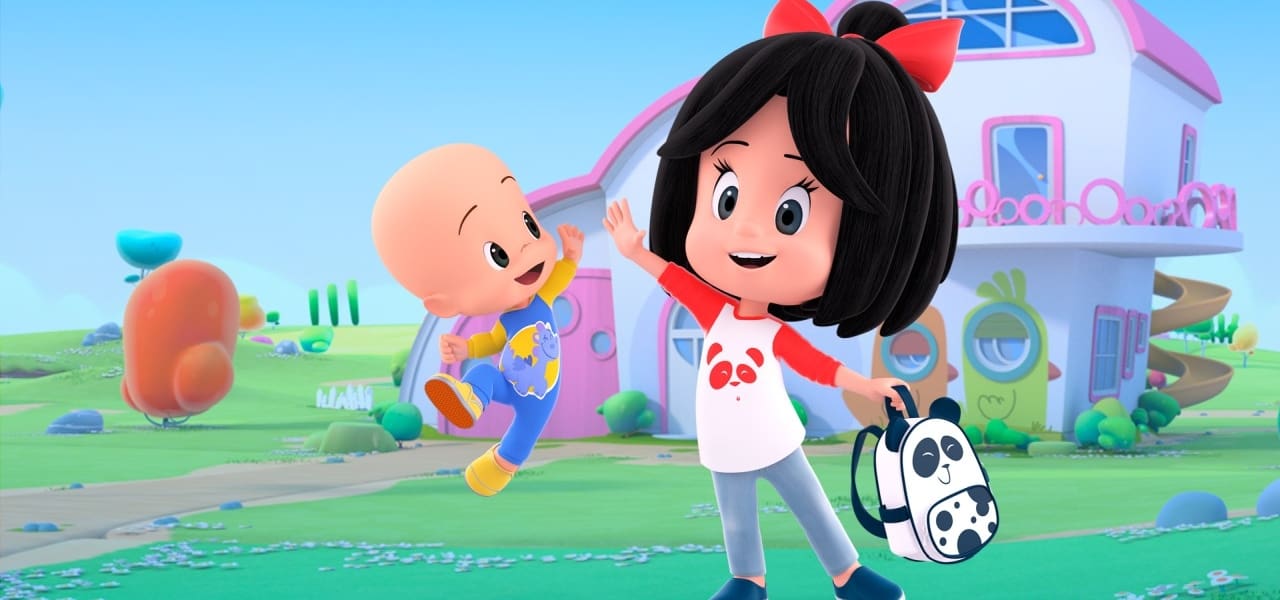
Anima Kitchent has functioned as a beacon of Spanish animation success. With a current headcount of approximately 170 employees, the studio has built a formidable reputation in the children’s entertainment sector. Their work on Cleo & Cuquín serves as a case study in how to leverage digital-native content to reach global audiences.
By folding Anima Kitchent into its operations—specifically under the umbrella of ReDefine Originals, DNEG’s dedicated content division—DNEG is not just buying equipment and office space. They are acquiring a proven workflow and a creative culture that has already mastered the art of high-volume, high-quality production. The expansion plan supported by the SETT investment is ambitious: stakeholders project the studio could grow to between 500 and 1,000 employees in the coming years, potentially making it one of the largest single-site animation employers in Europe.
Implications for the Global Animation Industry
The acquisition serves as a bellwether for the future of the animation industry. Several key implications emerge from this transaction:
1. Diversification of Production Pipelines
DNEG is clearly moving beyond its traditional reputation as a pure-play VFX house. By leveraging ReDefine Originals, the company is positioning itself as a vertically integrated entity capable of handling everything from early-stage concept development to final render and distribution. This reduces reliance on third-party service contracts and grants the company greater creative control over its output.
2. The Decentralization of Talent
For years, the animation industry was concentrated in cities like Los Angeles, London, Paris, and Vancouver. The DNEG-Anima Kitchent deal illustrates the successful decentralization of these high-skilled roles. By setting up shop in the Canary Islands, DNEG can tap into a lower cost-of-living region while maintaining the high standards required for global studio partnerships.
3. The "IP-First" Strategy
The trend toward original IP development is accelerating. As streaming services and major studios demand unique, proprietary content, the ability to build and own intellectual property is becoming the most valuable asset a studio can possess. Anima Kitchent’s existing catalog provides DNEG with a ready-made pipeline of properties that can be scaled or adapted for global markets.
.png)
Supporting Data and Market Dynamics
To understand the scale of this investment, one must look at the macro-economic conditions of the animation sector. The demand for animated content remains at an all-time high, spurred by the insatiable requirements of global streaming platforms.
| Metric | Context |
|---|---|
| Workforce Size | ~2,000 animation professionals currently in the Canary Islands |
| Tax Incentive | Up to 54% on the first €1M in spend |
| Projected Growth | 3x to 5x headcount increase for Anima Kitchent via DNEG |
| Sector Focus | Long-form, high-end animation features and series |
The involvement of SETT (the state-backed technology investment vehicle) is particularly telling. It represents a "Triple Helix" approach: the collaboration of government policy, academic/vocational training, and private enterprise. By underwriting the growth of the studio, the Spanish government is effectively betting that the animation industry will serve as a long-term engine for economic growth, high-value employment, and international brand prestige for the Canary Islands.
Official Responses and Industry Outlook
While DNEG has been tight-lipped regarding the specific mechanics of the deal, the industry sentiment is overwhelmingly positive. Analysts suggest that this is a "win-win-win" scenario.
- For DNEG: It secures a low-cost, high-efficiency production hub that is well-integrated into European labor laws and tax incentives, allowing them to remain competitive against other global VFX/animation houses.
- For Anima Kitchent: It provides the "scale-up" capital necessary to compete on a global stage, ensuring that their local talent is utilized on Tier-1 international projects.
- For the Canary Islands: It cements their status as a global leader in the digital economy, moving beyond tourism-based models and into the high-tech, creative industries.
"The expansion represents a turning point," noted one industry insider. "It’s no longer just about where you can find the cheapest labor; it’s about where you can find the best combination of talent, infrastructure, and fiscal support. The Canary Islands have managed to package all three."
As the animation industry continues to navigate the complexities of AI integration, labor cost fluctuations, and changing distribution models, the DNEG-Anima Kitchent partnership stands as a blueprint for the future. By anchoring itself in a region that has successfully fostered a collaborative and incentivized ecosystem, DNEG is well-positioned to maintain its dominance in the competitive world of global animation production.
Looking forward, the industry will be watching closely to see how the integration of these two entities proceeds. If successful, the model of combining international corporate muscle with regional talent hubs is likely to be replicated across other emerging European production centers, fundamentally altering the map of the global animation business.