Sagoh
Sagoh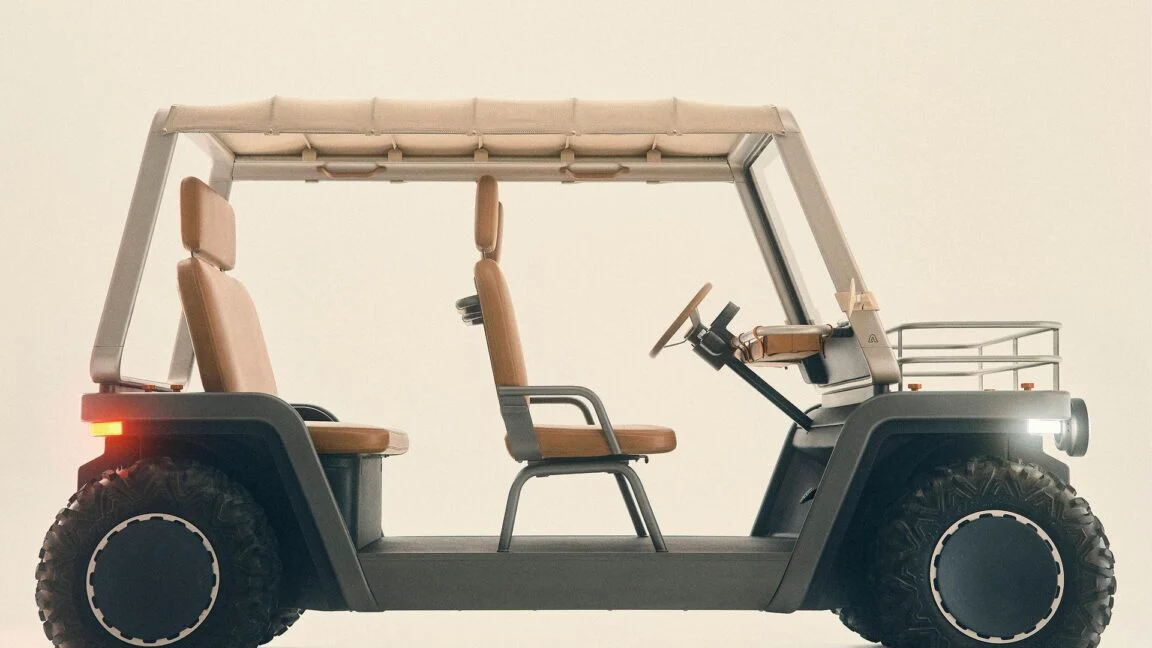
For decades, the automotive industry has operated under the assumption that bigger is better. As safety regulations tightened and consumer demand for "do-it-all" SUVs exploded, the average passenger vehicle has grown in both weight and footprint. Yet, a quiet shift is occurring in the mobility sector—a recognition that the gargantuan, high-tech crossover parked in your driveway is likely overkill for 90 percent of your daily errands.
Enter Amble, a startup betting that the future of personal transport isn’t a 6,000-pound electric SUV, but a refined, purpose-built, and distinctly "lunar-inspired" supermini. With the launch of the Amble One and plans for a more conventional successor, the company is attempting to prove that the second car in a household doesn’t need to be a compromise—it can be a lifestyle upgrade.
The Core Concept: The Amble One and the "Second Car" Thesis
The Amble One is a study in modularity. Eschewing the complex, over-engineered nature of modern luxury EVs, the One is designed to be configurable from the moment of purchase. Its rear seats fold completely flat, turning the vehicle from a passenger transport into a cargo hauler. For urbanites who prioritize utility over passenger capacity, the company offers a lockable front box that replaces the standard basket, providing a secure solution for groceries or daily gear.
While current iterations eschew hard doors—opting for an open-air, buggy-like aesthetic—the company is already testing a canvas weatherproofing option. This represents a pragmatic approach to design: building for the reality of short-distance, low-speed travel rather than the unrealistic expectations of highway-bound commuters.
Amble’s founder, Roose, posits a provocative question: "Most families do not need twice that $50,000 BYD or Tesla. The second vehicle for families could be something that is designed for purpose, designed for shorter trips—and that can be much simpler, way more fun, way more open, and also more affordable."
Chronology: From Concept to Reality
The trajectory of Amble’s development is deliberate, mirroring the "land and expand" strategy favored by successful technology startups.
- 2024-2025: Conceptualization and prototype refinement. The focus is on creating a premium "halo" effect by positioning the brand within the luxury hospitality sector.
- 2026: Continued pilot testing and manufacturing setup. The company focuses on securing supply chain logistics to ensure quality control for its niche, premium launch.
- Mid-2027: First hospitality deliveries. High-end resorts, including Amangiri in Utah and Six Senses Les Bordes, begin integrating the Amble One into their guest transport fleets.
- 2028: Consumer preorders in Europe and the United States open, with initial deliveries expected to reach the public.
- 2029 (Targeted): The launch of the "Amble Two." This second platform is designed to bridge the gap between the radical, open-air Amble One and conventional automotive standards. It will feature a lower roofline, a hardtop, and removable doors, explicitly targeting the "second car" slot in affluent households.
Market Context: Learning from the Failures of Micromobility
The history of urban micromobility is littered with the wreckage of companies that tried to disrupt the commute too quickly. Many firms attempted to flood dense city centers with shared scooters or low-speed pods, only to be crushed by regulatory hurdles, vandalism, and poor user adoption.
Amble’s leadership, including Hoenig, is acutely aware of these pitfalls. "A lot of companies in micromobility start in the urban market and want to compete with everyone, and we all know that this did not work out so far," Hoenig notes. "We’re taking a different approach: build our brand as a premium brand, and then step by step go more into this urban market."
By starting in the "walled gardens" of luxury resorts—where the environment is controlled, the user base is affluent, and the aesthetic appeal is a key selling point—Amble is building brand equity before it ever has to navigate the treacherous regulatory landscape of city streets.
Competitive Landscape: The Citroën Ami and Beyond
Amble is not the only player looking at the sub-compact space. The Citroën Ami has already carved out a significant niche in Europe. With a 28-mph top speed and a 46-mile range, the Ami is the quintessential "city bubble." Stellantis, the parent company of Citroën, recently announced plans to significantly expand production capacity for its supermini line in Morocco, signaling that the "micro-EV" sector is finally hitting an inflection point.
However, Amble differentiates itself through design language and brand positioning. While the Ami is often viewed as a utilitarian appliance—a motorized tricycle for the masses—Amble is leaning into the "luxury buggy" aesthetic. It aims to capture the spirit of the iconic beach cars of the 1960s, modernized for the electric era.
Financials and Order Books
For a startup, momentum is measured in contracts, not just prototypes. According to Roose, Amble has already secured 12 signed clients, representing over 500 committed vehicles. This has translated into more than 10 million euros in signed revenue.
The list of clients reads like a "who’s who" of high-end travel:
- Amangiri, Utah: A desert sanctuary where an open-air, rugged-yet-refined EV fits the landscape perfectly.
- Mustique Island: A private Caribbean island where the Amble One’s footprint and zero-emissions profile are major assets.
- Six Senses Les Bordes, France: A luxury estate in the Loire Valley.
- Na Praia, Comporta: A coastal destination that values the vehicle’s "open" design.
With a starting price of $25,000 for the consumer version in 2028, Amble is positioning itself as a premium, rather than a budget, alternative. This high entry price is a strategic choice: it ensures that the brand remains aspirational while providing the margins necessary to scale production without the immediate pressure of massive volume requirements.
Implications: The Death of the "Second ICE Car"
The most significant implication of the Amble strategy is the potential displacement of Internal Combustion Engine (ICE) second cars. Currently, many households keep a second, older, or less-efficient vehicle "just in case" they need to make a trip to the hardware store or pick up the kids.
If Amble succeeds, it could fundamentally alter the composition of the suburban garage. By offering a vehicle that is "way more fun, way more open, and also more affordable" than a traditional subcompact, they aren’t just selling a car; they are selling a shift in behavior.
The "Amble Two" is the real pivot point. By moving toward a "conventional-car" format—hardtop, more rigid structure, easier access—the company is effectively telling the consumer: "You don’t need a second SUV. You need a tool that is perfectly calibrated for the 90 percent of your driving that happens within a 10-mile radius."
Conclusion: A New Direction for Urban Mobility
Is the world ready to ditch the second sedan in favor of a lunar-inspired, ultra-compact electric vehicle? The challenges remain substantial. Infrastructure for charging, the complexities of highway safety regulations, and the deeply ingrained habit of "bigger is safer" will be difficult hurdles to clear.
Yet, as cities become more congested and the cost of owning and maintaining large, complex vehicles continues to rise, the appeal of the Amble approach grows. It is a calculated, premium-first gamble that acknowledges the limitations of the past while embracing a simpler, more agile future. If the company can deliver on its 2027 and 2028 milestones, it might just prove that the most luxurious way to move around is to stop trying to conquer the road and start enjoying the ride.
For now, the orders are signed, the resorts are waiting, and the design vision is clear. The Amble One isn’t just a car; it is a manifesto for a lighter, more intentional way of traveling.


 Ali Ikhwan
 Lina Hope