Ali Ikhwan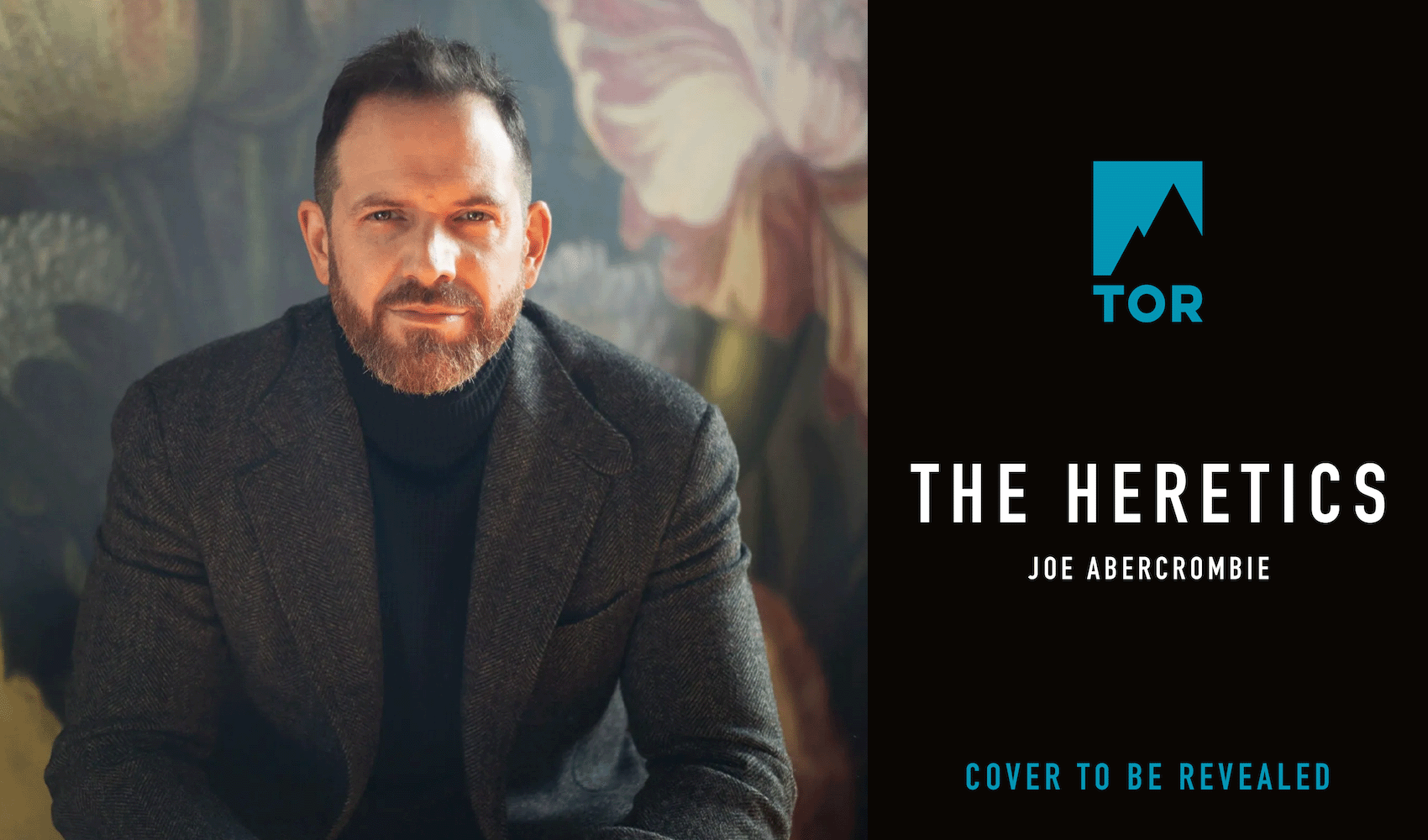
The literary world is bracing for a return to the visceral, morally ambiguous, and darkly comedic landscape of Joe Abercrombie’s The Devils universe. Tor Books has officially announced that the highly anticipated sequel, The Heretics, is scheduled for release on May 11, 2027. Fans of the “Grimdark” subgenre, which Abercrombie helped define, can expect a hardcover edition that serves as both a gripping narrative and a collector’s piece, featuring four-color illustrated endpapers, a detailed family tree, foil case stamping, and immersive full-page interior illustrations.
As the release date approaches, anticipation is reaching a fever pitch. To sate the appetites of his massive global readership, Abercrombie has provided a tantalizing, albeit harrowing, excerpt from the opening chapters, showcasing the precise blend of bureaucratic absurdity and sudden, brutal violence that has become his signature.
A Legacy of Rot: The World of Zeitz
The preview introduces readers to Hugo von Klotz, a man whose ambition is as vast as his current circumstances are wretched. Stationed at the Bridge of Martyrs in the decaying town of Zeitz, Hugo is a character defined by the "traditions and routines" of a life spent waiting for an inheritance that seems perpetually out of reach.
The setting is quintessentially Abercrombie: a place where art is "overwrought," roofs are "draughty eyesores," and the social order is built on a foundation of crumbling stone and long-dead saints. Hugo, the junior member of the von Klotz clan, views his life through the lens of a future Margrave, even as he spends his days acting as a glorified, underpaid constable, policing a bridge that serves as a conduit for trade, misery, and rumor.
The Anatomy of an Incident
The chronology of the provided excerpt offers a masterclass in tension. It begins with a seemingly mundane encounter between Hugo and Hoffman, a local pedlar. Their dialogue highlights the pervasive paranoia of the setting, where political instability in Prussia and Bavaria has left the common folk searching for scapegoats. The conversation quickly turns to the occult, with Hoffman reporting a corpse fished from the river—a body marked with runes, suggesting the work of "Black Art."
Hugo’s reaction—a weary, cynical dismissal of superstition—serves to ground the reader in his worldview. He views the "witch hunts" not as a supernatural threat, but as a convenient tool for corrupt magistrates to secure promotions. However, the mundane gives way to the catastrophic when Hugo is confronted by his cousin, Konrad.
The interaction escalates from petty verbal abuse to a fatal physical confrontation. In a moment of impulsive rage, Hugo shoves Konrad, resulting in a fall that appears to end in the cousin’s death. What follows is a dark, frantic sequence of events as Hugo attempts to conceal his culpability. In a chilling act of pragmatism, Hugo carves runes into the forehead of his dead cousin to mimic the "witch’s work" discussed earlier, framing the accident as a ritualistic murder.
Supporting Data: The Craft of Abercrombie
To understand why The Heretics is generating such significant buzz, one must look at the trajectory of Joe Abercrombie’s career. Since the 2006 debut of The Blade Itself, Abercrombie has moved away from traditional high-fantasy tropes, favoring psychological realism and a cynical examination of power structures.
- Psychological Depth: Abercrombie’s academic background in psychology is evident in his character work. Hugo von Klotz is not a hero or a villain in the classical sense; he is a product of his environment, a man who believes "it’s essential to picture oneself as one wishes to be," even if that picture is built on the corpses of his kin.
- Thematic Consistency: Throughout his bibliography—from the First Law trilogy to the Age of Madness—Abercrombie has consistently explored the "wearying routines" of life. Whether in a war-torn kingdom or a claustrophobic tower, his characters are almost always struggling against the weight of expectations and the crushing gravity of their own worst impulses.
- Production Quality: The decision by Tor Books to include a "full-page interior illustration" and an "illustrated family tree" suggests that The Heretics will be a dense, lore-heavy volume. Given the complexity of the familial squabbles in the excerpt, these visual aids will likely prove essential for readers attempting to navigate the tangled lines of succession within the von Klotz family.
Official Perspectives and Industry Reception
While official press releases from Tor Books focus on the technical specs of the hardcover edition, the subtext of the announcement is clear: this is a flagship title for the publisher.
"Return to the raucous world of Joe Abercrombie’s The Devils," the publisher states, leaning into the high-octane energy the author is known for. Industry analysts note that Abercrombie’s ability to blend high-stakes political maneuvering with gritty, grounded combat makes him a unique commodity in modern publishing. He is one of the few authors who can maintain a loyal, aging fanbase while consistently attracting new readers through the sheer visceral quality of his prose.
Implications: The Moral Cost of Ambition
The implications of the excerpt are profound for the narrative arc of The Heretics. Hugo von Klotz has crossed a line from which there is likely no return. By staging the death of his cousin as a supernatural event, he has invited an investigation that he may not be able to control.
- The Escalation of Paranoia: If the authorities of Zeitz are already on edge, a "murdered" nobleman with runic carvings on his forehead will undoubtedly trigger a massive, and likely violent, crackdown. Hugo, the very man tasked with keeping the peace, has effectively lit the fuse on a powder keg.
- The Failure of Stoicism: Hugo’s philosophy—that one must "always show class, not for the audience, but for oneself"—is clearly failing him. His internal monologue is a desperate attempt to maintain a facade of nobility while his actions suggest a man spiraling into sociopathy.
- The Unreliable Narrator: Readers are left to wonder just how much of Hugo’s assessment of his family is accurate. Are they all as "insufferable" as he claims, or is his own ambition blinding him to his family’s perspective? The revelation that Konrad was still alive when Hugo pushed him out the window marks a definitive shift in Hugo’s character, signaling that his "ambition" has successfully overridden his basic humanity.
As we move toward May 2027, The Heretics stands as a grim promise of what is to come: a story of blood, secrets, and the terrifying realization that for men like Hugo, there is no such thing as a "lovely, entirely ordinary morning." The only thing left to do is wait, observe, and hope the bridge holds.

 Nana Muazin
 Raul Delapena Setiawan