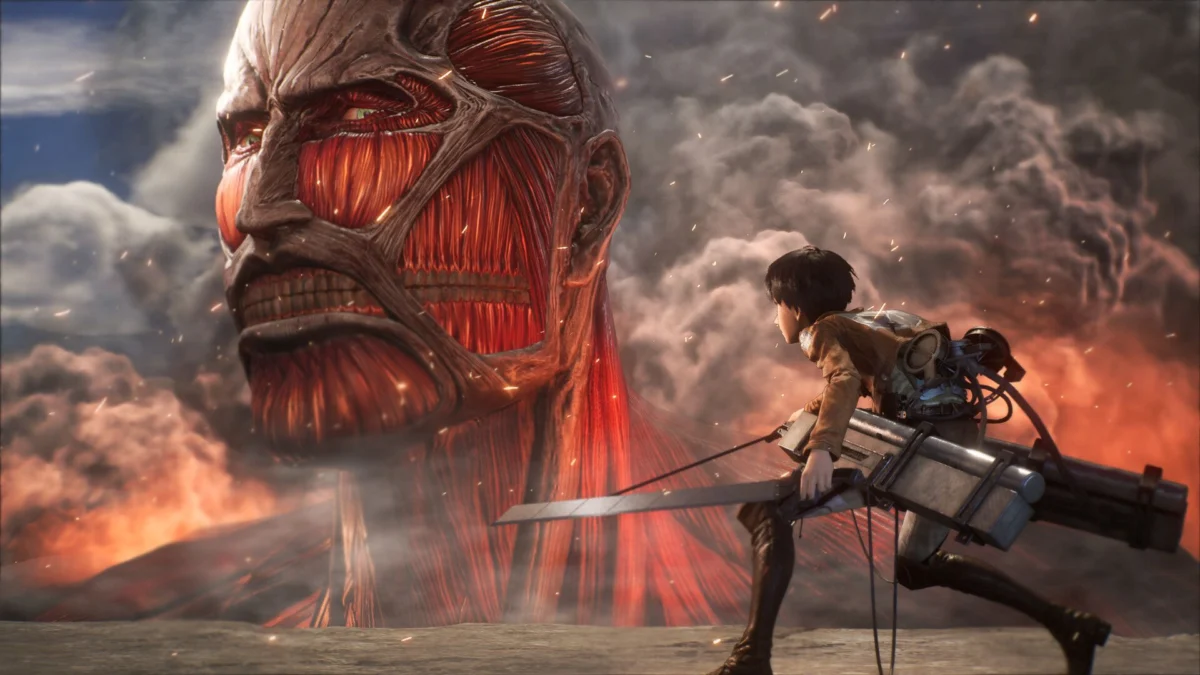
TOKYO, Japan – July 2, 2026 – Gamers and anime enthusiasts alike are buzzing with anticipation following Koei Tecmo’s extensive reveal of Attack on Titan 3, the latest and most ambitious video game adaptation of Hajime Isayama’s globally acclaimed manga. Announced just a month prior at Summer Game Fest 2026, the new title promises to deliver the ultimate interactive experience, adapting the entirety of the epic narrative while introducing groundbreaking gameplay features, including a vast open-world environment and a crucial collaboration with renowned animation studio MAPPA. Set to launch this Winter, the game aims to redefine how fans engage with the brutal yet captivating world of Titans.
A New Chapter for Humanity’s Struggle: Main Facts Unveiled
Koei Tecmo and developer Omega Force held a comprehensive 45-minute presentation on July 1st, diving deep into the mechanics and narrative scope of Attack on Titan 3. The core promise is audacious: to adapt the complete saga of Attack on Titan, from its harrowing beginnings to its climactic conclusion. This marks a significant departure from its predecessors, Attack on Titan (2016) and Attack on Titan 2 (2018), which covered only segments of the sprawling story.
The most transformative addition is an all-new open-world mode. Unlike the mission-based progression of previous entries, players will now have the freedom to traverse the desolate yet beautiful landscapes beyond the Walls, encountering Titans, undertaking side quests, and experiencing the world in a dynamic, non-linear fashion. This shift is expected to enhance immersion and provide a deeper sense of exploration and survival, moving beyond the often-criticized linearity of earlier adaptations.
Central to the Attack on Titan experience is the iconic Omni-Directional Mobility (ODM) gear. Koei Tecmo confirmed that the signature ODM gameplay has been meticulously refined for Attack on Titan 3, promising a smoother, more fluid, and exhilarating experience. This is a critical detail for fans, as the agility and speed of ODM combat are fundamental to the series’ appeal, and past iterations, while enjoyable, sometimes faced critiques regarding their control schemes and repetitive combat loops. The developers hint at enhancements that will make zipping through cityscapes and forests, slicing through Titan flesh, feel more intuitive and impactful than ever before.
In a creative choice that prioritizes player agency, Attack on Titan 3 will allow players to create their own original character. This bespoke avatar will be seamlessly integrated into the main cast’s journey, participating in pivotal moments alongside Eren Yeager, Mikasa Ackerman, Armin Arlert, and the rest of the Survey Corps. This approach was successfully implemented in Attack on Titan 2 and allows players to feel a more personal connection to the unfolding tragedy and triumphs, rather than simply reliving Eren’s predetermined path. While Eren remains a central figure in the narrative, the player’s custom character offers a fresh perspective on the well-trodden story beats.
The game is slated for a "Winter" release, a window that typically spans late 2026 into early 2027, ensuring fans won’t have to wait long after its detailed reveal. Attack on Titan 3 will be available across a broad spectrum of platforms, targeting the next generation of gaming hardware: Nintendo Switch 2, PlayStation 5, Windows PC, and Xbox Series X/S. The inclusion of the unannounced Nintendo Switch 2 is particularly noteworthy, suggesting a strategic move by Koei Tecmo to position the game as a potential launch or early-cycle title for Nintendo’s forthcoming console.
The Cinematic Touch: MAPPA’s Unprecedented Involvement
Perhaps the most electrifying announcement came at the close of the presentation: the acclaimed animation studio MAPPA will be animating the game’s opening cinematic. This collaboration is monumental, bridging the gap between the game and the high-quality animation that brought the final seasons of the Attack on Titan anime to life. MAPPA’s reputation precedes it, having produced some of the most visually stunning and critically lauded anime in recent years, including Attack on Titan: The Final Season, Jujutsu Kaisen, Chainsaw Man, and Hell’s Paradise. Their involvement signals a commitment to a premium visual experience for the game’s introduction.
Further cementing the prestige of this collaboration, Arifumi Imai, a celebrated action-scene animator known for his breathtaking work on the Attack on Titan anime, will direct the opening cinematic. Imai’s signature dynamic camera work and fluid combat choreography are synonymous with the series’ most iconic battles, making his leadership on the game’s intro a promise of unparalleled visual spectacle.
However, Koei Tecmo also unveiled a peculiar detail: the MAPPA-animated opening cinematic will not be available at the game’s launch. Instead, it is scheduled to be added in a future update sometime after the base game’s release. This decision has sparked immediate discussion among the fanbase, with speculation ranging from production timelines and strategic content rollouts to a desire to avoid spoilers or simply build additional hype post-launch. Regardless of the reason, the promise of a MAPPA-crafted opening, even delayed, remains a significant draw.
Chronology: Tracing the Path of the Titans in Gaming
The journey of Attack on Titan from manga to video game has been a varied one, with Koei Tecmo and Omega Force playing a pivotal role in shaping the interactive experience for fans.

Early Forays and Koei Tecmo’s Inaugural Attack
Before Koei Tecmo, there were a few minor Attack on Titan mobile titles and niche Japanese releases, but none captured the essence and scale of the series with significant success. It was in 2016 that Koei Tecmo, through its Omega Force development studio, released the first console game simply titled Attack on Titan (known as A.O.T. Wings of Freedom in some regions). This game was lauded for its faithful recreation of the ODM gear mechanics and its visceral Titan combat. It covered the narrative arcs of the first season of the anime, allowing players to relive key moments and participate in iconic battles. While generally well-received for its core gameplay, it faced criticism for its somewhat repetitive mission structures and limited scope.
Expanding the Narrative: Attack on Titan 2
Two years later, in 2018, the sequel Attack on Titan 2 arrived, building upon the foundation laid by its predecessor. This installment expanded the story to cover the events up to the third season of the anime, introducing new characters, abilities, and a more refined combat system. Crucially, Attack on Titan 2 introduced the ability to create a custom character, allowing players to experience the unfolding drama from a unique perspective within the Survey Corps. This feature was a hit with fans, fostering a deeper sense of connection to the world. Despite improvements, some critiques regarding mission variety and environmental repetition persisted, yet it remained a strong entry in the anime game adaptation landscape.
The Interim and the Manga’s Conclusion
The gap between Attack on Titan 2 and the newly announced Attack on Titan 3 has been substantial, spanning eight years. During this period, the Attack on Titan manga concluded its epic run in April 2021, and the anime adaptation reached its dramatic conclusion with Attack on Titan: The Final Season, captivating audiences worldwide. This period allowed the entire narrative to solidify, providing a complete blueprint for a definitive game adaptation. Fans have long speculated about a third game that would finally cover the full story, and Koei Tecmo has now answered that call.
The Grand Reveal: Summer Game Fest 2026 and July 1st Presentation
The first whisper of Attack on Titan 3 came during Summer Game Fest 2026, where a brief teaser trailer ignited the fanbase. This initial reveal was followed by the aforementioned July 1st, 2026, 45-minute presentation, which served as the official deep dive. The presentation showcased a detailed gameplay trailer, offering glimpses of the open-world environment, enhanced ODM combat, character interactions, and the sheer scale of the Titans players will face. It was during this extensive showcase that the "Winter" release window, multi-platform availability, and the groundbreaking MAPPA collaboration were officially confirmed, solidifying Attack on Titan 3 as one of the most anticipated titles of the coming year.
Supporting Data: The Pillars of Anticipation
The excitement surrounding Attack on Titan 3 is not merely born from its announcement but is deeply rooted in several key factors that underscore its potential impact.
The Enduring Popularity of Attack on Titan
Hajime Isayama’s Attack on Titan is a global phenomenon. The manga has sold over 110 million copies worldwide, making it one of the best-selling manga series of all time. The anime adaptation has garnered an even wider international audience, consistently topping streaming charts and generating immense cultural discussion. Its complex narrative, moral ambiguities, compelling characters, and breathtaking action sequences have resonated deeply with millions. This immense and dedicated fanbase guarantees a massive built-in audience for Attack on Titan 3, with high expectations for a faithful and engaging adaptation of their beloved story. The game has the advantage of arriving after the conclusion of both the manga and anime, allowing for a complete, spoiler-free, and definitive interactive experience of the entire saga.
Koei Tecmo and Omega Force’s Track Record
Koei Tecmo, as a publisher, has a long history with licensed anime titles, often developed by their internal studio, Omega Force. While Omega Force is best known for its "Musou" (Warriors) style games, they have successfully adapted various anime franchises, including One Piece: Pirate Warriors, Dynasty Warriors: Gundam, and Persona 5 Strikers. Their experience in crafting large-scale action combat, managing sprawling rosters of characters, and translating iconic attacks into engaging gameplay is well-established. Crucially, their previous Attack on Titan games demonstrated a strong understanding of the core ODM mechanics, which is a unique and challenging gameplay system to implement effectively. Their continued commitment to the franchise, now with an expanded vision, suggests a maturation in their approach to Attack on Titan as a video game property.
The Unparalleled Quality of MAPPA
MAPPA’s involvement is a game-changer. The studio has risen to prominence as one of the most respected and influential animation houses in Japan. Their work on Attack on Titan: The Final Season was particularly transformative, seamlessly transitioning from Wit Studio while maintaining and even elevating the series’ visual grandeur and brutal action. Their commitment to detail, dynamic animation, and dramatic storytelling is widely praised. For a game to secure an opening cinematic from such a high-caliber studio, directed by an animator integral to the anime’s success, is a testament to the project’s ambition and budget. It instantly elevates Attack on Titan 3 beyond a standard licensed game, imbuing it with the prestige of a major anime production. This collaboration could set a new precedent for how anime studios engage with game adaptations, potentially leading to more seamless and high-quality multimedia experiences.
Market Trends and Addressing Past Criticisms
The gaming market consistently shows a strong appetite for open-world titles, and a well-executed open-world Attack on Titan game could be a massive hit. The freedom to explore beyond the walls, engage in emergent gameplay, and tackle challenges at one’s own pace addresses a common critique of previous entries: their linear, mission-based structure could feel repetitive. By embracing an open-world design, Attack on Titan 3 aims to offer a more expansive and varied experience, potentially allowing for greater replayability and a more authentic simulation of life (and death) within the Survey Corps. Furthermore, the promise of "smoother ODM gameplay" directly targets feedback from the first two games, demonstrating a commitment to refining the core mechanics that define the series’ combat.
Official Responses and Fan Reactions
The announcement of Attack on Titan 3 has naturally elicited a wide range of responses, from the official statements of the involved parties to the fervent discussions within the global fanbase.

Koei Tecmo and Omega Force’s Vision
While direct quotes are still emerging, Koei Tecmo’s strategy with Attack on Titan 3 clearly signals their intent to create the definitive interactive adaptation of the series. Their decision to cover the full manga story, rather than continuing incrementally, suggests a desire to provide a complete and satisfying experience for fans who have followed the epic to its conclusion. The investment in an open-world mode and the collaboration with MAPPA speaks volumes about the perceived potential and budget allocated to this title. Omega Force, as the developer, appears to be taking previous fan feedback seriously, particularly concerning ODM mechanics and mission variety. Their vision seems to be centered on marrying the visceral action the series is known for with an expansive, immersive world that truly lets players live out the fantasy of being a Survey Corps member. The inclusion of the Nintendo Switch 2 also hints at their strategic positioning of the game to capitalize on emerging console hardware.
MAPPA’s Contribution and Imai’s Direction
MAPPA’s involvement, even for just an opening cinematic, is a significant endorsement. It underscores the studio’s commitment to the Attack on Titan legacy and their willingness to extend their artistic influence beyond pure animation. While the delayed release of the cinematic is an unusual move, it might be interpreted as MAPPA taking the necessary time to ensure the highest quality, unwilling to compromise their standard for a launch deadline. Arifumi Imai’s direction ensures that the cinematic will not just be a visual treat but a true extension of the anime’s most iconic action sequences, providing a powerful and authentic introduction to the game’s world. This collaboration suggests a mutual respect between the game developers and the animation studio, aiming for a cohesive and high-quality presentation.
The Fandom’s Pulse: Excitement and Cautious Optimism
The reaction from the Attack on Titan fanbase has been overwhelmingly positive, tempered with a healthy dose of cautious optimism. The initial Summer Game Fest reveal sparked immediate excitement, with social media platforms and gaming forums erupting in discussion. The subsequent 45-minute presentation, showcasing actual gameplay and detailed features, largely solidified this enthusiasm.
- Open-World Hype: The open-world mode is a major talking point, with fans envisioning endless possibilities for exploration and Titan encounters. Many express hope that this will finally allow for a true sense of scale and freedom that previous games couldn’t achieve.
- MAPPA’s Stamp of Quality: The news of MAPPA’s involvement, especially with Arifumi Imai at the helm, has been met with widespread acclaim. Fans recognize the studio’s commitment to quality and see it as a strong indicator of the game’s overall production values. The delayed cinematic, while a minor point of confusion, doesn’t seem to diminish the overall excitement for its eventual release.
- Full Story Adaptation: The promise of adapting the entire manga story is a huge draw, offering a comprehensive experience that will serve as a definitive interactive retelling for many.
- ODM Refinements: Players of previous games are keen to see how the "smoother ODM gameplay" translates into actual controls and combat flow, hoping for a truly perfected traversal system.
- Custom Character: The return of the custom character is also well-received, allowing players to imprint themselves onto the narrative.
- Cautious Optimism: Despite the immense hype, some fans maintain a cautious stance, remembering the occasional repetitiveness of earlier titles. The challenge for Attack on Titan 3 will be to deliver on its ambitious promises without falling into familiar pitfalls. However, the early information suggests a strong effort to learn from past experiences and innovate significantly.
Implications: Beyond the Walls of Innovation
The announcement and detailed reveal of Attack on Titan 3 carry significant implications, not just for the franchise but for the broader landscape of anime game adaptations and the gaming industry itself.
For the Attack on Titan Franchise: A Definitive Interactive Experience
Attack on Titan 3 has the potential to become the definitive interactive experience for the series. By covering the entire manga narrative in an open-world setting with refined gameplay, it offers a complete package that no previous adaptation, game or otherwise, has fully achieved. This could serve as a powerful way to re-engage fans post-anime conclusion, allowing them to relive, reinterpret, and perhaps even understand the story on a deeper, more personal level through active participation. It could also introduce new audiences to the epic saga, acting as a gateway to the manga and anime.
For Anime Game Adaptations: Setting a New Standard
The collaboration with MAPPA and the involvement of a key anime director like Arifumi Imai sets a new, ambitious standard for anime game adaptations. It signifies a growing trend of blurring the lines between animation production and game development, potentially leading to more visually cohesive and high-quality licensed titles. Publishers may increasingly seek out direct collaborations with the original animation studios to elevate the authenticity and prestige of their game projects. This could usher in an era where anime games are not just functional adaptations but artistic extensions of their source material.
For Koei Tecmo and Omega Force: A Flagship Title
For Koei Tecmo and Omega Force, Attack on Titan 3 represents a potential flagship title. If successful, it could solidify their reputation as leading developers of high-quality anime-licensed games, moving beyond the "Musou" stereotype. The ambitious scope, technical refinements, and high-profile collaboration demonstrate a significant investment, and a positive reception could pave the way for more innovative and expansive adaptations of other popular anime franchises under their banner. It’s a chance to demonstrate their evolution as developers capable of delivering deep, immersive experiences alongside their traditional action-oriented titles.
The Future of Gaming Narratives and Open Worlds
The choice to adapt an entire, complex narrative like Attack on Titan into an open-world game is a bold move. If executed well, it could influence how future story-driven licensed titles approach their adaptations, encouraging more expansive and non-linear storytelling in open-world formats. It challenges the notion that anime games must strictly adhere to linear mission structures and opens up possibilities for greater player agency and exploration within established universes.
The Nintendo Switch 2 Factor: Early Adoption
The inclusion of the Nintendo Switch 2 as a launch platform is a strategic and intriguing implication. It positions Attack on Titan 3 as a potential early adopter title for Nintendo’s next-generation console, lending it significant visibility and potentially boosting sales for both the game and the new hardware. This suggests Koei Tecmo’s confidence in the title’s technical prowess to perform on cutting-edge systems and their desire to reach the broadest possible audience from the outset of the new console cycle.
Conclusion
As humanity prepares once again to face the colossal threat of the Titans, Attack on Titan 3 stands poised to deliver an unparalleled interactive journey. With its promise of a full story adaptation, a groundbreaking open-world mode, refined ODM mechanics, and the prestigious artistic collaboration with MAPPA and Arifumi Imai, Koei Tecmo and Omega Force are clearly aiming for nothing less than the definitive Attack on Titan gaming experience. The wait until "Winter" 2026-2027 will be arduous for the legions of fans, but the anticipation suggests that this final, epic chapter of humanity’s struggle might just be worth every moment.