Release Date: [Assume a recent release for the review context]
Developer: Pearl Abyss
Publisher: Pearl Abyss
Platform: PC (Reviewed)
Main Facts: A Paradoxical Masterpiece in the Making
Pearl Abyss, renowned for its visually stunning MMORPG Black Desert Online, has ventured into the realm of action-adventure with Crimson Desert. Heralded by impressive trailers and an undeniable aura of ambition, the game arrived with a thunderclap, showcasing a world of breathtaking scale and graphical fidelity, coupled with a combat system that promises deep engagement. However, initial reviews paint a picture of a title torn between spectacular highs and baffling lows, a testament to its colossal, yet ultimately contradictory, design.
At its core, Crimson Desert presents a world named Pywel that is undeniably gorgeous, a technical marvel pushing the boundaries of what open-world environments can achieve. Players are introduced to Kliff, a protagonist entangled in a sprawling conflict, navigating a landscape ripe for exploration and fierce combat. The game’s combat system, a robust and varied offering, provides immense satisfaction, allowing players to fluidly switch between diverse fighting styles, from heavy weaponry to intricate unarmed grappling. This mechanical prowess, however, stands in stark contrast to an incongruent narrative, perplexing user interface (UI) decisions, and inconsistent characterization that severely hinder the overall experience. The consensus emerging is that Crimson Desert harbors the raw potential to be one of the generation’s defining titles, yet it remains frustratingly shackled by fundamental design flaws, particularly in its storytelling and accessibility, necessitating what reviewers describe as a "full revamp of 99% of its narrative content."
A Tale of Two Deserts: Unpacking Crimson Desert’s Paradox
Crimson Desert is a game that immediately asserts its presence, akin to a champion bodybuilder stepping onto a stage. Its virtual physique, crafted by Pearl Abyss, bulges with an incredible scale, rendered with shining graphical fidelity that frequently elicits awe. The very fabric of its world, Pywel, feels alive and immense, a testament to the developers’ technical prowess. Accompanying this visual feast is a muscular combat system, lauded for its versatility and impressive wealth of options, allowing players to sculpt their fighting style with satisfying depth. From the weighty impact of a sword-and-shield combo to the fluid, almost balletic brutality of unarmed grappling, the moment-to-moment gameplay during skirmishes is genuinely exhilarating.
Technical Brilliance Meets Narrative Blunders
The initial impression of Crimson Desert is overwhelmingly positive. The game’s engine flexes its muscles with expansive draw distances, detailed environmental textures, and dynamic weather systems that breathe life into every corner of Pywel. Traversing this world, whether on horseback or utilizing mystical gliding abilities, evokes a genuine sense of grand adventure. Combat encounters, particularly the larger-scale battles against hordes of enemies or challenging boss encounters, are consistently thrilling, demanding skill and strategic use of Kliff’s diverse abilities. It’s here that the game truly shines, offering an unassumingly deep system that rewards mastery and experimentation.
However, beneath this impressive exterior lies a lack of connective sinew. The narrative, instead of weaving together the disparate elements of the world into a cohesive tapestry, feels fragmented and often nonsensical. Maddening systems, particularly the user interface, prove to be significant barriers to immersion and enjoyment. Even the protagonist, Kliff, despite being central to the unfolding drama, suffers from genuinely odd and inconsistent characterization. These issues collectively hint at grinding joints and an enlarged heart under the hood, a potentially fatal flaw beneath the game’s otherwise impressive facade. The most frustrating, and indeed fascinating, aspect of Crimson Desert is this stark dichotomy: a game that could genuinely stand among the best of its generation, if only its narrative and systemic foundations were as meticulously crafted as its visual and combat mechanics. The "if only" looms large, representing a monumental task for any post-launch remediation.
Chronology of Development and Anticipation
The journey of Crimson Desert to its eventual release has been a long and winding one, marked by shifts in vision and escalating anticipation. Initially announced in 2019, the game was widely believed to be a prequel or spiritual successor to Black Desert Online, Pearl Abyss’s successful MMORPG. Early trailers and developer diaries hinted at a shared universe, leading fans to expect another sprawling online experience.
From MMORPG Roots to Single-Player Ambition
However, over time, Pearl Abyss clarified its ambitions for Crimson Desert, positioning it as a distinct, open-world action-adventure game with a strong single-player focus, albeit retaining some online elements. This pivot was a significant one, moving away from the "massive multiplayer" aspect that defined its predecessor and towards a more narrative-driven, character-centric experience. This strategic shift undoubtedly influenced many design decisions, particularly the choice to feature a fixed protagonist, Kliff, rather than the extensively customizable player characters that are a hallmark of Black Desert Online.
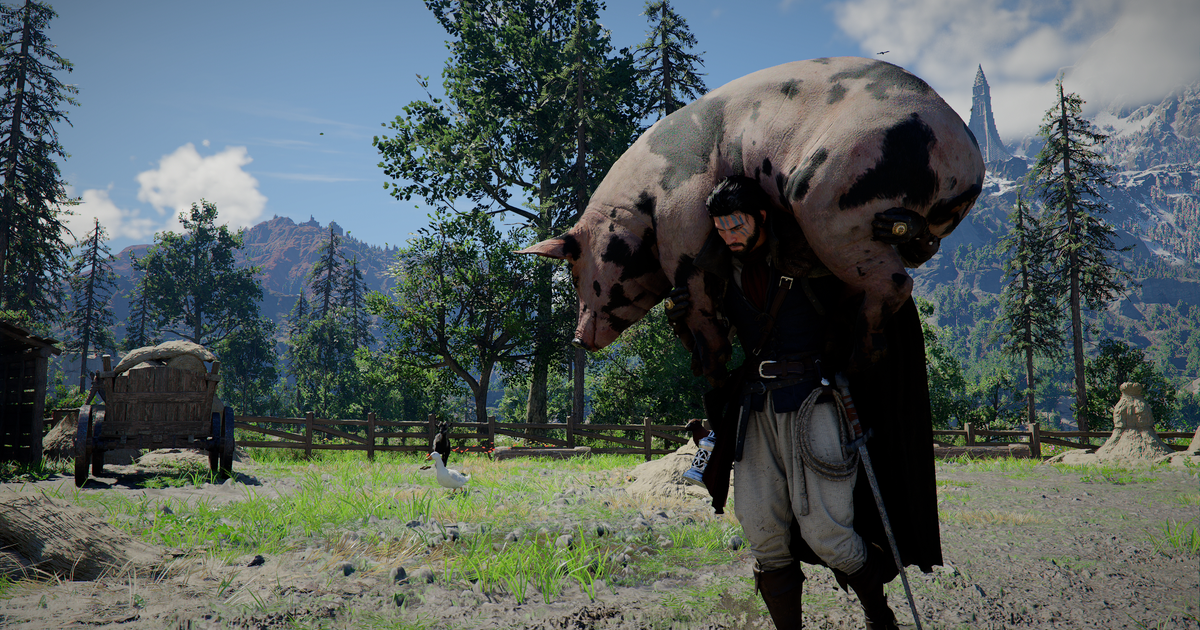
The game’s development was characterized by a meticulous approach to graphics and combat design, frequently showcased in stunning gameplay reveals at major industry events like The Game Awards and Gamescom. These showcases consistently highlighted the game’s breathtaking visuals, dynamic combat, and the sheer scale of its world, Pywel. The promise of a vast, explorable realm filled with diverse biomes, intricate lore, and fluid, impactful combat created a significant buzz within the gaming community. Players eagerly awaited a title that seemed poised to combine the visual fidelity of modern blockbusters with the deep combat mechanics Pearl Abyss was known for. This anticipation built a towering expectation for Crimson Desert, setting the stage for both its potential triumphs and its eventual points of criticism upon release. The developers’ decision to invest heavily in the game’s proprietary BlackSpace Engine further fueled this excitement, promising a level of detail and immersion rarely seen.
Supporting Data: Deep Dive into Gameplay Mechanics and Narrative Faux Pas
The review highlights a stark contrast between Crimson Desert‘s technical and mechanical achievements and its narrative and UI shortcomings. To understand the game’s paradoxical nature, a closer examination of these facets is crucial.
The Grandeur of Pywel: World Design and Exploration
The world of Pywel is undeniably Crimson Desert‘s most compelling feature. The "unbelievable" scale and "genuinely amazing" environmental design are not hyperbole. From the very first moments, players are treated to "visually breathtaking scenes," such as "trudging along a twilight-dappled ridge at sunset." This sense of wonder persists throughout the journey. The game offers vast, varied landscapes – high cliffs overlooking expansive plains, yawning valleys shrouded in mist, dense forests teeming with life, and bustling urban centers like the city of Delesyia.
Exploration is a core pillar of the experience, imbued with an "epic quality" as players glide across ravines on magical wings or gallop on horseback through diverse biomes. The dynamic day-night cycle and weather effects further enhance the immersion, making Pywel feel like a living, breathing entity. The sheer breadth of the sandbox world encourages deviation from the main path, inviting players to uncover hidden secrets, engage with environmental puzzles, and simply revel in the stunning vistas. This robust world-building and freedom of movement are precisely why the game’s potential is so frequently emphasized; it provides an incredible canvas upon which a truly great adventure could be painted.
The Art of War: Combat System Analysis
If Pywel is the game’s body, its combat system is the beating heart. Kliff has access to an "awesome array of styles," offering a depth that is "unassumingly deep once you’ve got the hang of everything you can do." Players can engage in "chunky sword-and-board action," delivering impactful blows and stalwart defenses, or transition to a "spectacular selection of unarmed grappling combos." These grappling maneuvers, described as "over-the-top within the otherwise quite grounded fantasy setting," inject a unique flair and satisfying brutality into engagements, making them consistently entertaining.
The combat system is fluid, allowing for seamless transitions between weapons, magic, and bare-handed techniques. Special abilities, parries, dodges, and counters create a dynamic dance of death that rewards skilled execution. Players "come to crave the larger battles where you take on almost Musou-like hordes of enemies," reveling in the visceral satisfaction of cleaving through legions. The "genuinely tough boss battles" serve as crucial skill checks, demanding a comprehensive understanding of Kliff’s toolkit and enemy attack patterns. This blend of tactical depth and raw, visceral impact positions Crimson Desert‘s combat as a standout feature, arguably on par with or even exceeding the systems found in its spiritual inspirations like The Witcher 3 and Dragon’s Dogma.
A Narrative in Disarray: Kliff’s Conundrum and Plot Pitfalls
Despite the strengths in world and combat, Crimson Desert‘s narrative proves to be its most significant Achilles’ heel. The story follows Kliff, a leader of the Greymanes, a warrior sect displaced from their homeland of Pailune by the aggressive Black Bears. After being defeated and resurrected with "otherworldly abilities" from The Void, Kliff embarks on a quest for vengeance and a new home, aiming to reunite the scattered Greymanes amidst complex political machinations involving counts, coinmasters, and courtesans. This setup, with its "Game of Thrones-y" political intrigue and "rEGioNaL bRiTiSh acCEnTs," promises an epic, mature fantasy.
However, the execution falls drastically short. The decision to feature a fixed main character, Kliff, is "doubly strange" given Pearl Abyss’s reputation for the "intensely detailed character creator" in Black Desert Online. This feels like "packing away one of the best toys in its box for basically no reason," denying players a fundamental element of agency often expected from such a developer. Kliff himself is a narrative enigma. His dialogue is often "hilariously sparse," exemplified by exchanges like a simple "Yes" to a crucial quest inquiry. More egregiously, his character tone is "massively incongruent and completely changes from scene to scene." He can switch from a "stoic badass" executing Terminator-like moves to "purring like a housecat serving soup to randos" who mysteriously appear.

Furthermore, the storytelling is both "flat and uneven." Key plot points, such as "reuniting the Greymanes," occur with little effort or dramatic build-up, with characters simply appearing at Kliff’s camp as if it were a casual reunion. This undermines the gravity of the quest and the player’s investment. The narrative even "strays into stereotypes," as evidenced by an early plot beat involving "money-lending goblin merchants called the ‘Goldleaf’ guild" besieging the city of Hernand, a trope that is not only uninspired but also verges on problematic. These narrative missteps collectively create a disjointed and often nonsensical experience, severely undercutting the grandeur of the world and the thrill of combat.
The UI Maze: Navigating Crimson Desert’s Frustrations
Beyond the narrative, Crimson Desert is "stuffed with baffling UI decisions" that actively impede player enjoyment and immersion. The inventory system is singled out as particularly egregious, described as designed to "simulate the experience of carrying your food home when you don’t want to pay for a carrier bag." Unlike virtually every other contemporary game, "enemies don’t have a viewable inventory" before looting. This forces players to "need space for everything they’re carrying before you can loot them," but without knowing what items they possess. The result is a frustrating loop of "grab every piece of junk before immediately throwing it away" simply to see what was dropped.
This lack of transparency and efficiency extends to other basic mechanics. The reviewer highlights the absurdity of enemies dropping "pouches of change which need to be manually opened before they’re added to your cash total." This micro-management for negligible rewards is likened to "how billionaires would need to drop the downpayment on a New York apartment for it to be worth their time to pick it up." The "effort of opening these bags is simply not worth a palmful of copper," transforming a mundane but necessary aspect of gameplay into a tedious chore. These UI choices are not merely inconvenient; they actively detract from the player’s ability to engage with the game world, creating unnecessary friction in an otherwise technically polished experience.
Official Responses and Community Reaction
As of the review’s context, specific official responses from Pearl Abyss regarding Crimson Desert‘s reception would be hypothetical, but one can infer a likely trajectory based on similar high-profile releases with mixed feedback.
Developer’s Stance and Future Prospects (Hypothetical)
Given the game’s significant investment and Pearl Abyss’s reputation, it is highly probable that the developers would issue a statement acknowledging player and critic feedback. Such a statement would likely emphasize their commitment to Crimson Desert as a long-term project. They would almost certainly highlight the positive reception of the game’s core strengths: its stunning visuals, massive world, and robust combat system. These are areas where the game genuinely excels and represent a substantial achievement for the studio.
Regarding the criticisms, particularly those concerning the narrative and UI, Pearl Abyss would likely adopt a constructive stance. They might promise immediate patches for critical bugs and performance issues, which are common in large-scale launches. For the more systemic problems, such as the inventory UI or the narrative inconsistencies, a longer-term roadmap could be suggested. This might involve pledges to "listen to the community," "prioritize quality-of-life improvements," and "explore ways to enhance the storytelling experience." However, fully revamping "99% of narrative content" is a monumental undertaking, bordering on a complete re-release, making any promises in this area necessarily vague and challenging to deliver post-launch without substantial delays or reworks. The focus would likely be on incremental improvements and post-launch content that can subtly address some of the narrative weaknesses.
Player Reception: A Divided Fandom
The community reaction to Crimson Desert would likely mirror the review’s dichotomy, creating a divided fandom. There would be a vocal segment of players absolutely captivated by the game’s visual splendor and exhilarating combat. These players would laud Pearl Abyss for delivering a technically impressive open world and a satisfying action experience, often overlooking or downplaying the narrative and UI flaws as minor inconveniences. They would champion the game’s potential and express hope for future updates to iron out the rough edges.
Conversely, another significant portion of the player base would express profound disappointment, particularly those who invested heavily in the pre-release hype. While acknowledging the game’s undeniable strengths, they would find the narrative incoherence and frustrating UI to be insurmountable barriers to enjoyment. Discussions on forums, social media, and streaming platforms would be rife with complaints about Kliff’s character, the nonsensical plot points, and the cumbersome inventory system. Many would lament the "wasted potential," echoing the sentiment that the game could have been truly great if only more attention had been paid to these critical areas. There would be fervent calls for extensive patches, demanding not just bug fixes but fundamental overhauls to core systems and storytelling. The hope for redemption would be strong, but tempered by skepticism regarding the feasibility of such extensive post-launch changes.

Implications and Industry Context
Crimson Desert‘s release carries significant implications for Pearl Abyss and the broader video game industry, particularly concerning the delicate balance between technical ambition and holistic game design.
The Price of Ambition: Lessons for AAA Development
Crimson Desert serves as a poignant case study in the risks associated with prioritizing spectacle and technical prowess over fundamental design principles like cohesive narrative and user-friendly systems. In an era where AAA game development costs are skyrocketing, there’s an increasing pressure to deliver visually groundbreaking experiences. Pearl Abyss has undeniably achieved this on a technical level, showcasing what their proprietary engine can do. However, the game’s reception underscores that cutting-edge graphics and robust combat alone are not sufficient to guarantee a universally acclaimed title.
The game’s struggles with narrative and UI highlight a critical lesson: a compelling story and intuitive player experience are not luxuries but necessities, even in open-world sandbox games. While games like Elden Ring thrive on minimalist storytelling and emergent narrative, they do so with consistent world-building and elegant, if challenging, systems. Crimson Desert‘s "incongruent story" and "baffling UI" create friction that undermines the player’s connection to the world and its inhabitants, making even its greatest strengths harder to appreciate. This reminds developers that a game must function as a cohesive whole, where all elements — from the grand narrative to the smallest inventory interaction — work in harmony to create a seamless and enjoyable experience. The industry may well look at Crimson Desert as a cautionary tale against hyper-focusing on one aspect of development at the expense of others.
Pearl Abyss’s Evolving Legacy
For Pearl Abyss, Crimson Desert represents a pivotal moment. While Black Desert Online established them as masters of visual fidelity and complex combat in the MMORPG space, this new title was meant to showcase their versatility in the action-adventure genre. The mixed reception could solidify their reputation for technical excellence but also expose perceived weaknesses in narrative design and user experience. The studio has other highly anticipated projects, such as DokeV, on the horizon. The lessons learned from Crimson Desert will undoubtedly influence these future titles. Will Pearl Abyss double down on their technical strengths while seeking external expertise for narrative cohesion and UI/UX design? Or will they attempt to internalize these critiques and evolve their development philosophy? The long-term implications for Crimson Desert‘s lifespan, potential expansions, or even a sequel will depend heavily on the studio’s post-launch commitment and ability to address its core flaws.
A Glimmer of Hope: The Path to Redemption
Despite its significant issues, the immense potential of Crimson Desert remains undeniable. The sheer quality of its world and combat mechanics offers a strong foundation for redemption. The path forward, though arduous, is not impossible. A comprehensive UI overhaul, driven by player feedback, could address the inventory and looting frustrations, making the game significantly more accessible and enjoyable.
The narrative challenges are more formidable. A "revamp of 99% of its narrative content" is a colossal task, likely requiring substantial new writing, voice acting, and quest design. However, even incremental improvements – such as fleshing out Kliff’s character, providing clearer motivations, refining dialogue, and addressing problematic stereotypes – could go a long way in enhancing player immersion. Developers could leverage the existing sandbox by introducing more reactive systems or emergent storytelling elements, akin to Dragon’s Dogma, to compensate for the linear narrative’s weaknesses.
Ultimately, Crimson Desert is a game of incredible promise trapped beneath layers of frustrating design. It is a testament to the fact that even the most ambitious technical achievements require a robust and coherent framework to truly shine. Whether Pearl Abyss can commit the resources and vision necessary to bridge this gap and allow Crimson Desert to fulfill its massive potential remains the most compelling question for this paradoxical, yet undeniably fascinating, title.