

For generations, the whimsical, topsy-turvy world of Enid Blyton’s The Magic Faraway Tree has served as a cornerstone of childhood literature. Now, that literary legacy is preparing to leap from the page to the silver screen. With the recent release of a definitive trailer and an official premiere date, Vertical has confirmed that the highly anticipated feature film adaptation will arrive in theaters on August 21, 2026.
This production, which marries classic British fantasy with modern high-concept filmmaking, promises to introduce a new generation to the wonders of the Enchanted Wood. As the release date approaches, fans and critics alike are beginning to examine what this adaptation means for the legacy of Blyton’s work and the current landscape of family-oriented fantasy cinema.
Main Facts: A Modern Twist on a Classic Tale
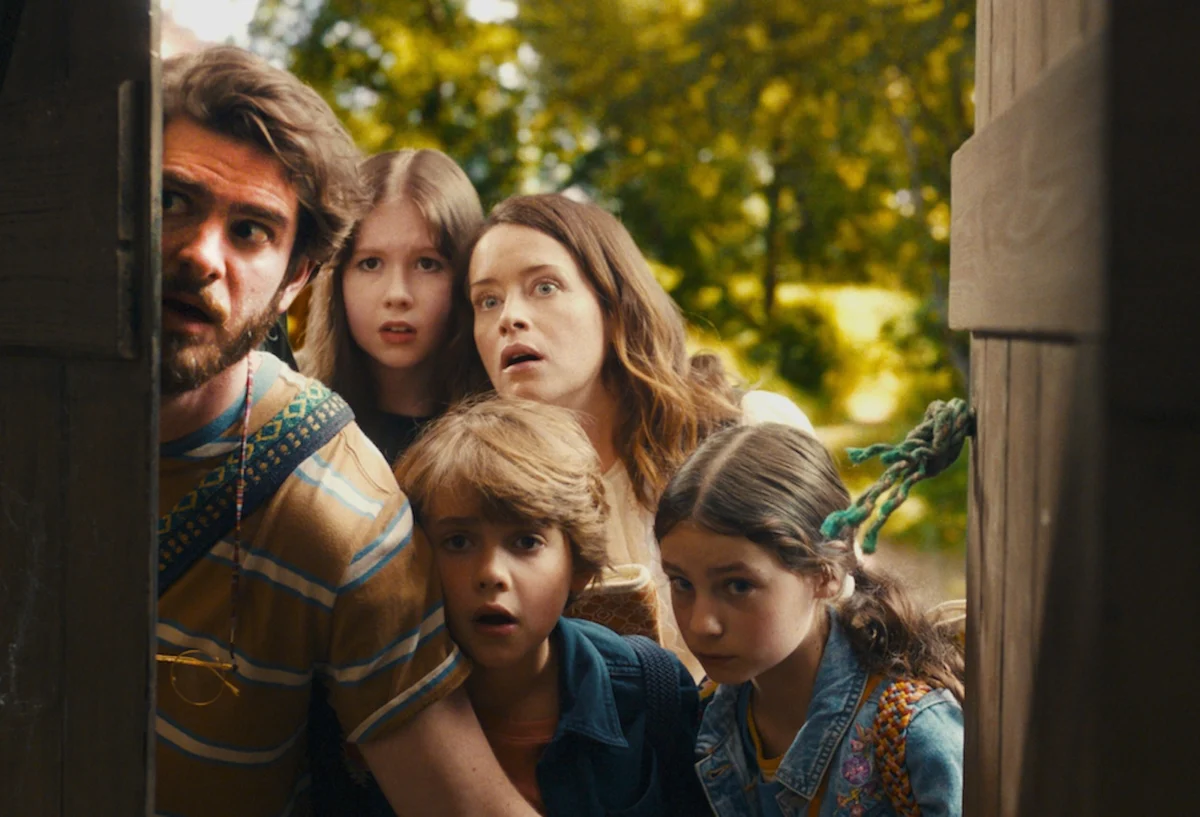
At its core, the film represents a bold reimagining of the source material. Rather than a direct, period-accurate adaptation, the production introduces a contemporary lens. The plot centers on a modern family—Polly (Claire Foy) and Tim (Andrew Garfield)—who are forced by the pressures of modern life to relocate to the remote, and seemingly quiet, English countryside.
Their three children, thrust into a new environment and disconnected from one another, soon stumble upon a phenomenon that defies explanation: a colossal, ancient tree that serves as a gateway to shifting, fantastical realms. As they climb higher into the canopy, they encounter a cast of extraordinary residents: the wise and kindly Moonface (Nonso Anozie), the ethereal Silky (Nicola Coughlan), the perpetually tidying Dame Washalot (Jessica Gunning), and the chaotic, rhythmic Saucepan Man (Dustin Demri-Burns).
The film is helmed by director Ben Gregor, known for his work on Brassic, and features a screenplay by Simon Farnaby, the writer behind the critically acclaimed Paddington 2. This creative pairing suggests a film that balances emotional resonance with the signature charm and humor required to bring Blyton’s eccentric world to life.
Chronology of the Production
The journey of The Magic Faraway Tree to the big screen has been one of slow, deliberate development, marked by a series of strategic announcements:
- Initial Development: The project was first discussed as a potential major franchise, with studios eyeing Blyton’s expansive catalog for years. The focus on The Magic Faraway Tree was chosen due to its episodic nature and strong world-building potential.
- Casting Announcements: The project gained significant momentum when Academy Award nominee Andrew Garfield and Emmy winner Claire Foy were attached to the leads. This elevated the film from a niche children’s movie to a prestige family project.
- Filming and Post-Production: Throughout 2025 and early 2026, the production utilized state-of-the-art practical effects mixed with CGI to create the "Faraway" aspect of the tree, ensuring that the transition between the human world and the magical realms felt seamless yet distinct.
- Marketing Kickoff (May 2026): On May 13, 2026, Vertical officially released the primary trailer and confirmed the August 21, 2026, release date, signaling that the film is entering its final promotional phase.
Supporting Data: The Talent Behind the Magic
The success of a fantasy adaptation often hinges on the synergy between the cast and the creative team. The inclusion of Simon Farnaby is particularly noteworthy; his work on Paddington 2 is widely considered the gold standard for modern family filmmaking. By bringing a similar sensibility to this project, the production team is clearly aiming for a film that appeals to both children and adults.
The supporting cast also underscores the ambition of the production. Rebecca Ferguson, fresh off her turn in the Dune franchise, takes on the role of the antagonist Dame Snap, adding a layer of sophisticated villainy. Meanwhile, the inclusion of veteran actress Jennifer Saunders as the grandmother—a character representing the "real-world" pressure to conform—provides a narrative foil to the whimsy of the tree, grounding the story in the relatable struggles of family reconciliation.
Official Responses and Creative Vision
The creative team has been vocal about the importance of capturing the "Blyton spirit" while making the story feel relevant to a 2026 audience. In recent promotional interviews, the producers noted that the challenge was not in updating the characters, but in preserving the sense of wonder that the original books instilled in readers.

"We didn’t want to turn this into a gritty reboot," a production representative noted during the trailer launch. "We wanted to honor the original, but acknowledge that a family today faces different distractions than a family in the 1940s. The tree serves as the ultimate remedy for the disconnection of the digital age."
The visual style, as evidenced by the trailer, leans heavily into rich, vibrant colors and tactile, organic environments. By opting for a look that feels grounded in nature rather than overly stylized digital art, the filmmakers are clearly attempting to evoke a sense of nostalgia for the classic children’s films of the late 20th century, updated with modern cinematography.
Implications for Fantasy Cinema and Literary Adaptations
The release of The Magic Faraway Tree serves as a litmus test for the viability of classic British children’s literature in the current theatrical market. In an era dominated by superhero franchises and sequels, the return to "pure" fantasy—tales centered on wonder, exploration, and interpersonal growth—is a significant risk.
1. The "Paddington" Effect
If the film succeeds, it will likely be attributed to the "Paddington Effect"—a trend where high-quality, character-driven family films that respect the intelligence of their audience outperform cynical, IP-driven cash grabs. Should The Magic Faraway Tree hit its projected numbers, expect a surge in interest in adapting other classic British properties that have long been considered "unfilmable" or "too small" for the big screen.
2. A Shift in Family Dynamics
The narrative decision to center the story on a family struggling to "reconnect" is a strategic move. By framing the magic as a catalyst for emotional healing, the film positions itself as a four-quadrant success—one that draws in children with the spectacle and parents with the emotional stakes.
3. The Future of the Franchise
Vertical has made no secret of the fact that they view this film as the first entry in a potential series. Given the episodic nature of the books (which feature various "Lands" at the top of the tree, such as the Land of Birthdays or the Land of Take-What-You-Want), the studio has essentially bought into a "multiverse" model that is organic to the source material rather than forced.
Conclusion: A Summer to Remember
As August 21, 2026, approaches, the industry will be watching closely. The Magic Faraway Tree represents more than just a movie; it is a bridge between the literary childhoods of the past and the cinematic experiences of the future. With a powerhouse cast, a screenwriter known for emotional intelligence, and a story that promises to transport audiences away from the mundane and into the extraordinary, the film is positioned to be one of the defining family releases of the year.
Whether the film manages to capture the specific lightning-in-a-bottle magic of the original novels remains to be seen. However, if the trailer is any indication, audiences should prepare to climb the trunk, hold on tight, and see exactly what kind of world awaits them at the top. The Enchanted Wood is waiting, and for the first time in years, the magic is set to arrive exactly when it is needed most.









No comments yet. Be the first to join the conversation!