

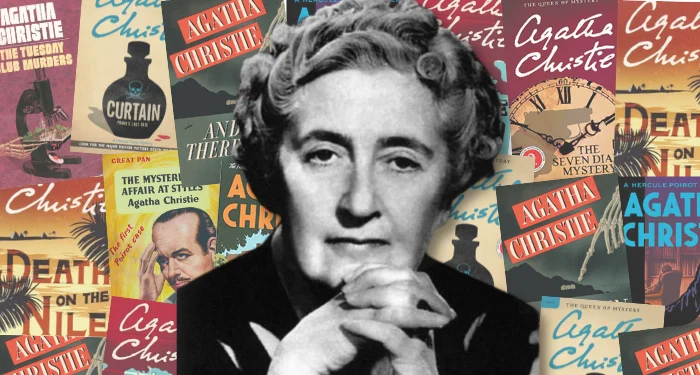
Dame Agatha Christie remains a titan of literature, a status cemented by the staggering four billion copies of her works sold since the debut of The Mysterious Affair at Styles in 1920. As the best-selling novelist of all time, her influence on the mystery genre is absolute; yet, in the contemporary era, her legacy is being navigated through a complex lens of historical preservation and modern sensibilities.
The Main Facts: An Unrivaled Literary Empire
Agatha Christie’s career was defined by an unparalleled ability to construct intricate puzzles that have captivated readers for over a century. Her most iconic creation, And Then There Were None, stands as a testament to her narrative dominance, with over 110 million copies sold worldwide. From the fastidious Belgian detective Hercule Poirot to the keen-eyed observer Miss Marple, Christie populated the literary landscape with characters who have become archetypes of the "whodunit."
However, the passage of time has cast a long shadow over the original texts. As the cultural climate has evolved, the inclusion of derogatory language, antisemitic tropes, and xenophobic caricatures within her novels has prompted a significant, often polarized, response from publishers and scholars alike.
A Chronology of Controversy and Revision
The conversation regarding Christie’s legacy is not a modern invention, but it reached a turning point in 2023.
- 1920–1976: Christie publishes 66 detective novels and numerous short stories. During this era, her depictions of minority groups were often reflective of the prejudices prevalent in early 20th-century British society.
- 1939: The U.S. release of And Then There Were None necessitated a title change due to the original, highly offensive moniker—a clear early indicator that the work was problematic even at the time of its initial global circulation.
- 2023: HarperCollins, the publisher holding the rights to the majority of Christie’s works, announces a formal initiative to revise her novels. This project aims to strip away language deemed offensive to modern readers, particularly concerning ethnic and cultural stereotypes.
- 2025 and Beyond: The publishing world continues to grapple with the ethics of "sanitizing" classics. The debate remains: does editing the past protect future readers, or does it obscure the historical reality of the author’s own biases?
Supporting Data: The Scale of the Phenomenon
Christie’s footprint is not merely cultural; it is economic and structural. Beyond the "Big Hits" like Murder on the Orient Express or The Murder of Roger Ackroyd, her bibliography contains a vast, often untapped reservoir of literary value.
While the classics dominate the discourse, the sheer volume of her work—66 novels—means that many remain "hidden gems." The endurance of her popularity is supported by constant adaptations in film, television, and, increasingly, the digital audiobook market. With companies like ElevenReader now offering high-access, credit-free platforms for literary consumption, the barrier to entry for new readers to experience both her famous and lesser-known works has never been lower.

Official Responses and the Ethics of Editing
The decision by HarperCollins to revise the texts has met with mixed reception. Supporters of the revisions argue that removing dehumanizing language allows the brilliance of the mystery plots to shine through without the interference of bigotry. They contend that literature is a living medium, and to keep Christie accessible to new generations, the "friction" of outdated, harmful rhetoric must be removed.
Conversely, literary purists and some historians argue that altering these texts is a form of revisionism. They suggest that the problematic passages serve as a historical record of the author’s mindset and the societal norms of her time. By "cleansing" the text, they argue, we risk losing the ability to analyze the author as a product of her era, effectively sanitizing history to make it more palatable for modern sensibilities.
Implications for the Mystery Genre
The implications of this editorial shift are profound. Agatha Christie is not an outlier; she is the baseline for the entire mystery genre. If the standard-bearer for the genre requires such extensive revision, the publishing industry is forced to confront the systemic biases present in much of the "Golden Age" of detective fiction.

This situation invites a deeper exploration of her work. Readers are now encouraged to look beyond the surface-level puzzles and consider the context of the writing. For those interested in exploring her catalog, the following list highlights titles that, while perhaps less famous than her top-tier hits, exemplify her mastery of the craft:
1. Peril at End House
A foundational text for many, this novel showcases the brilliance of Hercule Poirot. When he encounters the young, doomed heiress Nick Buckley, the reader is treated to a masterclass in tension and early investigative procedures.
2. The Secret Adversary
Introducing the delightful duo Tommy and Tuppence, this novel bridges the gap between the traditional mystery and the post-WWI spy thriller. It is a testament to Christie’s versatility as a storyteller.

3. Sparkling Cyanide
Featuring the lesser-known Colonel Race, this novel is a brilliant study of motive and hidden secrets within a social circle, proving that Christie’s genius was not limited to her most famous detectives.
4. Hallowe’en Party
A chilling, atmosphere-heavy mystery involving the death of a young girl. It captures the darker, more unsettling side of Christie’s imagination.
5. Sad Cypress
A courtroom drama that highlights the human element of her mysteries. Here, the focus is not just on the "how," but on the "why," as Poirot defends a woman wrongly accused of murder.

6. Sleeping Murder
Often overlooked in favor of The Body in the Library, this final Miss Marple mystery is a haunting, evocative story about the shadows of the past and how they influence the present.
7. By the Pricking of My Thumbs
A gothic-tinged mystery that sees Tommy and Tuppence navigating a nursing home with dark secrets. It remains one of her most atmospheric and underrated entries.
8. Death Comes as the End
Perhaps her most daring experiment: a murder mystery set in Ancient Egypt. It serves as a reminder that Christie was not afraid to step outside the comfort zone of the English country house.

The Future of the Queen of Mystery
As we look toward the future, the popularity of Agatha Christie shows no sign of waning. Whether one reads the original versions or the newly revised editions, the core of her work—the intellectual challenge, the suspense, and the unforgettable characters—remains the gold standard for the genre.
The ongoing conversation regarding her work is not a detraction from her talent, but a reflection of her enduring relevance. If an author can spark this much debate nearly 50 years after her death, she has achieved the ultimate literary immortality. As readers, we continue to pick up her books not just to solve a murder, but to engage with a body of work that, for better or worse, remains a cornerstone of the modern human experience.
For those looking to dive deeper into the history of the Queen of Mystery, studying her life, her struggles, and her immense literary impact is as rewarding as solving one of her final chapters. Agatha Christie was a woman of her time, but her stories have become property of the world—a world that will continue to debate, analyze, and, most importantly, enjoy her tales for generations to come.










No comments yet. Be the first to join the conversation!