

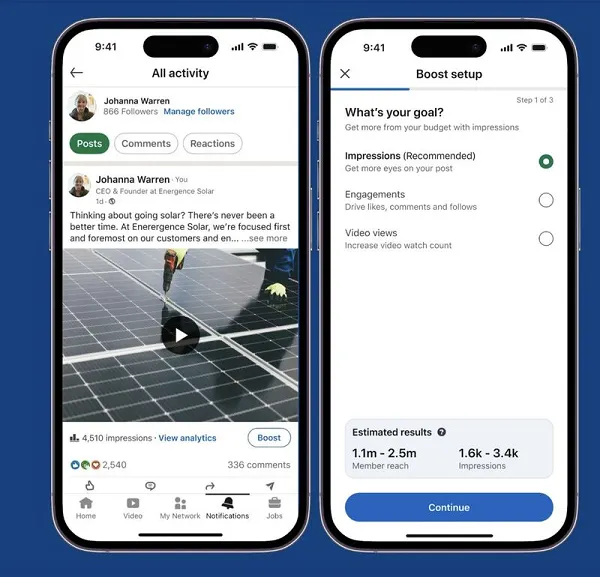
In an era where the professional landscape is increasingly defined by digital visibility, LinkedIn continues to refine the tools it provides to its massive user base. The platform has officially announced the broader rollout of its "Boost" feature for mobile devices, a move designed to simplify the transition from organic content creation to paid advertising. This development marks a significant shift in how B2B marketers, thought leaders, and business owners manage their professional presence on the go.
By enabling users to inject paid budget into high-performing organic posts directly from their smartphones, LinkedIn is effectively lowering the barrier to entry for professional promotion. This update is not merely a feature addition; it is a strategic maneuver to capitalize on the platform’s record-breaking growth and the evolving habits of its 1.3 billion members.
The Mechanics of Mobile Boosting: Core Facts
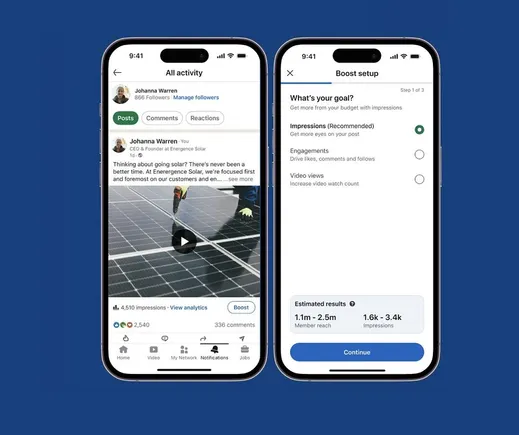
The "Boost" option on mobile is engineered for speed and efficiency. Unlike the complex Campaign Manager suite—which remains the gold standard for high-level, data-intensive ad strategies—the mobile Boost feature is a streamlined, user-friendly interface.
When a user identifies a post that is gaining organic traction, they can tap the "Boost" button directly within the mobile application. The process follows a logical, step-by-step workflow:
- Audience Selection: Users can define who sees the post, choosing from pre-set LinkedIn audience segments.
- Duration and Budget: The system asks for a specific timeframe and a total spend amount.
- Checkout: Ad credits are purchased at the point of sale, ensuring the transaction is finalized within the app.
A critical logistical detail is the minimum investment required: users must commit to a minimum budget of $10 per day for a duration of no less than two days. LinkedIn has also clarified that ad credits are account-specific. While credits purchased for one account cannot be transferred to another, they are flexible enough to be deployed across various campaign groups within that same account, offering a degree of versatility for small-to-medium business owners managing multiple projects.
Chronology of Development: From Desktop to Mobile
LinkedIn’s journey toward simplified advertising has been a multi-year effort to democratize its ad ecosystem.
- Initial Rollout: Years ago, LinkedIn introduced the concept of boosting organic content, but it was largely confined to the desktop interface, requiring users to navigate away from their primary feed to the Campaign Manager portal.
- Expansion to Influencers and Partners: Last year, LinkedIn expanded its boosting capabilities to include "Thought Leader Ads." This allowed companies to sponsor content created by employees or partners, recognizing that organic posts from individuals often generate higher engagement than corporate-branded announcements.
- The Shift to Mobile: Recognizing that a vast portion of their user base consumes and manages content via mobile devices, LinkedIn began testing the mobile Boost functionality. This testing phase aimed to refine the user interface (UI) to ensure that the complex logic of ad bidding could be distilled into a simple, touch-friendly mobile experience.
- The Current Phase: As of now, LinkedIn has confirmed that the mobile Boost feature is in a gradual, global release. It is being pushed to more users incrementally, signaling that the platform is confident in the stability and utility of the tool.
Supporting Data: Why Timing Matters
LinkedIn’s decision to prioritize mobile advertising tools is supported by robust data regarding the platform’s health and the shifting nature of professional communication.
The Scale of the Platform
With over 1.3 billion members, LinkedIn has evolved from a simple digital resume repository into the world’s primary B2B social network. This massive scale creates a "noise" problem; with more content being shared than ever before, organic reach has become increasingly difficult to sustain without a paid catalyst.
The Power of B2B Conversations
Data indicates that B2B decision-makers are spending more time on the platform than ever. LinkedIn has reported consistent double-digit revenue growth, driven largely by its advertising segment. This suggests that businesses are seeing a clear return on investment (ROI) when they put money behind their professional insights.
The AI Factor
Perhaps most interestingly, LinkedIn content is becoming a primary source for AI training sets. LinkedIn articles are increasingly being cited in AI chatbot responses. By boosting high-quality, authoritative content, brands are not only reaching humans but are also potentially increasing their brand’s footprint within the AI-driven search results of the future. This "semantic SEO" aspect of LinkedIn content is a new frontier that early adopters of the Boost feature are likely to exploit.
Official Stance and User Experience
LinkedIn has positioned this feature as an "accessibility" win. In their official documentation, they emphasize the simplicity of the user journey: "When you boost a post on mobile, you’ll set your audience, duration, and budget, then review your boost. Ad credits are purchased in the final step of checkout, right before you complete your order."
Feedback from early adopters, such as noted LinkedIn expert Nanna Dahl, has been largely positive. By providing a "simple, step-by-step set-up," the platform is catering to users who lack formal training in digital advertising but possess high-quality insights that deserve a larger audience.
However, LinkedIn maintains a cautious approach to the rollout. By keeping the feature in "testing" and "gradual release," they are monitoring how the mobile-first approach impacts ad quality and user feed sentiment. The goal is to ensure that mobile boosting does not lead to a degradation of the user experience by flooding feeds with low-quality, "spammy" advertisements.
Strategic Implications: How This Changes the Game
1. Real-Time Opportunity Management
In the past, if a post went "viral" on a Tuesday afternoon while a professional was in transit, the opportunity to amplify that momentum was often lost by the time they reached a desktop. Mobile boosting allows for "opportunistic marketing." If a post starts gathering steam, a user can capitalize on that momentum instantly, turning a momentary spike in engagement into a sustained campaign.

2. Empowering the "Employee Advocate"
This feature is a boon for companies that rely on employee advocacy. When a key executive or a subject matter expert posts a valuable insight, the company can now guide them on how to boost that content from their own device. This keeps the authentic voice of the individual intact while providing the necessary financial "fuel" to ensure the message reaches the target audience.
3. Lowering the Barrier to Paid Advertising
Many SMEs (Small and Medium Enterprises) have historically avoided LinkedIn ads due to the perceived complexity of the Campaign Manager. By stripping away the targeting complexities and focusing on a simplified UI, LinkedIn is inviting a new wave of advertisers—those who have a marketing budget but limited technical expertise.
4. The Shift Toward "In-Stream" Visibility
The focus here is clearly on "in-stream" visibility. LinkedIn is betting that native-feeling advertisements—posts that look like any other update in the feed—are more effective than traditional banner or sidebar ads. Mobile boosting forces the advertiser to think like a content creator first, ensuring that the "ad" is actually a valuable piece of information that happens to be paid for.
Looking Ahead: Challenges and Considerations
While the mobile Boost feature offers significant advantages, it is not without its challenges. Users must be wary of the "pay-to-play" trap. Boosting a poorly written or irrelevant post will not yield results, regardless of the budget applied. The success of this tool is inherently tied to the quality of the organic content.
Furthermore, power users who require granular targeting (e.g., specific job titles, industry sub-sectors, or exclusion lists) will still find the mobile Boost tool somewhat restrictive. It is intended for broad reach rather than surgical precision. Therefore, the most successful strategy for businesses will likely remain a hybrid one: using the desktop Campaign Manager for core, long-term acquisition campaigns and the mobile Boost feature for quick-turn, engagement-focused amplification of timely content.
Conclusion
LinkedIn’s expansion of its mobile boosting capabilities is a clear reflection of the modern professional’s workflow: mobile-first, fast-paced, and content-driven. By making it easier to promote content, LinkedIn is not just increasing its own advertising revenue; it is providing a mechanism for professionals to cut through the noise of an increasingly crowded digital landscape.
As the feature rolls out to more users, the definition of a "LinkedIn marketer" will continue to evolve. It is no longer a role reserved for those with a deep understanding of complex ad platforms; it is now a role for anyone with a smartphone, a perspective worth sharing, and a modest budget to ensure that perspective is seen by the people who matter most. As the platform continues to grow, the integration of these paid tools into the fabric of the daily feed will likely become a standard practice, rather than an experimental one.












No comments yet. Be the first to join the conversation!