


In the high-velocity world of digital marketing, the line between a viral success and a public relations crisis is often defined by a single, unvetted social media post. As organizations scale their digital presence, the challenge of maintaining brand voice, legal compliance, and operational efficiency becomes paramount. The solution lies in a robust, structured social media approval workflow—a critical component for any team looking to move fast without breaking their brand.
The Core Concept: Why Approval Workflows Matter
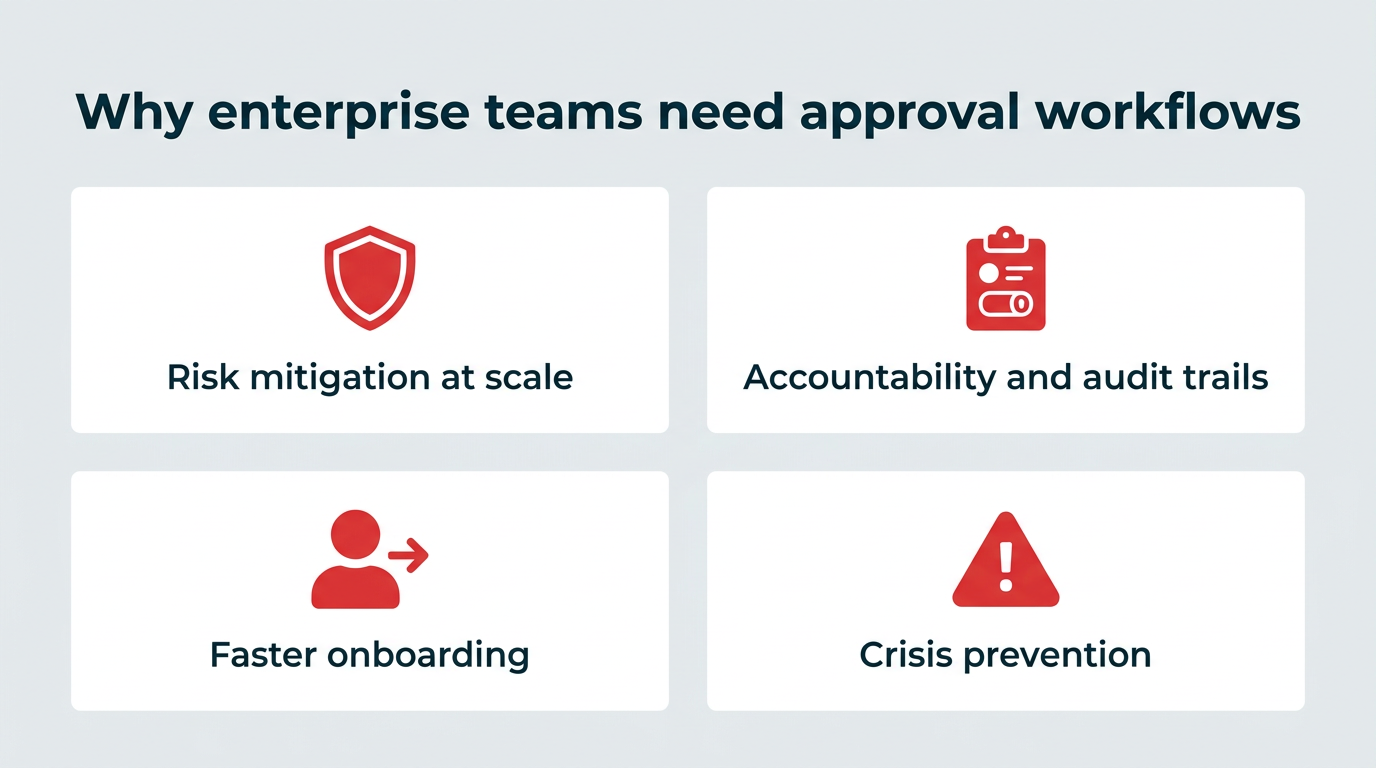
At its fundamental level, a social media approval process is the systematic framework a team employs to draft, refine, and authorize content before it reaches a public audience. It serves as a necessary gatekeeper, ensuring that typos, broken links, and off-brand messaging are intercepted long before they can reach followers.

For modern enterprises, this is not merely a formality; it is a vital layer of risk management. Whether you are a small boutique agency or a multinational corporation, a formal process transforms the creative chaos of content production into a streamlined, predictable cycle. It aligns disparate team members, ensures consistent tone, and provides a clear audit trail that is increasingly essential in regulated industries such as finance, healthcare, and government.
Chronology: The Life Cycle of a Post
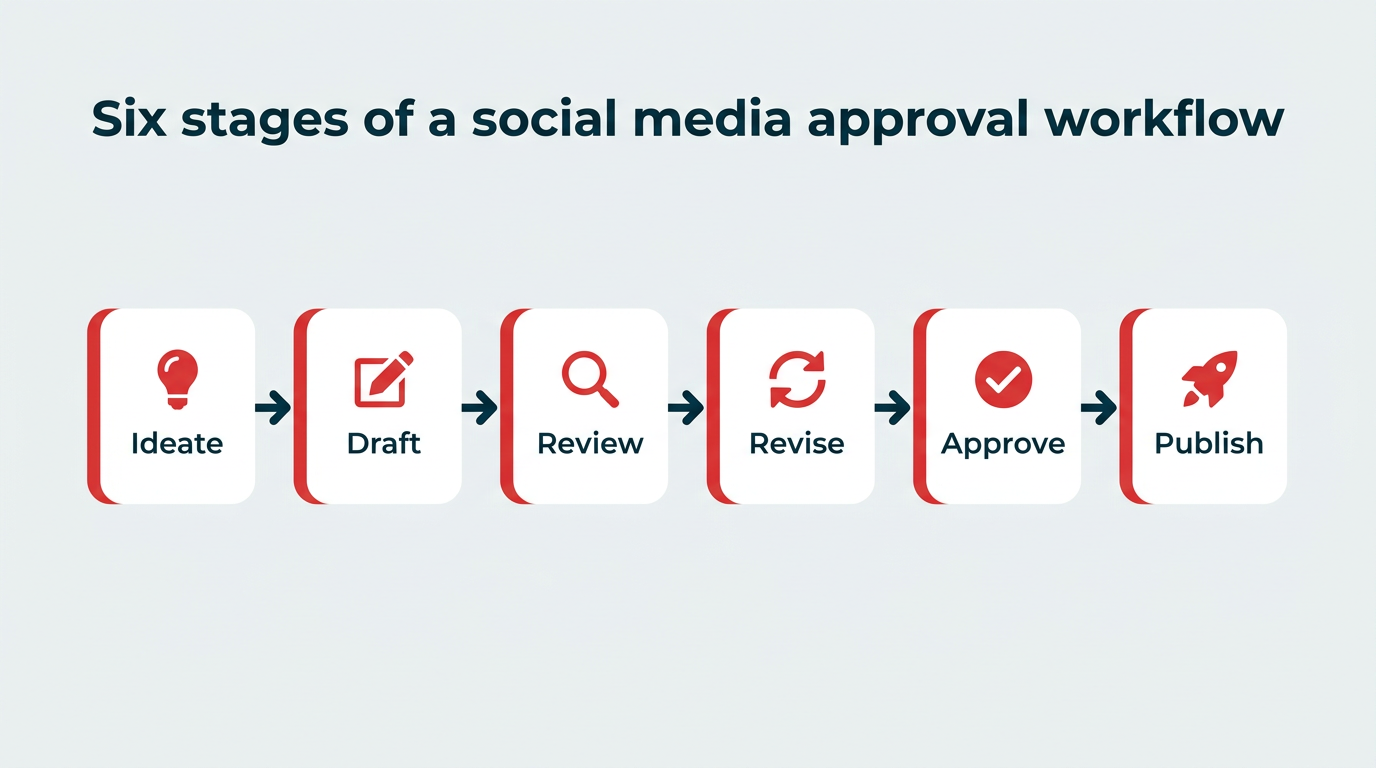
To understand the efficacy of an approval workflow, one must map the journey of a single piece of content. The standard lifecycle follows a six-stage progression:

- Ideation: The initial spark of a concept, usually documented in a creative brief or editorial calendar.
- Drafting: The creator develops the copy, visual assets, and links.
- Review: A designated editor or strategist inspects the content for quality, tone, and brand alignment.
- Revision: A collaborative loop where feedback is implemented, and the content is polished.
- Approval: The final sign-off by a stakeholder with authority.
- Publishing: The content is scheduled or pushed live to the relevant platforms.
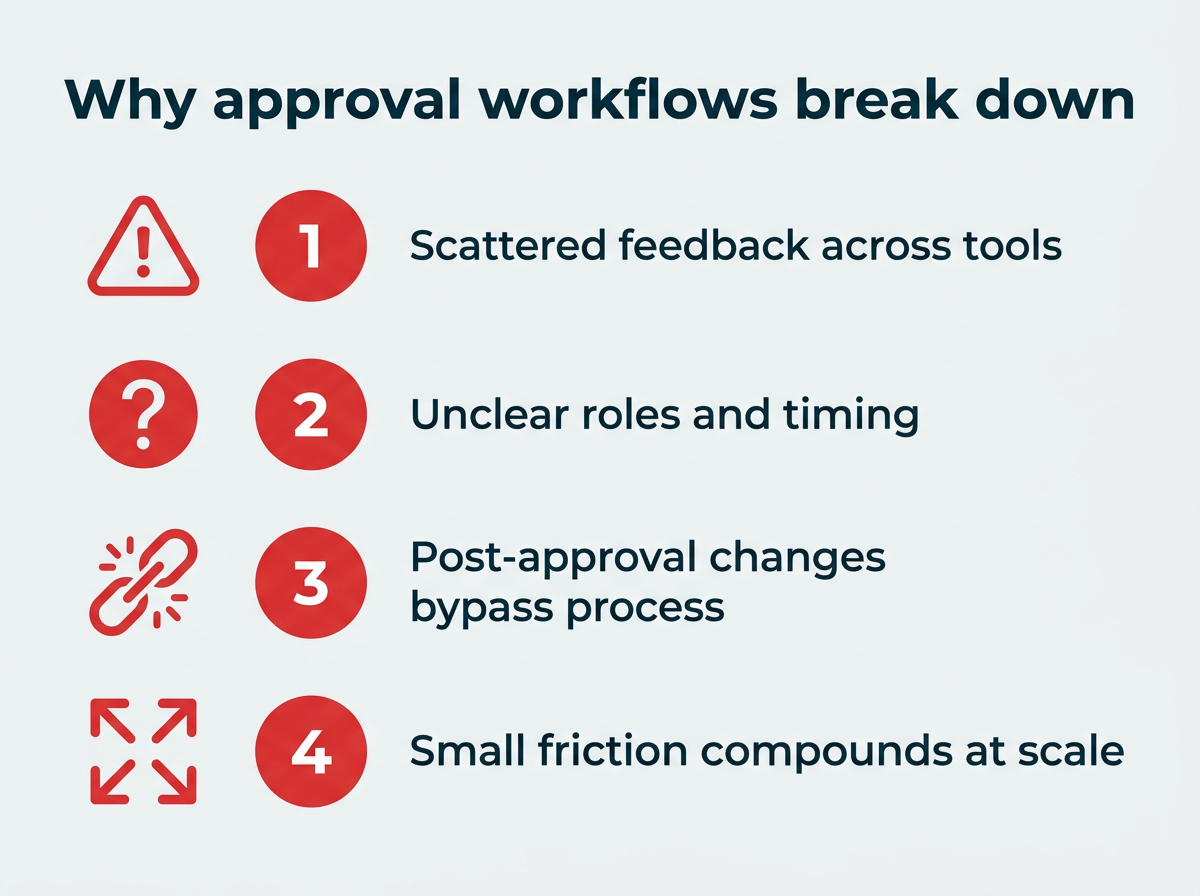
When this chronology is followed, the team avoids the common pitfalls of last-minute panic. Without this structure, teams often fall into the "scattered feedback trap," where comments are buried in email chains, Slack DMs, and verbal requests—a scenario that inevitably leads to missed edits and operational friction.
Structural Paradigms: Choosing Your Workflow
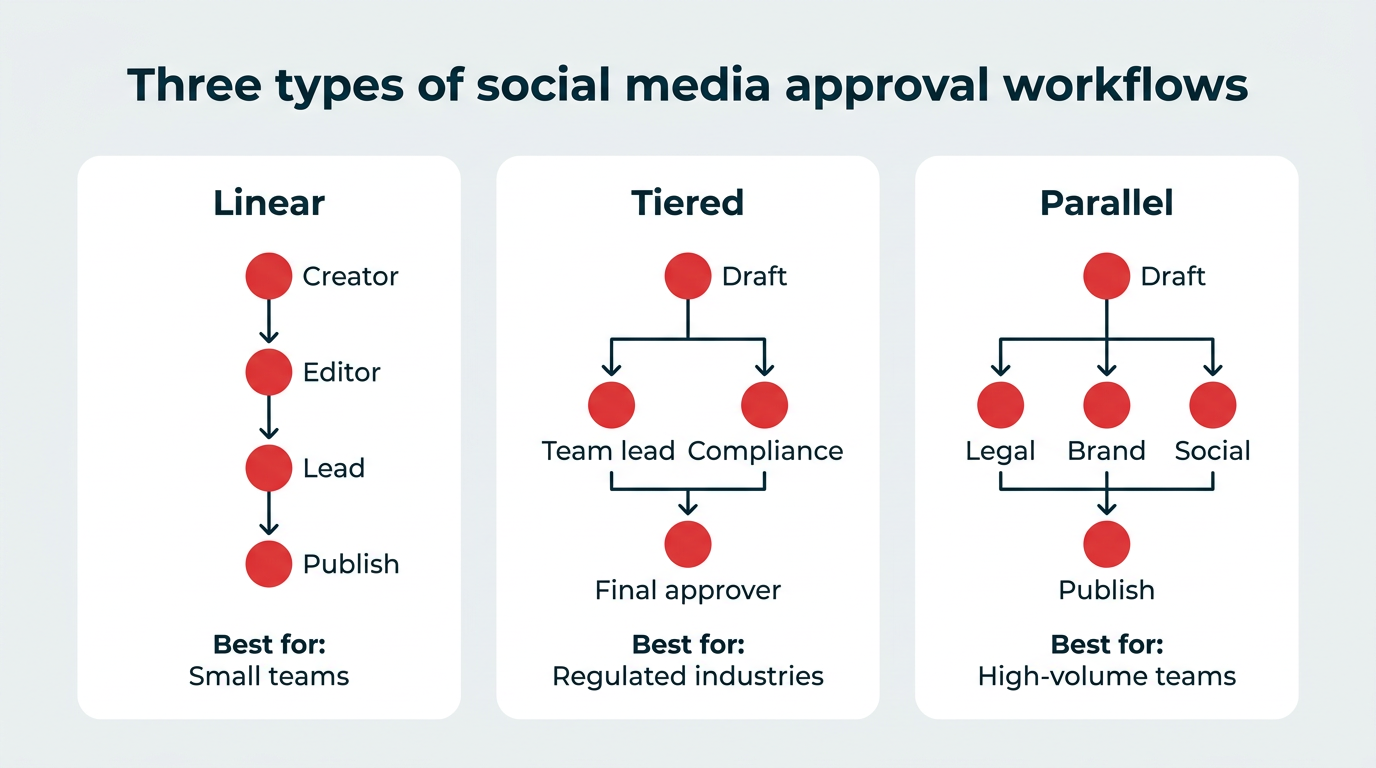
Not all teams require the same level of oversight. Depending on your organization’s size and publishing volume, there are five primary models:
- Linear Approval: The simplest form, moving from creator to editor to publisher in a fixed, single-file line. This is ideal for small, agile teams.
- Tiered (Multi-Level) Approval: Essential for enterprise organizations. Here, content requires sequential sign-offs from multiple departments—for instance, a brand lead, a legal counsel, and a department head.
- Parallel Approval: Multiple stakeholders review content simultaneously. This significantly cuts down turnaround time but requires a single, designated final decision-maker to resolve conflicting feedback.
- Conditional (Exception-Based) Approval: A sophisticated approach where the routing changes based on the content type. A routine organic tweet might skip legal review, while a high-stakes paid campaign triggers a rigorous, multi-tier process.
- Hybrid Approval: A mix of the above, often used by large organizations to balance speed for day-to-day posts with security for sensitive, large-scale campaigns.
Supporting Data and Scaling Challenges
Data consistently shows that inefficient content operations are a top challenge for marketing teams. As teams scale, small frictions—such as unclear roles or inconsistent approval criteria—compound into massive bottlenecks.
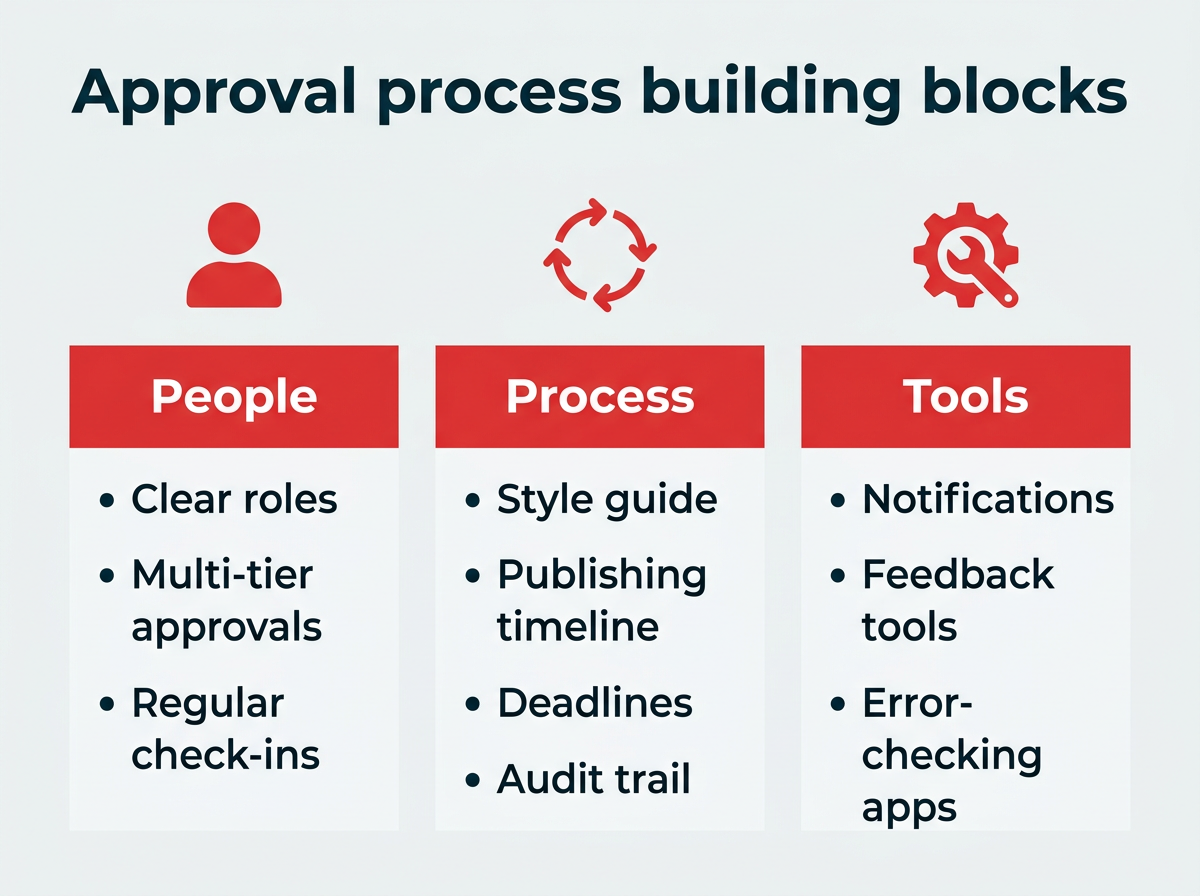
For instance, an enterprise team managing accounts across five regions will face chaos if they lack centralized visibility. Without a single, unified calendar view to track what is pending, approved, or scheduled, the probability of compliance incidents and brand-voice drift increases exponentially. According to industry best practices, the most successful teams utilize role-based permissions, which ensure that only authorized individuals can authorize a transition to the next stage, effectively creating an immutable audit trail.
Official Perspectives: The Role of Technology
Industry leaders, including the team at Hootsuite, emphasize that the right tools are not optional—they are the backbone of the process. Effective social media management platforms allow for:
- Automated Notifications: Reducing the "chase" by alerting reviewers exactly when their input is needed.
- Centralized Dashboards: Bringing AI-assisted drafts and human-created content into the same pipeline.
- Locked Content: Ensuring that once a post is approved, it cannot be altered by mistake, protecting the integrity of the final product.
When asked about the role of AI in these workflows, experts suggest that while generative AI can drastically speed up the drafting phase, it should never bypass the approval gate. AI-assisted content must be treated with the same, if not higher, level of scrutiny to catch potential factual inaccuracies or hallucinations that could compromise a brand’s reputation.
Implications for Regulated Industries
For sectors like pharmaceuticals or finance, the stakes are elevated. Publishing unapproved content can lead to severe regulatory fines or even the loss of professional licensure. In these environments, the approval workflow acts as a mandatory safety net.
Key considerations for these industries include:
- Compliance Tagging: Ensuring every post is vetted for mandatory disclosures.
- Archiving: Keeping a permanent record of what was published and who approved it for future audits.
- Access Controls: Restricting the ability to post to a limited, verified group of employees.
Measuring Success: Key Performance Indicators
A workflow is only as good as the data it produces. Teams should track the following metrics on a quarterly basis:
- Time-to-Publish: The total duration from the initial draft to the live post.
- Revision Rounds: The average number of times a piece of content is sent back for changes.
- Bottleneck Frequency: Identifying which stage or which reviewer is most frequently holding up the process.
- Error Rate: The number of posts that required post-publish edits or were removed due to errors.
- Team Satisfaction: Subjective feedback from the team regarding the ease of use of the current system.
Implementation: A Six-Step Path to Efficiency
Building a sustainable workflow requires intentionality.
- Define Roles: Clarify who acts as the creator, the reviewer, and the final approver.
- Map Stages: Create a clear, documented path for content movement.
- Choose a Structure: Align your workflow type (linear, parallel, etc.) with your team’s volume.
- Adopt Technology: Use a centralized platform to house the entire process.
- Document Guidelines: Create a "source of truth" document covering brand voice and SLAs.
- Test and Iterate: Treat your workflow as a living document, adjusting it based on the metrics you collect.
Conclusion: The Path Forward
In the digital age, a social media approval workflow is not a bureaucratic hurdle; it is a competitive advantage. It empowers teams to be creative and bold, knowing that their work is protected by a safety net of their own design. By clarifying roles, centralizing feedback, and embracing technology, organizations can ensure that their social media presence remains consistent, compliant, and—above all—effective.
As your team continues to grow and your publishing volume increases, remember that the goal is not to over-engineer the process, but to create a path of least resistance from a brilliant idea to a successful, high-impact post. Start by auditing your current process, identifying the most frequent points of failure, and implementing these proven strategies to secure your brand’s future.












No comments yet. Be the first to join the conversation!