

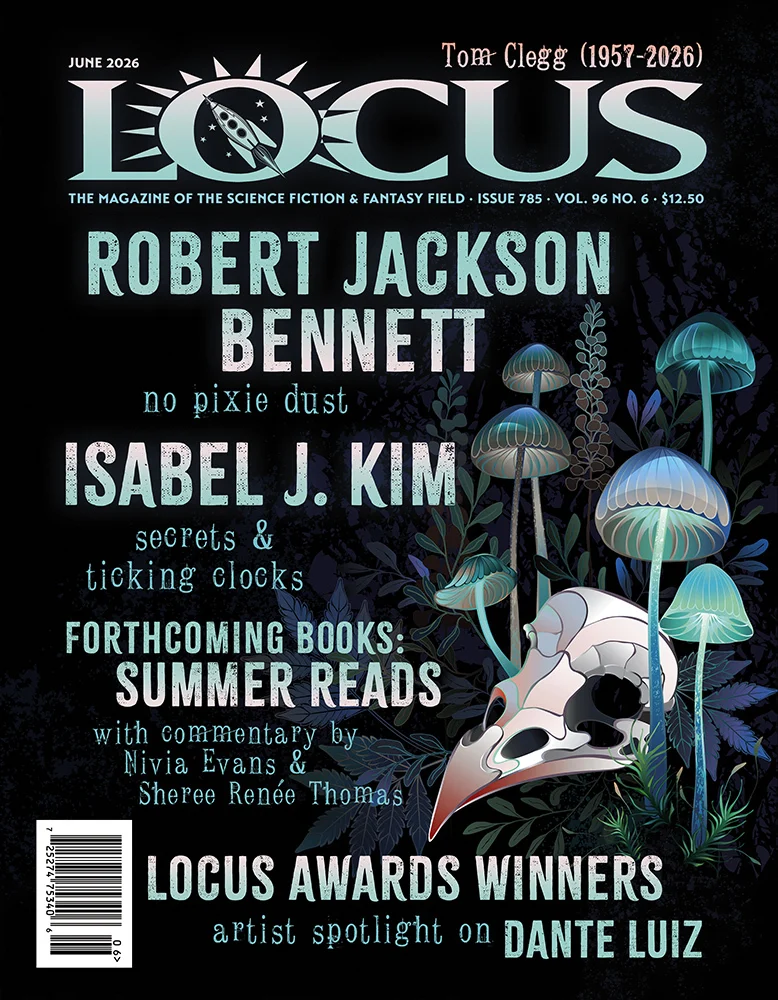
As the definitive voice in the science fiction and fantasy community, Locus magazine continues its legacy of critical excellence with the release of its June 2026 issue (#785). Marking its 59th year of publication, this milestone issue offers a comprehensive snapshot of a genre in constant evolution, balancing industry-shaping news, profound retrospectives on lost legends, and a sprawling collection of reviews that capture the breadth of contemporary speculative fiction.
Main Facts: A Landmark Issue for the SFF Community
The June 2026 edition of Locus serves as both a ledger of current industry health and a celebration of creative output. Anchored by cover art from Nelli Valova and design work by Francesca Myman, the issue is headlined by exclusive, in-depth interviews with two of the genre’s most compelling voices: Robert Jackson Bennett and Isabel J. Kim.
The editorial focus for this issue centers heavily on the transition into summer, featuring a robust "Summer Reads" section. This package includes curated recommendations from the magazine’s seasoned review staff, alongside strategic insights from Saga editor Nivia Evans and author/editor Sheree Renée Thomas.
Beyond the creative focus, the issue serves as a vital record of the industry’s high-water marks, prominently featuring the 2026 Locus Awards winners, reporting on Daniel Kraus’s recent Pulitzer Prize victory, and highlighting the winners of the LA Times Book Prize. With the announcement of new industry entities like the Transworld imprint "3AM Books," the magazine reinforces its role as a necessary companion for professionals and enthusiasts alike.

Chronology of Industry Developments
The landscape of publishing is rarely static, and the "Data File" section of this issue outlines a busy spring for the literary world. Key developments captured in this report include:
- Early 2026: The preliminary ballot for the Ditmar Awards is released, signaling the start of the regional awards season.
- March 2026: Night Shades Magazine maintains its rapid output, while Strange Horizons and PodCastle continue their consistent delivery of short fiction, all noted in this issue’s extensive review coverage.
- April 2026: A wave of industry news hits, including the announcement of the Aurora Awards ballot and the commencement of the online 2026 Hugo voting process.
- May 2026: The official publication of Locus #785, coinciding with the industry-wide recognition of the 2026 Locus Awards winners and the celebration of the late Tom Clegg.
This chronology underscores the sheer volume of output in the SFF field, from the quarterly Analog AnLab awards to the ongoing developments in international rights and publishing house stability, such as the reported layoffs at Bloomsbury.
Supporting Data: An Unprecedented Review Volume
One of the most valuable aspects of the June 2026 issue is its exhaustive commitment to criticism. Locus has assembled an all-star team of reviewers—including Gary K. Wolfe, Ian Mond, Alexandra Pierce, Maya C. James, Niall Harrison, Abigail Nussbaum, Colleen Mondor, and Gabino Iglesias—to parse through the latest releases.
The list of reviewed titles represents a global reach, featuring translations from Julia Sanches, Anton Hur, and Jim Rion. Among the highlights are:

- Literary heavyweights: Amitav Ghosh’s Ghost-Eye and M. John Harrison’s The End of Everything.
- Genre staples: Garth Nix’s Massif, Ann Leckie’s Radiant Star, and the latest installment in the Expanse universe, The Faith of Beasts by James S.A. Corey.
- Rising voices: Isabel J. Kim’s Sublimation and Pemi Aguda’s One Leg on Earth.
This data confirms that the market is currently favoring a blend of established franchise expansion and experimental, voice-driven short-story collections, a trend reflected in the magazine’s "New & Notable" section for April.
Official Responses and Obituaries
A recurring duty of Locus is the dignified remembrance of those who shaped the genre. This issue pays poignant tribute to three figures who left an indelible mark on the field: Tom Clegg, Michael P. Spradlin, and Donald Sidney-Fryer.
In a moving appreciation, Kim Stanley Robinson reflects on the life and legacy of Tom Clegg (1957–2026). The inclusion of such personal tributes serves to ground the magazine’s industry reporting in the human reality of the community. These obituaries are not merely footnotes; they are essential reminders that the genre’s history is built upon the life work of its contributors.
Furthermore, the issue addresses the institutional challenges facing the industry today. The "Data File" includes reports on the launch of the PEN America Author Safety Program, indicating a collective move toward protecting writers in an increasingly polarized digital environment. These official industry responses to safety and security demonstrate that the SFF community is actively engaged in the broader societal discourse regarding labor and creative freedom.

Implications for the Future of SFF
The June 2026 issue suggests several critical implications for the future of the science fiction and fantasy genre:
1. The Rise of Independent and Imprint-Driven Publishing
The birth of "3AM Books" as a new Transworld imprint, alongside the steady influx of translated works from smaller presses, suggests a market shift toward specialized, curated imprints. Readers are increasingly seeking out curated "tastes" from specific editors like Nivia Evans, rather than relying solely on legacy publishing houses.
2. The Globalization of Genre Fiction
With translations from Korean, Spanish, and Japanese (via Uketsu, translated by Jim Rion), the scope of what constitutes "mainstream" SFF has widened significantly. The inclusion of these works in a premier magazine like Locus indicates that the "world-building" aspect of SFF is now truly global, breaking free from traditional Anglo-centric dominance.
3. The Digital-Physical Hybrid Model
As Locus continues to offer both print subscriptions and digital access, it mirrors the wider book market’s reliance on a hybrid model. The inclusion of photo stories from events like "Brooklyn Books & Booze" proves that the SFF community is desperate for the return of in-person, social, and tactile experiences after years of digital isolation.

4. Sustainability and the "Donate" Model
Finally, the magazine’s open appeal for reader donations highlights the precarious nature of independent journalism. As an institution that relies on its readership to maintain its massive database of reviews and news, Locus represents the "public good" of literary criticism. The implication here is clear: the survival of deep, thoughtful criticism is directly tied to the financial support of the readers who benefit from it.
Conclusion: A Living Archive
The June 2026 issue of Locus is more than just a magazine; it is a vital organ of the SFF community. By meticulously tracking awards, providing a platform for complex critical reviews, and honoring the lives of those who have passed, Locus ensures that the history of the genre remains a living, breathing entity.
For the reader, this issue serves as a roadmap for the coming months—a guide to what to read, who to watch, and how the industry is pivoting in an uncertain, rapidly changing world. As Locus enters its 60th year, it remains the gold standard for what a professional publication can achieve when it treats its subject matter with the gravity and passion it deserves. Whether you are a long-time subscriber or a new reader looking to navigate the vast sea of modern SFF, issue #785 provides the essential tools to stay informed, inspired, and engaged.











No comments yet. Be the first to join the conversation!