

It has been nearly a decade since Boots Riley—the polymathic rapper, activist, and filmmaker—shook the foundations of the industry with his satirical debut, Sorry to Bother You. That film, a surrealist descent into the horrors of corporate assimilation, set a high bar for political cinema. Now, Riley has returned with I Love Boosters, a film that manages to be simultaneously more vibrant, more philosophical, and, perhaps most surprisingly, more optimistic than its predecessor.
I Love Boosters is not merely a heist film; it is a cinematic manifesto on the nature of capitalism, the necessity of collective action, and the power of women of color in the face of systemic tyranny. By transforming the "booster" subculture—individuals who steal high-end merchandise to redistribute it at affordable prices—into a sci-fi epic of class warfare, Riley has crafted a work that feels urgent, necessary, and dangerously fun.
The Premise: Stealing Back the Future
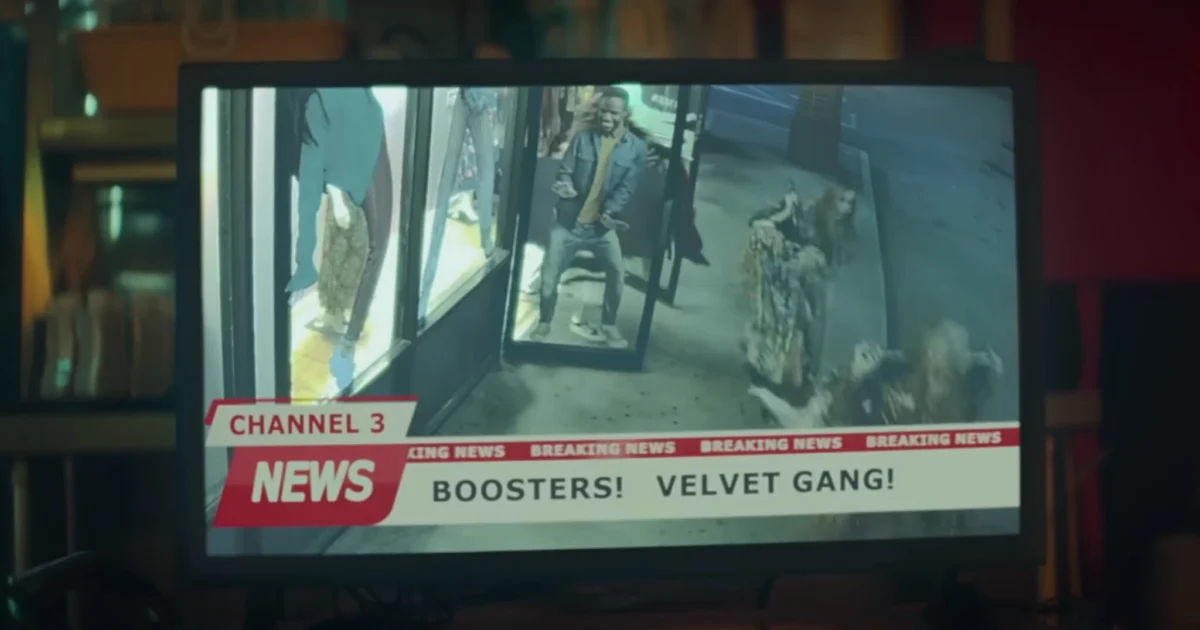
The film draws its title and thematic heart from a 2006 track by Riley’s legendary hip-hop group, The Coup. In the lexicon of the streets, "boosters" are the Robin Hoods of the retail world. The narrative centers on "The Velvet Gang," a San Francisco-based crew led by the determined, fashion-forward Corvette (Keke Palmer). Alongside her cohorts—Sade (Naomi Ackie) and Mariah (Taylour Paige)—and their occasional "distraction" specialist, Stevie (Rachel Walters), the crew targets Metro Designers, a soulless fashion conglomerate helmed by the vapid and hyper-capitalist Christie Smith (Demi Moore).
Corvette is not just a thief; she is an artist whose own designs have been sidelined by the very system that exploits her. When Smith publically disparages these "urban" thieves on social media, the conflict shifts from simple economic survival to a deeply personal vendetta. The Velvet Gang infiltrates the inner sanctum of Metro Designs, not just to steal, but to dismantle the myth of the "visionary" CEO.

Chronology of a Class Uprising
The plot unfolds with the frenetic pace of a heist thriller, but it is anchored by a slow-burn realization of the stakes.
- Act I: The Infiltration. The Velvet Gang secures employment at a Metro Designs outpost under the watchful eye of their harried manager, Grayson (Will Poulter). The goal is to clear out the store, but the plan is complicated by the arrival of an unexpected variable: Jianhu (Poppy Liu), a sweatshop worker from China who has utilized a government-developed, high-tech device to literally teleport across the globe.
- Act II: The Convergence. Jianhu’s technology, which was designed to cut shipping costs for global elites, is repurposed by the gang. The story expands as their coworker Violeta (Eiza González) introduces the group to the true potential of these devices. Beyond teleportation, the tech possesses capabilities rooted in the philosophy of dialectical materialism: the "situational accelerator," which pushes conflicts to their logical apex, and the "deconstructor," which strips objects back to their moment of creation.
- Act III: The Collective Apex. The film culminates not in a singular heroic victory, but in a series of coordinated heists across the Bay Area. The individualistic drive for revenge, which once defined Corvette’s motivations, is replaced by a broader understanding of solidarity. As the gang realizes that their personal struggles are inextricably linked to those of the workers in China and the retail floor, the film shifts from a story of theft to one of total systemic transformation.
Supporting Data: The Anatomy of the "Girlboss" Villain
Demi Moore’s performance as Christie Smith serves as a definitive critique of the "girlboss" archetype. Unlike the overt, cartoonish villainy of previous corporate satires, Smith is portrayed as a true believer in her own necessity. She views herself not as an exploiter, but as a benefactor who deigns to bestow "vision" upon the masses.
The film meticulously deconstructs this. Through the lens of the Metro Designs empire, Riley illustrates how art is co-opted by capital, denying the average person the right to create for themselves. The production design—specifically the forty-five-degree tilt of Smith’s apartment and the recurring imagery of a massive, rolling ball of trash—serves as a visual metaphor for the instability and eventual collapse of the capitalist status quo.
The Philosophical Core: Beyond the "Great Man" Theory
One of the most compelling aspects of I Love Boosters is its insistence on collective liberation. While the film is filled with "sci-fi" gizmos, these devices are essentially metaphors for the tools of political education and solidarity.

Violeta’s lesson on the "situational accelerator" is a poignant nod to the belief that, when given the right conditions, the contradictions of capitalism will inevitably resolve themselves—if only the people have the courage to push them to that point.
Furthermore, the film makes a pointed choice to sideline the "romantic lead." When the "Pinky Ring Guy" (LaKeith Stanfield) enters the fray, he is not a potential partner but a literal demon—a humorous, biting commentary on the time and emotional energy that patriarchal structures demand from women. The focus remains steadfastly on the bonds between the women of The Velvet Gang.
Official Responses and Cultural Context
While the film is currently in the early stages of its theatrical run, early critical discourse has already begun to contrast its tone with the darker, more cynical ending of Sorry to Bother You. Where the 2018 film suggested that the system might be too pervasive to dismantle, I Love Boosters suggests that victory is not only possible but inevitable, provided we stop fighting each other for the crumbs of a broken table.
The inclusion of high-profile cameos—including Don Cheadle, Viggo Mortensen, and an unforgettable turn by Eric André—adds a layer of chaotic, star-studded energy that masks the heavy lifting of the film’s political theory. However, it is the quiet, emotional moments—like the heated argument between Sade and Corvette regarding their future—that ground the film. Sade’s demand to be heard is a reminder that even within revolutionary movements, the human need for empathy and support remains the primary engine of progress.

Implications: A Template for the Future
I Love Boosters does not pretend that the fight is easy. It acknowledges the pull of pyramid schemes, the sting of personal failure, and the temptation of revenge. Yet, it refuses to shame its characters for these very human responses. Instead, it posits that the road to change becomes "smoother" only when we begin to pave it together.
In an era where the public is often bombarded with "Manosphere" rhetoric and a sense of terminal, creeping hopelessness, Boots Riley has delivered something profoundly radical: a movie about the joy of resistance.
The film implies that we are currently living in the "pre-deconstruction" phase of our own history. The tools for change are already in our hands—be it technology, labor unions, or the simple, quiet act of supporting a friend’s creative endeavor. I Love Boosters is not just a film to be watched; it is a prompt. It asks the audience to look at their own "Metro Designs" and decide if they are ready to stop stealing the clothes and start burning the store down—metaphorically speaking, of course.
Ultimately, I Love Boosters confirms that Boots Riley is one of the most vital voices in modern cinema. He has managed to turn the complex, often dry academic concepts of dialectical materialism into a vibrant, stylish, and deeply human action flick. If this is the future of political filmmaking, then the revolution might just be as entertaining as it is necessary.











No comments yet. Be the first to join the conversation!