Rifan Muazin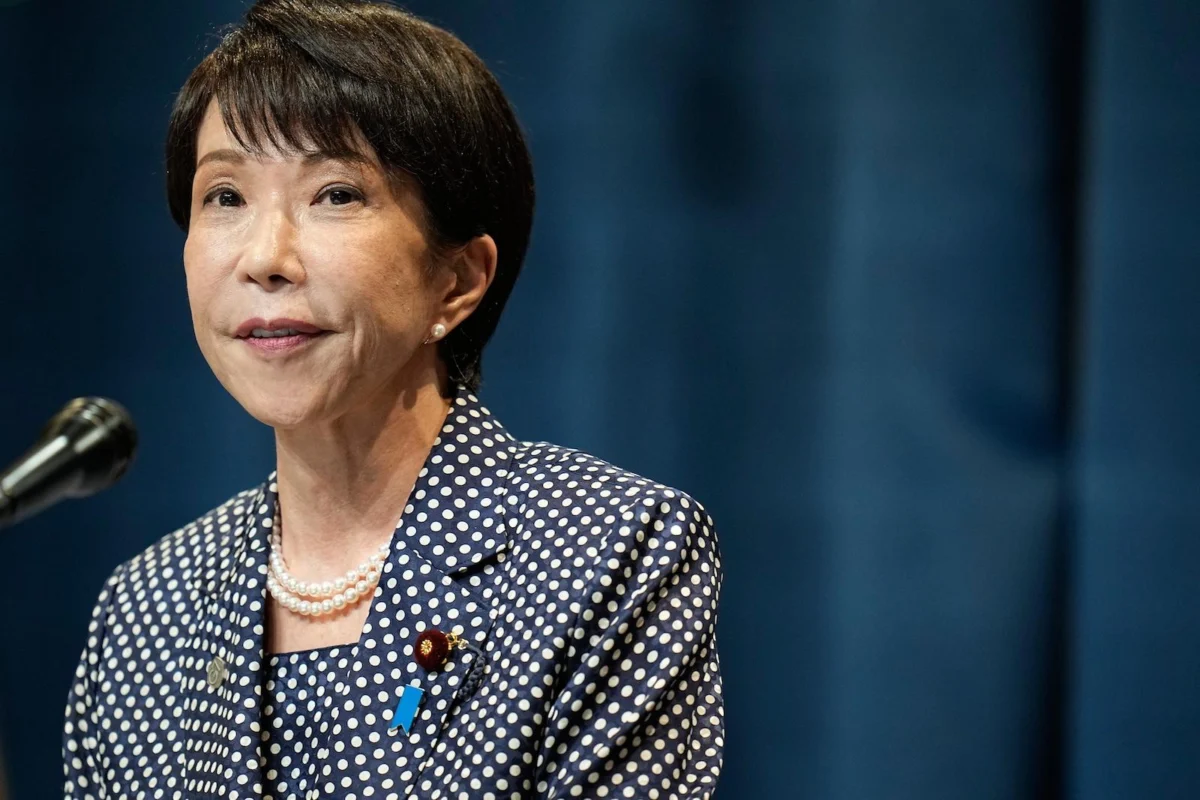
TOKYO — In the high-stakes theater of Japanese politics, the art of the "shared meal" has long served as a vital, if informal, mechanism for legislative consensus. For months, Prime Minister Sanae Takaichi stood as a notable exception to this tradition, favoring a detached, policy-first approach that earned her accolades for efficiency but garnered significant resentment within the halls of the Liberal Democratic Party (LDP).
However, recent shifts in the Prime Minister’s schedule reveal a calculated pivot. Facing a delicate legislative landscape and mounting friction within her own ranks, Prime Minister Takaichi has markedly increased her social engagements with senior ruling party officials. This strategic outreach marks a clear attempt to mend fences, consolidate her power base, and ensure the survival of her administration’s ambitious, yet controversial, legislative agenda.
The Genesis of Friction: A High-Handed Reputation
Prime Minister Takaichi’s political style—characterized by decisive action and a rapid pace—proved both her greatest strength and a significant liability. Her decision earlier this year to call a surprise snap election, followed by an aggressive push to enact the fiscal 2026 state budget despite a compressed parliamentary schedule, caught many in the LDP off guard.
While the February general election resulted in a resounding victory for the ruling coalition—granting the LDP and its partner, the Japan Innovation Party, a supermajority in the powerful House of Representatives—the victory masks a deeper vulnerability. The ruling coalition lacks a similar majority in the House of Councillors (the upper house). In this chamber, the administration is forced to rely on the cooperation of an often-combative opposition to secure the passage of critical bills and budgets.
Sources close to the Prime Minister suggest that Takaichi was initially oblivious to the growing chasm between her office and the LDP lawmakers tasked with navigating these upper-house negotiations. By prioritizing the speed of enactment over the sensitivities of coalition management, Takaichi inadvertently alienated the very individuals responsible for her legislative success.
Chronology of the Diplomatic Pivot
The change in Takaichi’s operational style did not happen overnight, but the data points to a distinct acceleration starting in April.
Phase I: The Post-Budget Thaw (April 2026)
Following the successful enactment of the fiscal 2026 budget on April 7, Takaichi initiated a series of reconciliatory gestures. Recognizing the heavy lifting performed by upper-house LDP members in negotiating with the opposition, she hosted a dinner for these senior officials at her official residence. The event was explicitly framed as a gesture of gratitude, but political analysts viewed it as the first tangible signal that the Prime Minister understood the necessity of "face-to-face" diplomacy.
Phase II: The "Ishii" Reconciliation (Late May 2026)
Perhaps the most significant development occurred in late May, when Takaichi dined with Junichi Ishii, the LDP’s secretary general in the upper house. Their relationship had been widely described as strained; Ishii had previously organized a faction of dozens of upper-house LDP lawmakers, a move interpreted by political observers as a display of leverage intended to check the Prime Minister’s authority.
The dinner at the official residence proved pivotal. According to individuals familiar with the proceedings, the tone was notably informal. Takaichi shared personal anecdotes, and the meeting concluded with an exchange of gifts—cosmetics and soap—a symbolic gesture that suggests a genuine thaw in relations.
Phase III: Sustained Engagement (June 2026 – Present)
Data compiled by Kyodo News underscores the magnitude of this shift. Over the two-month period since April, the number of working meals involving Takaichi and senior party officials has already surpassed the five confirmed meetings held over the preceding five months combined. This sustained cadence of engagement suggests that the Prime Minister’s office has institutionalized this outreach as a core component of her current administration.
Supporting Data: The Arithmetic of Coalition Politics
To understand why this shift is occurring now, one must look at the mathematical reality of the Japanese Diet.
- House of Representatives: The LDP/Japan Innovation Party coalition maintains a supermajority, allowing for relative autonomy in policy implementation.
- House of Councillors: The lack of a majority here creates a "bottleneck effect." Every major policy proposal must be negotiated with opposition parties.
When the Prime Minister acts unilaterally, the upper-house LDP leadership bears the brunt of the political fallout. As the current Diet session enters its final, high-pressure weeks, Takaichi’s legislative agenda faces several hurdles that require broad, rather than narrow, support:
- Flag Desecration Legislation: A controversial proposal to impose penalties for the desecration of the Japanese flag.
- Legislative Downsizing: A push to reduce the total number of seats in the Diet, a move that threatens the job security of existing lawmakers.
These items are inherently divisive. Without a cohesive, unified party front, the administration risks a humiliating legislative defeat—a scenario that would undermine the momentum Takaichi has built since taking office in October of last year.
Official Responses and Internal Sentiment
While the Prime Minister’s office remains officially guarded, sources within the administration confirm that the change in strategy is both intentional and permanent. "The Prime Minister is aware of the need for deeper communication," a high-ranking official stated on condition of anonymity. "The working meals are not just a temporary fix; they are part of a revised approach to party management."
However, not all party members are fully convinced. While the atmosphere at the official residence has improved, some veterans of the LDP remain skeptical of whether these dinners are a genuine change of heart or a calculated tactical retreat.
"The Prime Minister has a high-handed reputation for a reason," one senior LDP lawmaker noted. "Shared meals are a good start, but they are only a precursor to true policy collaboration. We are waiting to see if this openness extends to the actual drafting of legislation, rather than just the socializing that follows it."
Implications for the Takaichi Administration
The implications of Takaichi’s shift in style are twofold:
1. Short-Term Legislative Stability
By effectively neutralizing the internal dissent of figures like Junichi Ishii, Takaichi has significantly increased the likelihood that her government will survive the current Diet session with its reputation intact. The ability to pass the flag desecration bill and the downsizing measure will serve as a barometer for her restored authority within the party.
2. Long-Term Governance Style
The more profound question is whether Takaichi can reconcile her instinct for decisive, top-down leadership with the consensus-driven culture of the LDP. If this pivot to "dinner diplomacy" succeeds, it could mark the evolution of her leadership style into a more balanced model—one that maintains her reputation for speed and efficiency while respecting the traditional power centers of the party.
If it fails, or if she reverts to her previous style once the immediate legislative crisis passes, the party may see a resurgence of the factionalism that has historically plagued LDP administrations.
As the Diet session draws to a close, all eyes will be on the Prime Minister’s official calendar. The "shared table" has become the primary site of political negotiation in Tokyo. For Prime Minister Takaichi, the ability to cultivate allies over dinner may prove to be just as important to her legacy as the policies she fights to enact in the chamber.
With public support remaining relatively solid since her inauguration last October, Takaichi still holds a significant advantage. Yet, in the labyrinthine world of Japanese politics, the support of the public is only half the battle; the support of one’s own party is the bedrock upon which all successful premierships are built. For now, the Prime Minister appears to have recognized this truth, trading the isolation of the office for the conviviality of the dining room. Whether this change is a transformation or merely a performance remains to be seen.


 Neng Nana
 Asro
Asro