In the ever-shifting landscape of PC hardware, memory has emerged as a particularly volatile component. As global DRAM supply chains face persistent pressure, system builders are finding themselves navigating a market defined by fluctuating prices and limited availability. For those currently planning a high-capacity build or looking to upgrade an existing platform, the search for value has become a high-stakes exercise in patience and research.
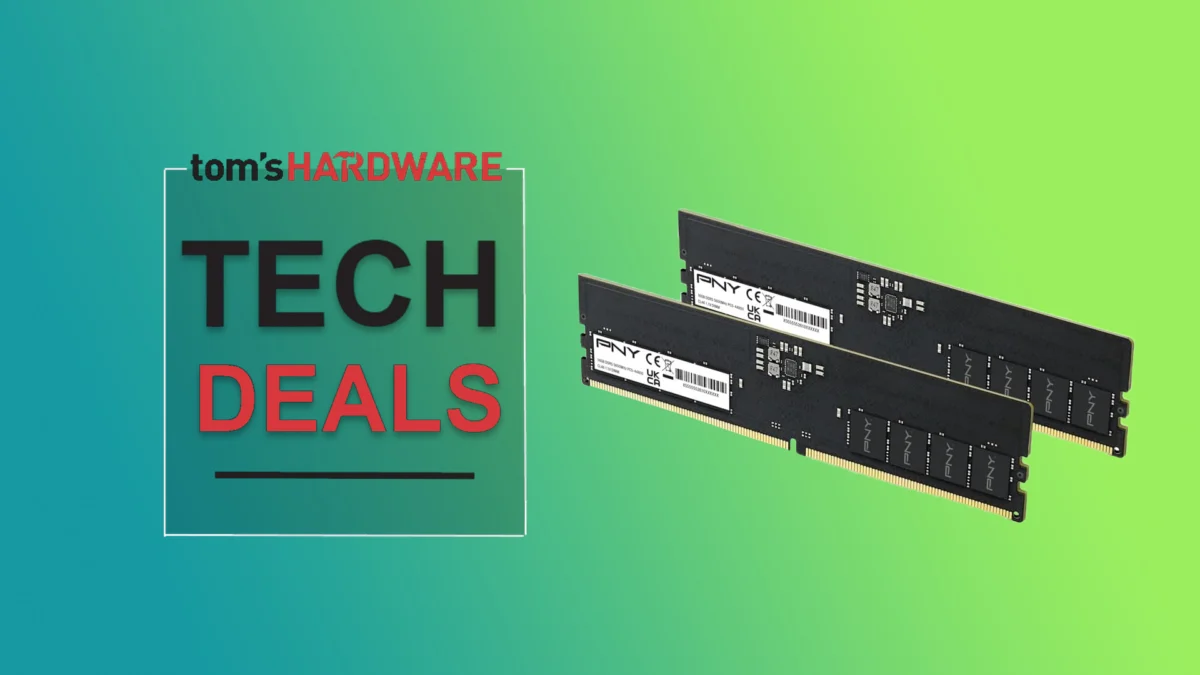
Against this backdrop, a notable development has arrived: the PNY Performance 32GB (2x16GB) DDR5 memory kit has seen a significant price correction on Amazon. Having previously listed at a daunting $449.99, the kit is now available for $379.99—a $70 reduction that places it firmly among the most accessible 32GB DDR5 options currently on the market. But as prices stabilize, the question remains: does a "budget" choice in the DDR5 era provide the performance longevity that modern enthusiasts demand?
The Current State of the DRAM Market
To understand why a $379.99 price tag for 32GB of RAM is considered a "deal," one must look at the broader industry context. The transition from DDR4 to DDR5 has been anything but smooth. Unlike previous generational leaps, the migration to DDR5 was hampered by complex power management integrated circuits (PMIC) and supply chain bottlenecks that kept initial production costs prohibitively high.
Even as manufacturing yields have improved, the industry remains sensitive to production cutbacks from major memory manufacturers. These companies often throttle output to maintain price floors during periods of low consumer demand. For the end-user, this manifests as a frustrating plateau where prices refuse to drop significantly, forcing many to settle for lower capacities or slower kits.
The PNY Performance kit represents a segment of the market focused on utility over vanity. By stripping away the premium aesthetic flourishes that drive up the price of "gaming-branded" memory, manufacturers like PNY are attempting to provide a path to high-capacity computing without the "RGB tax."
Chronology: How We Reached This Price Point
The timeline of DDR5 pricing over the last 18 months has been a rollercoaster. When the standard first launched, 32GB kits often commanded prices exceeding $600. Through the latter half of 2023 and early 2024, we saw a slow, steady decline as production matured.
- Early 2023: DDR5 kits were largely reserved for early adopters and extreme enthusiasts. Supply was sparse, and prices for 32GB kits frequently hovered between $500 and $700.
- Late 2023: A massive influx of inventory from major players led to the first major price break. We began to see $400 barriers broken, though stability was elusive.
- Q1 2024: Market analysts noted a tightening of supply, which caused prices to tick upward again. This brings us to the current situation, where the PNY Performance kit’s move from $449.99 to $379.99 serves as a crucial signal. It suggests that even amidst high costs, there is enough competition to force vendors to shave margins to capture the budget-conscious segment.
Technical Analysis: Beneath the Surface
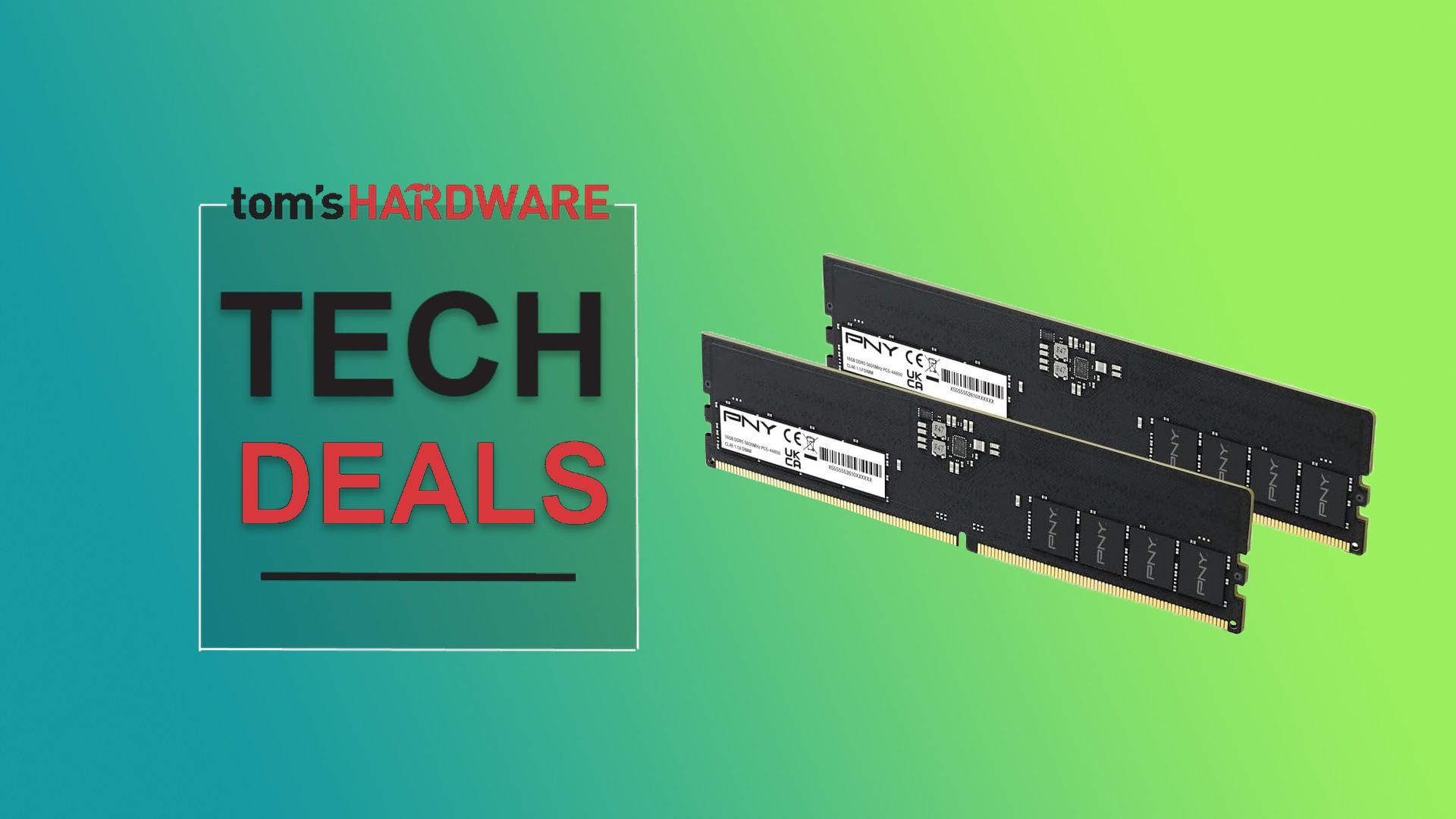
The PNY Performance 32GB kit is designed for the pragmatic builder. The kit consists of two 16GB modules, a standard configuration that allows for dual-channel operation—a necessity for modern processors from both Intel and AMD.
Performance Metrics
The modules are rated for 5600 MT/s at CL46 latency. For the uninitiated, "MT/s" (MegaTransfers per second) refers to the speed of the data transfer, while "CL" (CAS Latency) refers to the delay between the memory controller’s request and the data being made available.
A CL46 rating is objectively "loose" by high-end standards. Enthusiast-grade kits frequently offer sub-CL40 or even CL30 timings at 6000 MT/s and above. However, the practical impact of this latency difference is nuanced:
- Gaming Performance: At 1080p, where CPU bottlenecks are more common, faster memory can yield a noticeable frame-rate uplift. However, at 1440p and 4K, the GPU becomes the primary limiting factor, and the performance gap between this PNY kit and a high-end CL30 kit narrows significantly.
- Productivity Workloads: For tasks like video rendering, 3D modeling, or heavy multitasking, capacity is king. The move from 16GB to 32GB provides a much more significant performance leap than the marginal gains of lower latency. For a workstation build on a budget, this kit is highly effective.
Design and Aesthetics
The PNY Performance kit eschews the "gamer" aesthetic entirely. There are no heatspreaders, no RGB light bars, and no aggressive branding. The modules are naked PCBs with a clean black finish. While this may disappoint those with tempered glass side panels, it is a functional benefit for small-form-factor (SFF) builds where height clearances are tight, or for stealthy, professional workstations that prioritize a clean, understated look.
Supporting Data: Comparative Value
When evaluating this purchase, it is vital to weigh it against the next tier of memory. At the $399 price point—a mere $20 increase—consumers can find options such as the TeamGroup T-Force Vulcan DDR5-6000 (CL38).
The comparison is stark:
- The PNY Advantage: The $379 price is a hard-won floor. If your budget is strictly capped at $380, this is your entry point to 32GB DDR5.
- The Alternative: For $20 more, you gain a 400 MT/s speed increase and tighter CL38 timings, plus the inclusion of functional heatspreaders.
The "value" of the PNY kit is therefore highly sensitive to the buyer’s specific budget ceiling. If every dollar is accounted for, the PNY kit is a reliable, no-frills choice. If there is even a small amount of "wiggle room" in the budget, the jump to the 6000 MT/s tier offers a better performance-per-dollar ratio.
Official Manufacturer Perspective and Industry Trends
While PNY has not issued a specific press release regarding this price drop, industry-wide trends indicate that manufacturers are increasingly segmenting their product lines. There is a growing bifurcation in the market: "Premium" memory is being pushed toward extreme speeds (7200 MT/s and above) and heavy RGB integration, while "Performance" or "Value" lines are being stripped back to bare minimum specifications to reach lower price points.
This is a response to the "DIY" segment’s maturation. Builders are more informed than ever; they understand that they can sacrifice aesthetic features to afford a better CPU or GPU, which will have a far greater impact on their total system performance than the memory kit’s timings.
Implications for the Future of PC Building
What does this price move imply for the future of the market? Firstly, it confirms that 32GB is rapidly becoming the new "standard" for entry-level to mid-range gaming PCs. As game engines and productivity suites become more memory-hungry, 16GB is increasingly viewed as insufficient for a future-proof build.
Secondly, it highlights the importance of the "Price Index" approach to shopping. With memory prices shifting weekly, the value proposition of a specific kit is temporary. Consumers should utilize real-time price tracking to ensure they aren’t paying a premium for inventory that is already depreciating.
Conclusion: Who is this for?
The PNY Performance 32GB DDR5 kit is an excellent solution for a specific type of builder. It is not for the benchmarker, the overclocker, or the aesthetic purist. It is, however, the perfect choice for:
- Budget Gaming Builds: Where the saved $70 can be diverted to a better graphics card, which will provide a much higher tangible return on investment.
- Productivity Workstations: For users who need the capacity to run multiple VMs, large datasets, or creative software but don’t need the sub-millisecond latency benefits.
- Stealth Builds: For those who prefer a professional, industrial look over flashing lights.
As the memory market continues to evolve, this PNY kit serves as a bellwether. It proves that despite the challenges of the DRAM industry, the market is finding ways to support the budget-conscious builder. While it may not be the fastest kit on the block, it provides a stable, reliable, and high-capacity foundation for any modern DDR5 system. For the builder who values substance over style, this deal is one to watch—provided you don’t mind the lack of a heatspreader.