

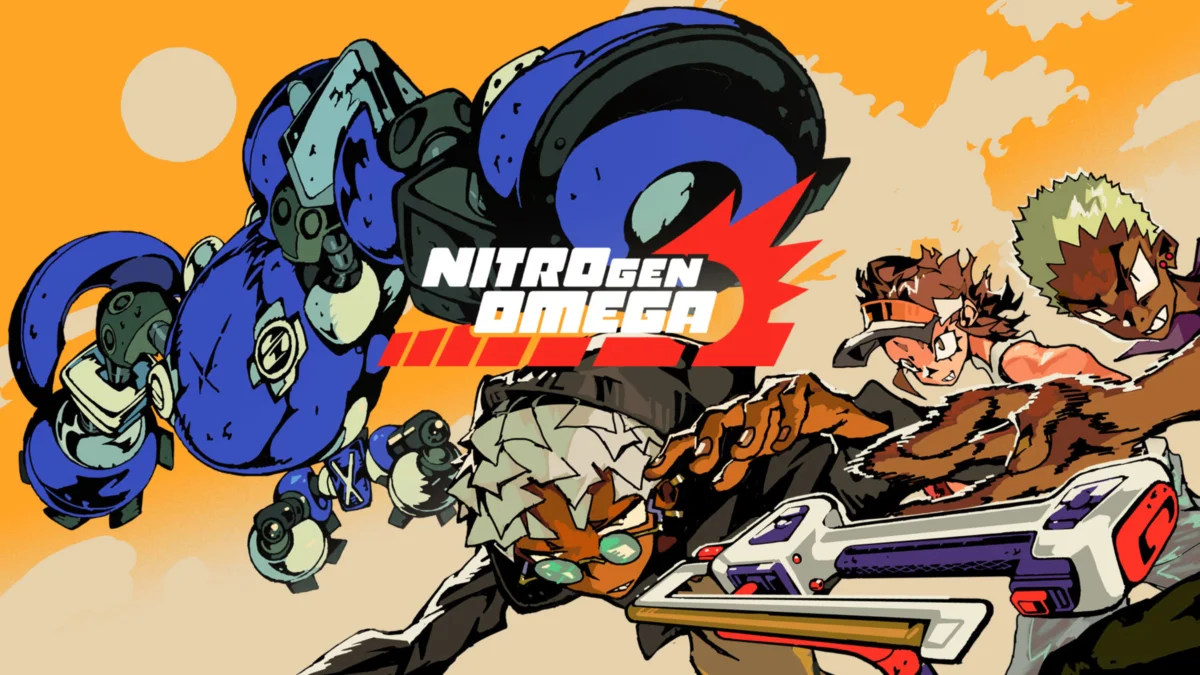
In the landscape of 2026 gaming, where blockbusters often prioritize explosive set pieces over mechanical depth, Nitro Gen Omega emerges as a quiet, deliberate triumph. Developed by the team at DESTINYbit and published alongside Beep Japan, this title offers a synthesis of management simulation and turn-based tactical combat that rewards patience, foresight, and a keen eye for logistics. Since its launch on May 12, 2026, the game has carved out a niche for itself as a challenging, atmospheric journey across a desolate, machine-infested wasteland.
Main Facts: The Core of the Experience
Nitro Gen Omega places players in command of a nomadic airship, serving as a mobile base of operations for a crew of survivors navigating a world reclaimed by mysterious, roaming robots. It is a game defined by its "slow-burn" philosophy. Rather than inundating the player with dense lore dumps or cinematic exposition, the narrative is delivered through environmental storytelling and the personal dramas of your crew.
The game is available on Windows, Xbox Series X|S, PlayStation 5, and Nintendo Switch for a retail price of $29.99. At its heart, the gameplay loop revolves around the maintenance of a singular, highly customizable mech and the precarious management of the crew tasked with piloting it.

Technical Specifications and Availability
- Developer: DESTINYbit
- Publisher: DESTINYbit, Beep Japan
- Release Date: May 12, 2026
- Platform Support: PC (Steam), PlayStation 5, Xbox Series X|S, Nintendo Switch
- Price Point: $29.99 USD
Chronology: From Overwhelming Complexity to Tactical Mastery
The player’s journey in Nitro Gen Omega is marked by a distinct "learning curve cliff." During the opening hours, the sheer volume of management responsibilities can feel daunting. Players are not merely controlling a unit in combat; they are acting as the Chief Operating Officer of a combat vessel. You are tasked with tracking crew wages, monitoring individual morale levels, addressing medical emergencies, and mediating interpersonal conflicts that arise within the cramped confines of the airship.
However, the genius of the game design lies in how it transitions from an administrative chore to a rhythmic, satisfying cycle. As the player masters the UI and understands the nuances of crew management, the "grind" of the early game transforms into a strategic flow state.
The Strategic Evolution
- The Initial Friction: Players struggle with the balancing act of financial solvency and mech upkeep.
- The Systemic Click: The moment where the player internalizes the resource loops, realizing that every decision—from wage increases to morale management—directly impacts performance in the field.
- The Tactical Plateau: The endgame phase, where players move beyond survival and begin focusing on high-level optimization and advanced combat sequencing.
Supporting Data: The Mechanics of Combat
Combat in Nitro Gen Omega is where the game distinguishes itself from its peers in the strategy genre. It utilizes a deep, turn-based system that demands rigorous coordination between crew members. The mechanical depth is split between two primary functions: the Pilot and the Gunner.

The Pilot and Gunner Synergy
The Pilot is responsible for the physical positioning of the mech. Movement is restricted to cardinal directions, and the Pilot governs all melee engagements. Conversely, the Gunner oversees the arsenal, including standard ballistic weaponry and high-damage missiles. The brilliance of this design is that the "turn" is not just about moving or shooting; it is about the sequencing of those actions.
If a player orders a melee strike before the enemy is within range, the action is wasted. If an engineer is tasked with an action during a critical moment, the ripple effect can be catastrophic. One notable example of this complexity is the interaction between engineering tasks and combat positioning; as noted by early adopters, a poorly timed detonation of a battlefield trap can easily result in self-inflicted damage, turning a strategic advantage into a liability.
Financial Management: The "Marbles" Economy
The game’s economy is dictated by "marbles," a currency that acts as the lifeblood of the operation. Because this resource is constantly drained by wages, medical bills, and equipment repairs, the player is forced into a constant state of resource tension. This prevents the player from becoming too powerful too quickly, ensuring that every upgrade—even a marginal increase in armor health—feels like a hard-earned victory.

Official Responses and Industry Reception
Since its release, the reception from the community has been largely positive, particularly among fans of "hard" strategy games. While there have been minor criticisms regarding the lack of visual customization for crew members—a deviation from the traditional JRPG focus on distinct character identities—the mechanical trade-off has been praised by those who prefer the XCOM-style approach of viewing crew as functional, replaceable assets.
The developers have highlighted the game’s "Ironman Mode" as a testament to their vision of consequence-driven gameplay. By disabling save-scumming and forcing players to live with the fallout of a poorly executed combat turn, the game reinforces its core theme: in a dying world, mistakes are often fatal.
Implications: A New Standard for Atmospheric Strategy
The success of Nitro Gen Omega carries several implications for the strategy genre. First, it proves that there is still a massive appetite for games that don’t hold the player’s hand. By allowing the story to unfold at a glacial, naturalistic pace, DESTINYbit has managed to create a sense of mystery that keeps players engaged far longer than a traditional, cutscene-heavy narrative would.

The Customization Debate
One of the most discussed aspects of the game is the discrepancy between the mech customization and the crew customization. While players can paint their mechs with a level of detail rivaling the Armored Core series, the inability to customize the look of the pilots remains a point of contention. However, the game’s aesthetic direction—a mix of gritty, industrial wasteland visuals and a haunting, melancholic soundtrack—effectively masks these limitations, ensuring the overall tone remains cohesive.
The "JRPG" Classification
There is ongoing discourse within the gaming community as to whether Nitro Gen Omega should be categorized as a JRPG. While it lacks some of the genre’s typical tropes—such as extensive dialogue trees or anime-inspired character arcs—its focus on group dynamics, turn-based strategy, and gear-based progression has led many to embrace it as an unconventional entry in the genre.
Looking Toward the Future
For a mid-year release, Nitro Gen Omega serves as a refreshing palate cleanser for a 2026 release calendar that had been lacking in high-quality tactical titles. It is a game that respects the player’s intelligence, forces them to engage with the systems at a granular level, and provides a rewarding sense of progression that is rare in modern gaming.

As the industry continues to evolve, the "quiet ambition" shown by DESTINYbit in Nitro Gen Omega—where the gameplay loop is the narrative—stands as a blueprint for future developers. It demonstrates that you do not need an open world or hundreds of hours of voice acting to build an immersive experience; you simply need a set of systems that, when pushed together, create a world that feels alive, dangerous, and entirely your own.
Whether you are an enthusiast of deep management sims or a veteran of tactical turn-based combat, Nitro Gen Omega demands your attention. It is a testament to the idea that sometimes, the most rewarding experiences are the ones that make you work for every inch of progress. In the vast, silent wastes of this game’s world, every decision matters, and for the players who embrace its challenge, the reward is a unique, deeply personal journey of survival and strategic triumph.











No comments yet. Be the first to join the conversation!