Nila Kartika Wati
SPOILER WARNING: The following feature contains discussions regarding specific mechanics, item utility, and thematic outcomes found within Pokémon Pokopia.
In the vast, often overwhelming landscape of modern gaming, few titles manage to bridge the gap between high-level academic discourse and the simple, tactile joy of picking up a discarded object. Pokémon Pokopia is one such anomaly. It is a game that does not merely invite players to collect creatures; it asks them to curate a world built from the remnants of a forgotten civilization. For those who play it, the game acts as a mirror, forcing a re-evaluation of what we classify as "garbage" and how our own consumption habits reflect our broader cultural values.
The Philosophical Foundation of Refuse
At the heart of this transformation is Trubbish, a Pokémon frequently dismissed by the community as a mere aesthetic joke. Yet, in Pokémon Pokopia, Trubbish serves as the ultimate alchemist. By turning discarded newspaper, scrap metal, and industrial waste into functional habitat components, the creature embodies the transition from "trash" to "treasure."

As a PhD student specializing in digital rhetoric and game preservation, my daily life is spent wading through the digital detritus of the internet—archiving defunct blogs, parsing through ephemeral social media discourse, and analyzing the "dusty theory" that forms the backbone of our digital history. I have often felt a kinship with the Trubbish: we both scavenge, process, and attempt to find meaning in what society has deemed irrelevant.
Pokémon Pokopia elevates this act of scavenging from a chore to a core philosophy. It challenges the player to view the environment not as a resource to be depleted, but as a site of potential re-creation. This shift in perspective is not just a game mechanic; it is a fundamental restructuring of how we define utility.
Chronology of a Real-World Realization
The impact of Pokopia’s philosophy manifested in my own life during a mundane Sunday night at the library. I was deep in the throes of a dissertation proposal, utilizing a "tomato timer" to break my research into 45-minute cycles of intense focus. My subject matter—André Brock’s Critical Technocultural Discourse Analysis (CTDA)—was, admittedly, dry enough to induce a mid-session stupor.
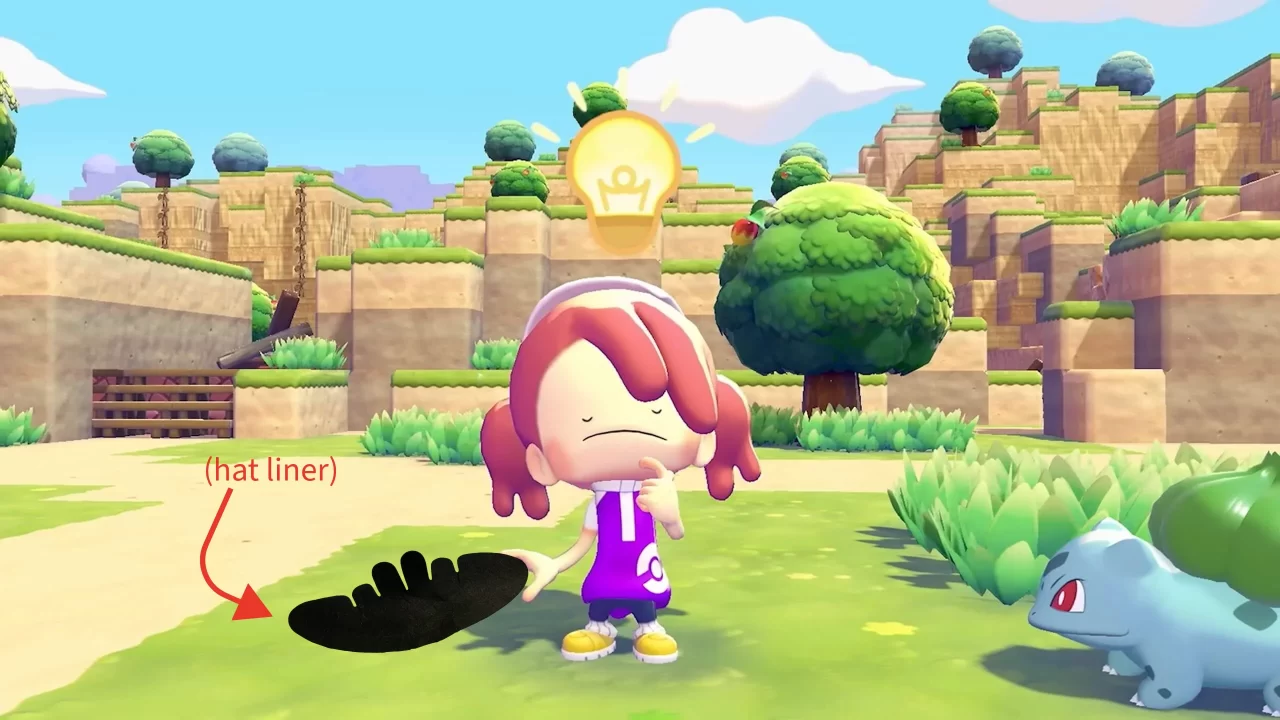
It was only when I stripped away the academic pressure that I noticed the physical reality of my workspace. An itchy hat—a piece of fast-fashion apparel I had purchased without a second thought—was the source of my distraction. Removing it, I discovered a stiff, felt liner tucked into the crown. My initial, reflexive reaction was to discard it. It was, by all accounts, "advertising ephemera," a piece of material designed to make a product look better on a store shelf before being rendered useless.
However, the influence of Pokopia kicked in. I began to wonder: What would a Trubbish do?
This led to a collaborative investigation. I consulted a stranger in the library, a partner, and a cousin experienced in product packaging. Their responses varied from the literal ("it’s a hat liner") to the imaginative ("a mineral from Stardew Valley"). These disparate perspectives mirrored the "community meaning-making" that occurs within Pokopia. By engaging with others about the object, I transformed a piece of literal garbage into a subject of intellectual inquiry.

Supporting Data: The Rhetoric of Consumption
My investigation into the hat liner eventually led me to the digital storefront of the manufacturer, Lululemon. The product, a "classic satin-lined ball cap," is marketed with heavy emphasis on the recycled nature of its polyester and nylon components. Yet, the liner itself—the very piece of material that allows the hat to hold its shape—is entirely absent from the product description and the care instructions.
This silence is telling. It highlights a critical flaw in modern consumerism: the "disposable" nature of auxiliary components. By analyzing the item through the lens of CTDA, we can see it as a piece of "ad rhetoric." It is designed to facilitate the sale of the hat, but it is explicitly excluded from the product’s lifecycle, effectively forcing the consumer to become a waste producer.
The data confirms that this is a widespread issue. Studies consistently rank fast fashion among the most unsustainable industries globally. My own hesitation to throw the liner away was a clash between my "Midwest junk-drawer" upbringing—which values the preservation of all things—and the modern, capitalist drive toward immediate disposability. Pokopia provides the framework to resolve this conflict: it encourages us to pause, interrogate the technology of our objects, and choose to retain what is useful, regardless of the manufacturer’s intent.

Official In-Game Mechanics and Implications
Pokémon Pokopia is not just a game about cleaning up; it is a game about "critical recontextualization." Throughout the narrative, the player is tasked with rebuilding a wasteland using objects that humans have long since abandoned.
- The Rain Dance Site: In the introductory level, players are tasked with constructing a site for a "Rain Dance" using discarded dolls and household items. The game treats these as historical artifacts, asking the player to honor their past while repurposing them for a future habitat.
- Artifact Evaluation: Professor Tangrowth and other characters provide constant feedback on these objects. A piece of "trash" to a human becomes a vital piece of decor for a Pokémon. This subversion of value is the game’s greatest strength.
- Technological Repurposing: In later stages, the game features locations that resemble the old, destructive power stations of HeartGold and SoulSilver. Instead of serving as tools of labor or production, these sites are repurposed for play and community, demonstrating that even the most "toxic" legacies can be reclaimed.
The implication here is profound: we are not just recycling plastic or paper; we are recycling our own imagination. By choosing to build a habitat for a Pokémon out of an old CD or a discarded laptop, the player is actively rejecting the "production-consumption-disposal" cycle that defines our current reality.
A Call for Critical Stewardship
The beauty of Pokémon Pokopia lies in its ability to show us that the world is, as the trainer Brock famously said, "huge." When we apply this scale to our personal consumption, we realize that our relationship with the environment is a series of daily choices.

The game forces us to ask: Why was this object thrown away? Who does it benefit to discard it? How can I use this to improve the lives of others?
By the end of my evening at the library, the hat liner was not in the trash. It now rests on my desk, serving as a makeshift hammock for a Ditto plush, bridging the gap between my two computer monitors. It is a small, silly gesture, but it is a direct result of the critical framework provided by Pokopia.
In a world increasingly concerned with the sustainability of our future, Pokémon Pokopia offers a refreshing, albeit unconventional, lesson. It suggests that if we want to save our world, we must start by looking at our trash with curiosity rather than contempt. We must be willing to stop, think, and ask what a thing could be, rather than what it was told to be. It is a radical, kind, and profoundly important way to engage with the world—and honestly, it’s pretty rad.


 Asro
Asro
 Muslim