

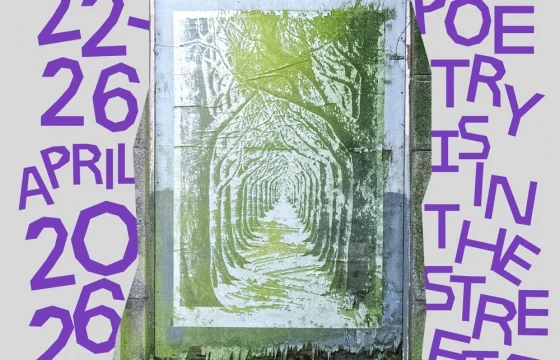
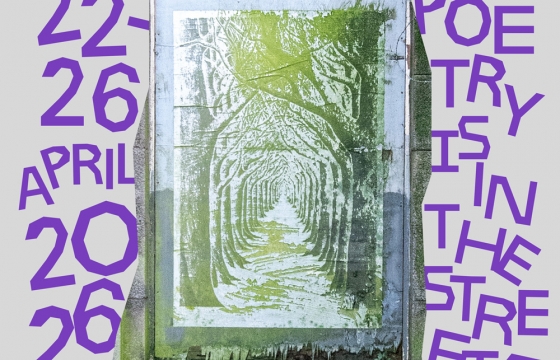
Aberdeen, Scotland — April 22–26, 2026
The grey granite architecture of Aberdeen is set to become a vast, open-air library this week as Nuart Aberdeen returns for its 2026 edition. In a radical departure from the hyper-saturated, large-scale muralism that has defined the global street art movement for the past decade, this year’s festival is pivoting toward the written word. By focusing on poetry, text-based interventions, and ephemeral stencils, Nuart is attempting to democratize public art, stripping away the barriers of entry that have turned street art into a professionalized, institutionalized spectacle.
The Shift: From Tower Blocks to the ABCs
For years, the "muralism" model—characterized by massive, multi-story portraits and hyper-realistic illustrations—has dominated city skylines. While visually arresting, Nuart founder and curator Martyn Reed argues that these massive works have inadvertently created a hierarchy of art.
"Due to the resources required to produce murals, they’re perhaps the least democratic form of art on the streets," Reed explains. "No one stands in front of a ten-story tower block mural and thinks, ‘I’ll pop home and have a go myself on the gable end of Gran’s house.’"
This realization has prompted a significant shift in philosophy. The 2026 festival aims to move away from the "masterpiece" culture that requires expensive lift rentals, professional insurance, and fine art degrees, moving toward a more accessible medium: language. The festival’s guiding principle this year is simple: if you know your ABCs, you can participate.
A Chronology of Inspiration: Paris 1968 and the UK Graffiti Boom
The thematic framework for Nuart 2026 didn’t emerge in a vacuum. Reed points to two foundational moments that shaped the ethos of this year’s program.
The first is the spirit of the 1968 student uprisings in Paris, where the slogan "La poésie est dans la rue" (Poetry is in the streets) turned the city walls into a living, breathing manifesto of resistance and creative energy. It was a time when art wasn’t just decoration; it was communication.
The second influence comes from legendary UK graffiti pioneer Mode2, who once noted that the rapid spread of graffiti in the 1980s was due to its inherent simplicity. Traditional fine art education often alienated students who couldn’t paint or draw with "realistic" precision. Graffiti, however, bypassed the academic gatekeepers. It allowed anyone with a spray can and a basic grasp of lettering to stake their claim on the urban environment.
By synthesizing these two concepts, Nuart Aberdeen is challenging the public to stop viewing street art as a passive visual experience and start viewing it as a participatory dialogue.
The Lineup: A Diverse Array of Text-Based Creators
The 2026 festival features an eclectic mix of artists whose work emphasizes the power of the written word. The lineup includes:
- Robert Montgomery (SCT): A master of the text-based intervention, whose light-installations and poetic billboards serve as modern-day philosophical inquiries.
- The Rebel Bear (SCT): Known for satirical, socially conscious stencils that often pair minimal imagery with biting text.
- Alisa Oleva (UK): An artist whose practice focuses on the urban environment and the sensory experience of the city.
- Ciarán Glöbel (SCT): A specialist in traditional signwriting and typography, bringing a classic aesthetic to modern social commentary.
- dr.d AKA Subvertiser (UK): A long-time critic of corporate advertising, using text to reclaim public space from commercial interests.
- Trackie McLeod (SCT): Celebrated for his observational, humorous takes on Scottish culture, often utilizing simple, punchy text.
- HICKS (UK), James Klinge (SCT), KMG (SCT), Molly Hankinson (UK), Remi Rough (UK), The Writing Is On The Wall (UK), and V2k | (LT – SCT).
Supporting Data: Why Small Scale Works
While major murals attract tourism and "Instagrammability," Nuart’s internal research suggests that smaller, human-scale works—stencils, paste-ups, and sticker art—have a higher rate of conversion regarding public participation.
"We’ve seen it time and time again," says Reed. "The ease of copying a stencil—which requires nothing more than a craft knife, a piece of cardboard, and an idea—is the very foundation of this culture."
Evidence of this "grassroots ripple effect" can be seen in the festival’s own history. Several of the artists and producers currently working on the 2026 festival began their journey as volunteers or assistants at previous Nuart events. By lowering the barrier to entry, the festival creates a sustainable ecosystem where the audience can easily transition into creators.
Official Responses and The "Partnership" Balancing Act
Managing a major urban arts festival requires a delicate balance between public funding, corporate sponsorship, and artistic integrity. Reed is candid about the challenges of this negotiation.
"It’s a lofty goal, particularly as it’s often in conflict with the stated needs of sponsors and partners," he admits. "They often want the ‘big’ mural because it creates a clear landmark for tourism boards. But our responsibility as curators isn’t just to provide a backdrop for selfies; it’s to ensure the development and survival of the culture itself."
The Aberdeen City Council, a long-term partner of the festival, has remained supportive of this shift, recognizing that a more engaged, creative citizenry is ultimately more valuable to the city than static, decorative art. By allowing the festival to experiment with text and poetry, the city is signaling a move toward a "smarter" cultural policy—one that prioritizes community engagement over mere visual consumption.
Implications for the Future of Urban Art
The 2026 Nuart Aberdeen festival serves as a litmus test for the future of the street art movement. If the festival succeeds in sparking a local wave of text-based interventions, it may signal the end of the "mural-only" era.
1. The Democratization of Public Space
By moving away from large-scale murals, the festival is signaling that public space should be a medium for conversation rather than a gallery for prestige. If successful, this could inspire other international festivals to rethink their reliance on expensive, top-down production models.
2. Intellectualization of the Street
Text-based art requires the viewer to engage in a more cognitive, rather than purely aesthetic, process. By forcing passersby to read, contemplate, and interpret, the festival is shifting the "vibe" of Aberdeen’s streets from a passive visual experience to an active, intellectual one.
3. Sustainability and Ephemerality
Large-scale murals are often permanent, which can lead to stagnation in the visual landscape. Text-based, ephemeral works—like those found in paste-ups—allow for a constantly evolving city aesthetic. This creates a "living" urban environment that changes as quickly as the social and political climate it reflects.
Conclusion: A City as a Canvas
As the festival kicks off, the question posed by Reed remains: "What is a city without art?" If all art is confined behind the locked doors of museums and institutions, the city loses its soul. By turning the streets into a venue for poetry and text, Nuart Aberdeen is reclaiming the city for its residents.
"I hope the festival sparks the public’s imagination in the same way that those early bubble letters and Banksy stencils did," Reed says.
For the residents of Aberdeen, the coming days offer more than just a tour of new art. They offer an invitation to participate in a global movement where the walls speak, the pavement writes, and every citizen is invited to join the conversation. In the granite heart of Scotland, the message is clear: poetry isn’t just for books—it belongs to the streets.









No comments yet. Be the first to join the conversation!