
 Pevita Pearce
The global phenomenon of the Pokémon Trading Card Game (TCG) has reached a critical juncture in Japan. As the secondary market for high-demand collectibles continues to be plagued by aggressive scalping operations, The Pokémon Company has announced a bold, potentially industry-shifting strategy. In a move to curb the mass purchase of limited-edition items and stabilize the market for legitimate collectors, the company is preparing to implement a mandatory identity verification system utilizing Japan’s government-issued "My Number Card."
This initiative marks a significant escalation in the ongoing "cat-and-mouse" game between retailers and resellers. If implemented, it would be one of the most stringent anti-scalping measures ever adopted by a commercial entity in the entertainment industry, effectively barring non-residents and those without specific government documentation from accessing premium Pokémon Center Online stock and official tournament entry.
The Escalation: A History of Market Manipulation
To understand the gravity of this new proposal, one must look at the increasingly desperate measures retailers have taken to protect their inventory. Over the past several years, the scarcity of rare Pokémon cards has driven prices to astronomical levels, incentivizing professional scalpers to use automated bots and massive logistics networks to clear shelves within seconds of product drops.
A Chronology of Counter-Measures
- Early 2020s: Retailers began by implementing simple "one-per-customer" policies. These were quickly bypassed by scalpers using multiple accounts and proxies.
- 2024–2025: Brick-and-mortar stores in Tokyo began experimenting with mandatory "Pokémon trivia" quizzes at checkout, forcing buyers to prove their status as genuine fans rather than opportunistic flippers.
- May 2026: In a viral move, some independent card shops began cutting the plastic packaging of booster packs at the point of sale. This "de-valuing" tactic prevents the items from being sold as "sealed/mint" on secondary markets, rendering them less attractive to high-end collectors and investors.
- Late May 2026: The Pokémon Company issues an official statement indicating they are exploring the integration of the My Number Card system for their official online storefront and tournament registration.
The evolution of these tactics highlights a shift from mild inconveniences to structural, technological barriers. The decision to move toward government-backed authentication suggests that the company no longer views scalping as a retail annoyance, but as a systemic threat to the brand’s integrity.
The Mechanics: How the My Number System Works
At the heart of this proposal is the "My Number Card," a digital identity system introduced by the Japanese government in 2016. The card serves as a multifunctional identification document, containing a resident’s name, address, date of birth, photo, and a unique 12-digit identification number.
Leveraging IC Chip Technology
The crux of the Pokémon Company’s plan involves the card’s integrated circuit (IC) chip. Since 2021, all My Number Cards have featured this chip, which allows for secure, encrypted authentication. Under the proposed system, the Pokémon Center Online would require users to utilize a third-party verification service.
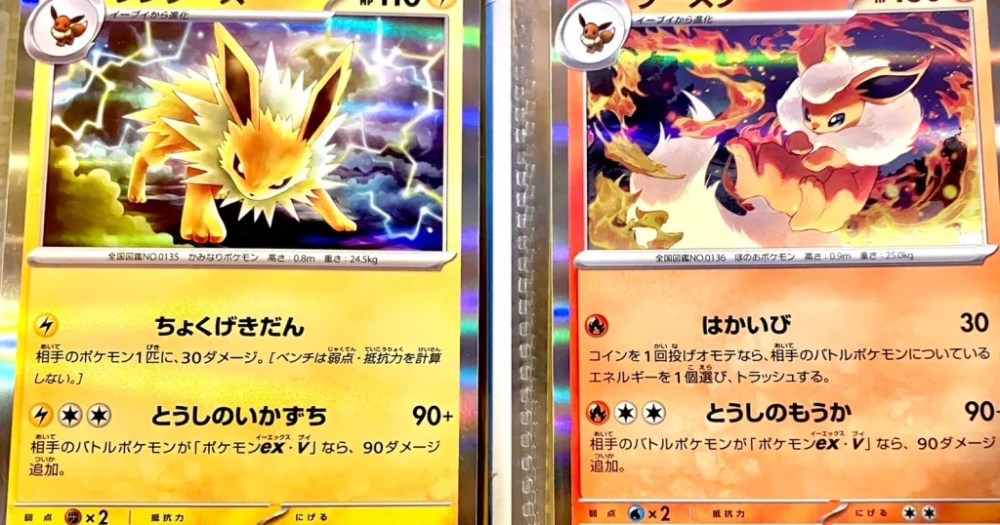
By tapping their physical My Number Card against a smartphone equipped with Near-Field Communication (NFC) capabilities, users can verify their identity in real-time. This digital handshake confirms that the person making the purchase is a unique, registered individual residing in Japan. This data bridge effectively ties a digital storefront account to a singular, verifiable physical human being, theoretically ending the "bot-farm" era where a single entity could create thousands of accounts to hoard lottery-winning rights.
Official Responses and Strategic Intent
The Pokémon Company has framed this initiative as a pursuit of "fair opportunities and safe, secure service." While the official TCG website used cautious language—stating they are "looking into the introduction" of the system—the company’s corporate communications via social media have been far more declarative, signaling that the rollout is likely imminent.
The target demographic for these restrictions is not the casual fan, but the "pro-scalper." By requiring a residency-linked ID, the company aims to filter out international bulk-buyers. It is an open secret within the Japanese hobby community that foreign resellers often utilize local mail-forwarding services or shell accounts to bypass export restrictions. By mandating a My Number Card, which is only available to Japanese citizens and long-term foreign residents, the company creates a jurisdictional wall that protects local stock for local fans.
The Implications: A Double-Edged Sword
While the proposal has been met with applause from long-time collectors tired of empty shelves, the policy carries significant social and logistical implications.
1. The Exclusion of Non-Residents
The most immediate impact is the total exclusion of international fans and tourists. If the policy becomes the standard for high-demand releases, the global Pokémon market may become bifurcated. Overseas collectors will find it increasingly difficult to acquire "Japan-exclusive" products at retail prices, likely forcing them to rely even more heavily on the very secondary markets the company is trying to suppress.
2. The Domestic "Digital Divide"
Not every Japanese resident holds a My Number Card. While the card is the primary national ID, its adoption has not been universal, and it is not a legal requirement to possess one. A segment of the population relies on driver’s licenses, national health insurance cards, or residency cards (for foreigners). By forcing a shift to the My Number Card, the Pokémon Company is essentially imposing a "hidden tax" of time and bureaucracy on its fans, requiring them to apply for and obtain a card they may not have previously needed.
3. Impact on Younger Demographics
The issue of age is particularly complex. The My Number Card is generally not issued to children under 15. While the company implies that adult proxies (parents or guardians) can handle registrations for tournaments, this creates an administrative bottleneck. It potentially discourages young, grassroots players from participating in events if the barrier to entry—legal guardianship and government-backed verification—becomes too cumbersome.
Looking Ahead: The August Deadline
The timeline for this transition is rapid. Sources suggest the system could be operational as early as August 2026. For the average collector, this leaves a narrow window to prepare. Since the application process for a My Number Card can take upwards of two months, the company is effectively forcing a "get ready or get left behind" scenario.
The implications for the broader retail landscape are profound. If The Pokémon Company successfully implements this system, it could set a precedent for other Japanese luxury and hobby brands. From high-end fashion sneakers to limited-edition consumer electronics, the use of government identity verification to manage supply chain integrity is a concept that other industries will be watching closely.
Ultimately, this is a gamble for The Pokémon Company. They are trading convenience and accessibility for security and fairness. Whether this move effectively cleanses the market of predatory scalping or simply creates a new, more exclusive tier of "insider" collectors remains to be seen. What is certain, however, is that the days of anonymous, bulk-buying for profit are drawing to a close in the world of Japanese Pokémon TCG. The brand is betting that its fans are willing to jump through the ultimate bureaucratic hoop to keep the game alive, fair, and, most importantly, in the hands of the players.


 Neng Nana
 Asro
Asro





