Dwi Wanna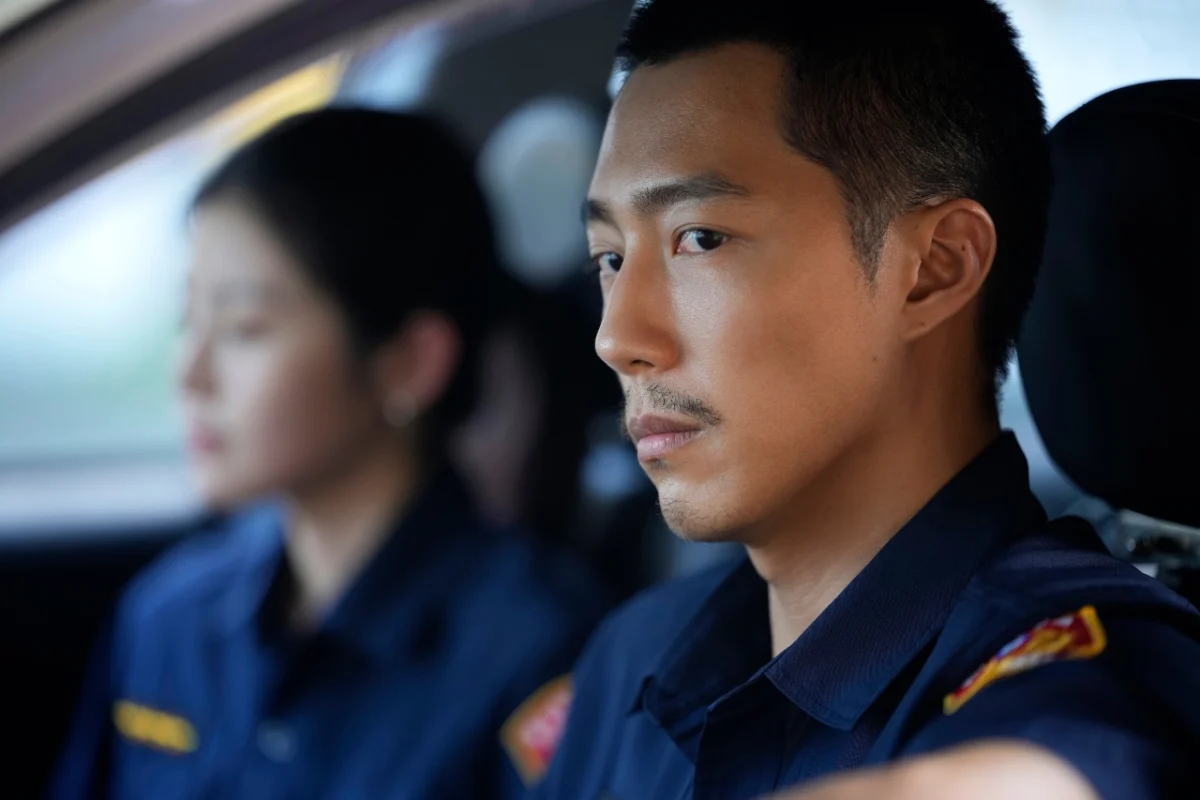
TAIPEI — In an era where the lines between law enforcement, public opinion, and digital performance are increasingly blurred, the landscape of the modern police procedural is undergoing a seismic shift. Taiwan’s public broadcaster, PTS Taigi, has officially commenced production on Gunshot, an ambitious eight-part crime drama that promises to dissect the moral complexities of policing in an hyper-connected world.
Produced in a high-profile collaboration between S11 Partners and Third Culture Content, the series represents a significant milestone for Taiwanese television. By grounding its narrative in the unique linguistic and cultural tapestry of Taiwan, Gunshot seeks to bridge the gap between local storytelling and global genre expectations.
The Core Narrative: Justice in the Digital Age
At its heart, Gunshot is not a traditional “whodunit.” Instead, it is a character-driven exploration of the professional and personal toll exacted by the “attention economy.” The series centers on three police officers, each representing a different generation and philosophical approach to justice, as they navigate a system that often prioritizes viral optics and performance metrics over substantive public service.
The narrative arc is anchored by a stellar ensemble cast. Kent Tsai, best known for his breakout role in The Teenage Psychic, portrays Hao, a detective whose career—and internal moral compass—are irrevocably altered after a high-profile, controversial use-of-force incident. His struggle with the weight of public scrutiny serves as the series’ emotional catalyst.
Opposite Tsai, rising star Chan Tzu-Hsuan embodies the idealism of a rookie officer, Shih-Ting, whose entry into the force tests her faith in the system. The generational bridge is completed by veteran actor Cheng Chih-Wei, who plays Hou, a pragmatic, battle-hardened officer nearing the end of his career, representing the “old guard” who remembers a time before social media dictates defined police strategy.
The tension is further amplified by the presence of legendary Singaporean actor and Golden Horse Award winner Mark Lee. Lee steps into the role of Long, a sophisticated and menacing crime boss whose calm, calculated demeanor belies a volatile and dangerous nature, serving as the perfect foil to the fractured police department.
A Proven Creative Pedigree
The project boasts an impressive creative team that signals high production values and a commitment to narrative depth. Co-directors Hsiao Li-Hsiu—acclaimed for her work on the hit series Wake Up—and creator-director Chang Kai-Chih bring a nuanced understanding of the Taiwanese law enforcement landscape to the screen.
The script is penned by Chen Fang-Chi, known for Hotel Saltwater, and Hsu Shih-Hui, who contributed to the gripping crime drama The Abandoned. By drawing inspiration from real-life experiences shared by active and retired police officers, the writers aim to strip away the glossy artifice of the genre to reveal the uncomfortable, gritty realities of policing in a contemporary city.
Chronology and Development: From EMERGE to Screen
The journey of Gunshot from a concept to a full-scale production is a testament to the burgeoning support for Asian creators on the global stage. The project originated from EMERGE, a specialized development initiative launched by the Taiwan Creative Content Agency (TAICCA) in partnership with Ron Howard and Brian Grazer’s Imagine Entertainment.
The goal of EMERGE is to identify and nurture internationally minded creators who can elevate Asian stories for a worldwide audience. The success of Gunshot in moving from the development phase to principal photography demonstrates the effectiveness of this pipeline. Notably, Imagine Entertainment remains attached to the project as a producer, ensuring that the show maintains its international standards while retaining its authentic Taiwanese voice.
Supporting Data: The S11 Partners and Third Culture Content Synergy
The production is helmed by two of the most influential figures in Asian television: Cora Yim, co-founder of S11 Partners, and Janice Chua, co-founder of Third Culture Content. This duo previously garnered critical acclaim for their work on the Disney+ series Taiwan Crime Stories.
That project served as a proof-of-concept for their collaborative vision, earning 12 Golden Bell Award nominations and securing recognition at the prestigious Asia Contents Awards & Global OTT Awards in Busan. The decision to reunite for Gunshot underscores their commitment to high-stakes, prestige television that challenges regional stereotypes.
Official Responses and Creative Vision
The producers view Gunshot as a cultural touchstone. In a joint statement regarding the commencement of production, Yim and Chua emphasized that the series is a deliberate attempt to showcase the versatility of Taiwanese-language drama.
“Gunshot reflects the kind of storytelling we want to champion—grounded in local culture, yet ambitious in scope and execution,” Yim and Chua noted. “From the beginning, we saw the series as an opportunity to tell a distinctly Taiwanese story through a contemporary lens.”
They further highlighted the strategic importance of their partnership with PTS Taigi: “Partnering with PTS Taigi TV Station on a Taiwanese-language crime drama is an ambitious and meaningful step for all of us. We believe Gunshot contributes to the continued evolution of Taiwanese-language drama by demonstrating that these stories can embrace new genres, contemporary themes, and resonate with audiences far beyond Taiwan.”
The Implications for Global Content Distribution
The production of Gunshot carries significant implications for the future of Asian content distribution. For years, the global streaming market has been dominated by Western procedurals. However, the success of localized hits from South Korea and Japan has paved the way for Taiwanese productions to find a global audience.
By utilizing the Taiwanese language—often underrepresented in high-budget international crime dramas—Gunshot is asserting its identity. The series is not attempting to mimic Hollywood, but rather to use the mechanics of the crime genre to explore universal human experiences: the fragility of integrity, the burden of public perception, and the difficulty of maintaining one’s humanity in a system designed to measure success in clicks and views.
Furthermore, the involvement of international entities like Imagine Entertainment and the backing of TAICCA highlights a shift in how regional stories are funded and developed. It suggests that the "internationalization" of Asian content is moving away from remakes and toward the creation of original, high-quality IP that can compete on platforms like Netflix, Disney+, and beyond.
Looking Ahead: A New Standard for Taiwanese TV
As filming continues, anticipation is building for a series that promises to be as visually arresting as it is intellectually challenging. Gunshot is positioned to be more than just a crime drama; it is a mirror held up to society, questioning whether we are safer when our police are accountable, or whether the pursuit of visibility has rendered the concept of justice obsolete.
With an ensemble cast that includes the Golden Horse Award-winning Lu Hsiao-Fen, the production is clearly aiming for the highest tier of dramatic excellence. As the industry watches, Gunshot stands as a bellwether for the future of Taiwanese television—a future that is bold, linguistically proud, and increasingly prepared to take its place on the world stage.
As the production team moves through the shooting schedule, the industry will be closely monitoring how this blend of local insight and international production strategy translates to the screen. If the pedigree of its creators and the strength of its premise are any indication, Gunshot may well redefine the expectations for what a Taiwanese crime series can achieve.

 Asep Darmawan
 Ali Ikhwan