Lina Irawan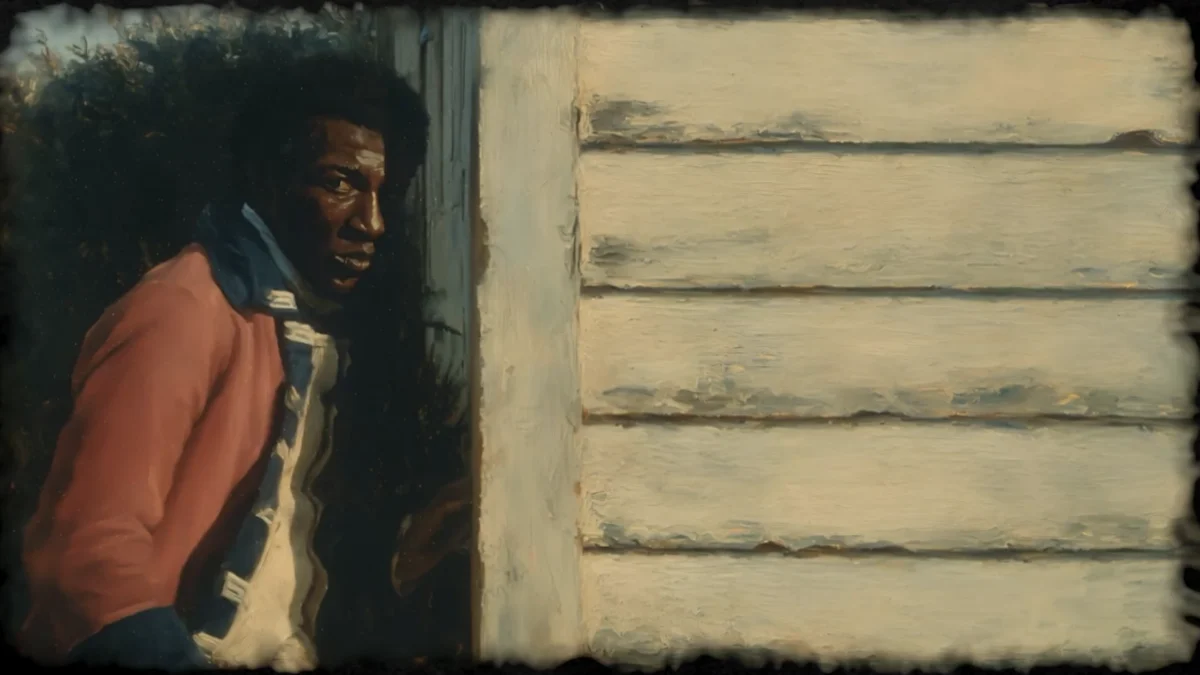
As the United States approaches its 250th anniversary, a profound reckoning with the nation’s founding myths is underway. While the narrative of the American Revolution is traditionally dominated by the "Founding Fathers," a new documentary, Declarations: Black Americans and the Revolutionary War, is utilizing cutting-edge technology to shift the spotlight toward the individuals who were simultaneously fighting for independence and their own personal liberation.
Premiering on PBS on June 29 at 10:00 PM ET, the film, directed by Stacey Holman and Maya Tepler, is more than a historical account; it is a technological experiment in ethical filmmaking. By employing generative AI to visualize the lives of Black Americans who have been historically "disenfranchised, disregarded, and decentered," the filmmakers are challenging the limitations of the traditional archival record.
The Archive as a Barrier: The Need for a New Methodology
For decades, documentarians specializing in Black history have faced a recurring, structural obstacle: the archive. Historical visual records of Black Americans in the 18th century are notoriously scarce, and when they do exist, they are often compromised by the biases of the time.
"The typical route has been archival materials," Holman and Tepler noted in an essay for PBS. "Archive is often a primary visual tool, but in the case of storytelling centered on historical Black narratives, archive is both limited and limiting."
The filmmakers point to a critical reality: depictions of Black individuals in early American art were frequently relegated to the background, rendered as faceless laborers in fields, or deliberately caricatured to enforce the narrative of subservient property. To tell a story of agency and revolution, the filmmakers realized they could not rely on the existing visual record, as doing so would only perpetuate the very erasure they sought to rectify.
"We knew we wanted to give our historical subjects agency on visual terms, as never seen before," the directors explained. "In doing so, we aim to be a part of a long lineage of artists reclaiming and reshaping Black narratives."
Chronology: The Lives Reimagined
The documentary centers its narrative on four specific figures, each representing a different facet of the Revolutionary-era experience:
- James Lafayette: An enslaved man who served as a double agent for the Marquis de Lafayette, providing critical intelligence that led to the British surrender at Yorktown.
- Harry Washington: A man enslaved by George Washington who escaped to fight for the British in hopes of securing his freedom.
- Elizabeth Freeman: A woman who successfully sued for her freedom in Massachusetts in 1781, arguing that the language of the state constitution—which declared all men born free and equal—applied to her.
- Abraham Peyton Skipwith: A figure whose pursuit of freedom highlights the complex, often precarious paths to independence taken by Black individuals during this era.
By focusing on these individuals, the film moves away from the abstract concepts of the Revolution and into the visceral, high-stakes reality of survival and self-determination.
Supporting Data: The Technical Execution
The transition from historical research to visual representation was managed by artist and researcher Hudson Campbell. The process was not a simple matter of prompting an AI generator; rather, it was a rigorous, multi-layered artistic endeavor designed to prioritize historical accuracy over algorithmic convenience.
Campbell began by creating oil paintings of the four primary subjects. These works were firmly rooted in historical context, utilizing known portraiture and period-accurate depictions to ensure that the "base" of the imagery was authentic. Only after these canvases were completed did Campbell turn to generative AI tools to animate the portraits.
The goal was to preserve Campbell’s artistic intent while allowing the technology to breathe life into the static images. According to the production team, the AI was used as a specialized tool to handle fluid movement and atmospheric detail, rather than as a replacement for the artist’s vision. For sequences where no historical face was available, the AI generated imagery that adhered strictly to Campbell’s established stylistic framework, ensuring a cohesive visual language throughout the documentary.
Official Responses and Expert Oversight
To maintain the high standard of historical integrity required for such a bold project, the creative team established a rigorous oversight committee. The documentary’s visual output and narrative choices were vetted by a team of prominent historians and filmmakers:
- Stephen Seals: A staff member and historical re-enactor at Colonial Williamsburg, who provided deep insight into the material culture and daily existence of the period.
- Dr. Ed Ayers: A renowned professor and National Humanities Medal recipient whose expertise in the American South provided a structural anchor for the historical arguments.
- Sam Pollard: The Oscar-nominated and Emmy-winning documentary filmmaker, whose involvement ensured that the technical risks taken by Holman and Tepler remained grounded in the best practices of documentary storytelling.
This collaborative approach was essential to the filmmakers’ mission: to demonstrate that generative AI does not have to be a threat to historical truth. By keeping the technology under the control of an artist-centric framework, the team hopes to provide a "blueprint" for future projects that wish to leverage AI without sacrificing ethical standards.
Implications: A New Era for Historical Documentaries
The use of generative AI in Declarations arrives at a time of intense industry debate regarding the ethics of synthetic media. Earlier this year, Darren Aronofsky’s AI studio, Primordial Soup, and Time Magazine launched On This Day… 1776, a short-form animated series that also utilized genAI to depict Revolutionary-era events.
However, Declarations distinguishes itself by centering the conversation on agency. While some projects have used AI to "recreate" history for the sake of spectacle, Holman and Tepler are using it to correct a historic imbalance.
The implications of this work are significant for the field of documentary film. If filmmakers can ethically use AI to fill the gaps left by the white-dominated archives of the past, it opens the door to a more inclusive and representative version of American history. It suggests a future where the absence of a primary source document no longer equates to the absence of a voice.
"We hope that this work will serve as a blueprint for how to use generative AI as a tool, while still being artist-centric, historically accurate, and in line with ethical storytelling practices," the directors stated.
As the nation prepares to celebrate its semiquincentennial, the conversation has shifted from the traditional, static monuments of the past to a more dynamic, technologically-assisted search for the truth. By reclaiming these narratives, Declarations does not merely retell history; it creates a bridge between the limitations of the past and the possibilities of the future.
Whether this "blueprint" will become the new industry standard remains to be seen. However, as audiences tune in on June 29, they will witness a bold experiment that asserts one thing clearly: the history of the American Revolution is far larger, far more complex, and far more Black than the traditional archives have ever allowed us to see. Through the marriage of painstaking historical research and the innovative, responsible use of generative technology, Holman and Tepler have ensured that these four lives—and the millions they represent—can finally be viewed with the dignity and complexity they were long denied.

 Nana Muazin
 Nana
Nana