Dwi Wanna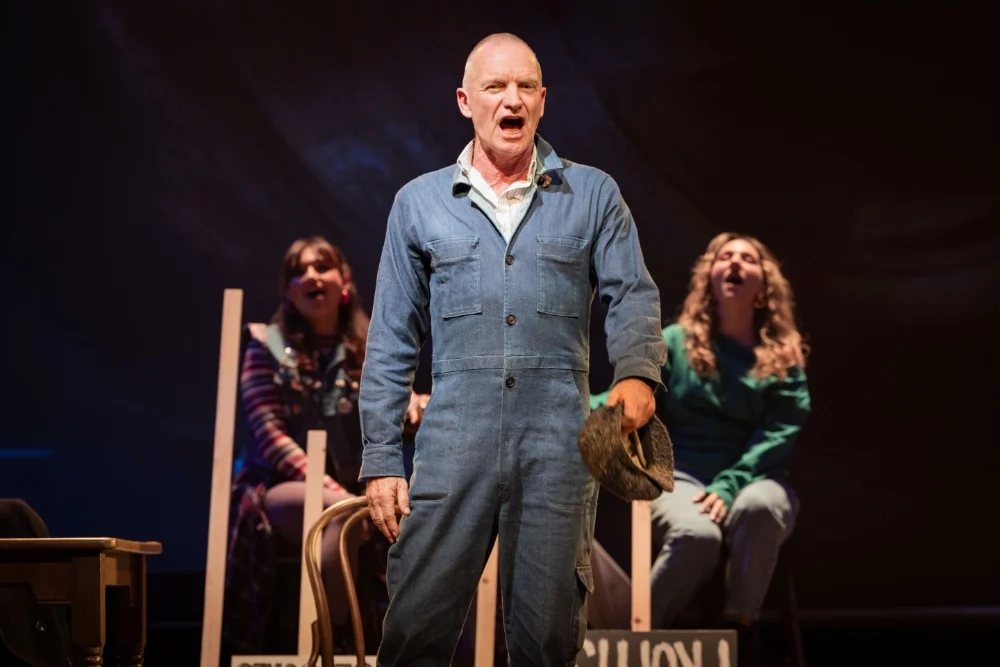
In a significant theatrical homecoming, music icon Sting is set to step onto the hallowed stage of London’s Theatre Royal Drury Lane, reprising his role in a newly reimagined production of his deeply personal musical, The Last Ship. The production, which is scheduled for a limited engagement from September 22 to October 3, represents the latest chapter in a long-gestating project that has evolved from a 1991 concept album into a sprawling, international theatrical phenomenon.
Produced by Karl Sydow, this iteration of The Last Ship promises a fresh perspective on a familiar narrative, bolstered by a new book penned by playwright Barney Norris. As the production prepares for its West End arrival, it brings with it the weight of history—both the industrial history of Northeast England and the personal artistic journey of one of music’s most enduring songwriters.
The Narrative Core: A Story of Industry and Identity
Set against the stark, evocative backdrop of Wallsend, a shipbuilding town in Northeast England, The Last Ship is a poignant exploration of community, legacy, and the human spirit under duress. Sting stars as Jackie White, a shipyard foreman facing a dual crisis: his own deteriorating health and the collapse of the industry that has served as the lifeblood of his community for generations.
The production boasts a company of more than 50 performers, underscoring the scale of the narrative. By centering the story on the shipyard, Sting captures the tension between the inevitability of progress and the desperate desire to preserve a way of life that is rapidly vanishing. It is a story of a town standing on the precipice of oblivion, struggling to reclaim its dignity.
Chronology: From Wallsend to the World Stage
The journey of The Last Ship is a testament to the longevity of Sting’s creative vision. The project’s roots can be traced back to his 1991 album The Soul Cages, which first explored the themes of loss, memory, and the industrial landscape of his youth.
- 2011: Sting officially begins the development of The Last Ship as a theatrical piece, weaving his past experiences into a narrative structure.
- 2014: The musical premieres on Broadway, earning critical attention and Tony Award nominations for Best Original Score and Best Orchestrations.
- Post-2014: Recognizing the potential for a more intimate, resonant staging, Sting and his team begin reworking the production for international markets.
- 2024-2026: The show embarks on a global tour, visiting cultural hubs such as Amsterdam, Brisbane, and Paris.
- June 2026: A prestigious series of performances is slated for the Metropolitan Opera in New York.
- September 2026: The production arrives at London’s Theatre Royal Drury Lane, marking a major milestone in the show’s evolution.
This iterative process has allowed the creative team to refine the narrative, incorporating new songs and adjusting the emotional arc to better suit different audiences across the globe.
Creative Architecture: The Team Behind the Vessel
This latest production is not merely a restaging of the original Broadway material. It represents a significant creative overhaul. The collaboration between director Leo Warner and the creative team at 59 Productions—a studio renowned for its innovative integration of technology and performance—ensures that the production is visually and sonically distinct.
The creative team includes an extensive list of industry experts:
- Book: Barney Norris (drawing from the previous iteration by Lorne Campbell, based on the original by John Logan and Brian Yorkey).
- Design: Set and video design by 59 Productions; set and props by Jenny Melville.
- Visual Identity: Costume design by Loren Elstein and lighting design by Adam Bassett.
- Audio/Atmosphere: Sound design by Tom Gibbons, with musical supervision and orchestration by Rob Mathes, alongside MD and co-orchestrator Richard John.
- Movement: Choreography by Rebecca Howell, with animation direction by Matt Taylor.
The integration of new scenes and newly written songs, alongside iconic tracks such as "Island of Souls," "All This Time," and "When We Dance," serves to bridge the gap between Sting’s established catalog and the specific requirements of the stage narrative.
Official Perspectives: Sting on His Artistic Tribute
For Sting, The Last Ship is far more than a commercial endeavor; it is an act of reclamation. "I grew up in the shadow of the shipyard," Sting stated in a recent interview. "I’d watch thousands of men walk to work each morning, but I dreamed of something else. I dreamed of escaping, and I did everything in my power to get away from that life."
However, as the musician matured, his perspective on his upbringing shifted. "The farther I got, the more I realized I needed to understand where I came from and felt I had to give something back," he added. "‘The Last Ship’ is my tribute to the people and the place that shaped me."
This sentiment is echoed in the production’s commitment to authenticity. By placing himself in the role of Jackie White, Sting anchors the production in a lived experience, lending the character a gravity that resonates with audiences who have similarly grappled with the tension between ambition and belonging.
Implications: The Intersection of Music and Theater
The success and longevity of The Last Ship signal a broader trend in contemporary theater: the "prestige jukebox musical" or "autobiographical theatrical narrative." Unlike traditional jukebox musicals that simply string together existing hits, Sting’s work integrates his music into a cohesive, evolving narrative framework.
Economic and Cultural Impact
The choice of the Theatre Royal Drury Lane—owned and operated by Andrew Lloyd Webber’s LW Theatres—adds a layer of prestige to the production. The venue, a cornerstone of the West End, provides the perfect environment for a production that balances grand, sweeping musical numbers with the intimate, often melancholic moments of personal reflection.
Furthermore, the simultaneous release of The Last Ship (Expanded Edition)—featuring five new recordings produced by Sting and Rob Mathes—serves to broaden the project’s footprint. By treating the album as a companion piece to the stage production, the team creates a multi-channel experience for the audience, allowing the music to reach listeners who may not have the opportunity to see the live show.
A Globalized Narrative
The fact that this production has traveled through Amsterdam, Brisbane, and Paris before arriving in London suggests that the themes of The Last Ship—deindustrialization, community decline, and the quest for identity—are universal. The production has proven that a story rooted in the very specific geography of Northeast England can translate across linguistic and cultural boundaries.
By continuing to rework the book and the score, the production team is also avoiding the pitfalls of stagnation. The 2026 iteration is arguably the most polished version of the show to date, benefiting from over a decade of feedback and artistic refinement.
Conclusion: The Final Voyage
As the curtains rise at the Theatre Royal Drury Lane this September, The Last Ship will once again demonstrate why it remains one of the most compelling projects in Sting’s illustrious career. It is a rare example of an artist successfully navigating the transition from global pop stardom to the nuanced world of musical theater.
By choosing to remain involved not just as a songwriter, but as an active performer, Sting ensures that the production remains a living, breathing entity. As he steps into the boots of Jackie White, he isn’t just playing a character; he is confronting his own past, inviting the audience to join him in a town that, while physically disappearing, continues to exist as a powerful, resonant myth in the collective consciousness of those who call it home.
With its blend of new material, a refined book, and a stellar creative team, the London run of The Last Ship is poised to be one of the highlights of the theatrical season, offering a masterclass in how to turn personal history into a universal anthem for the working class.


 Iffa Jayyana