Ali Ikhwan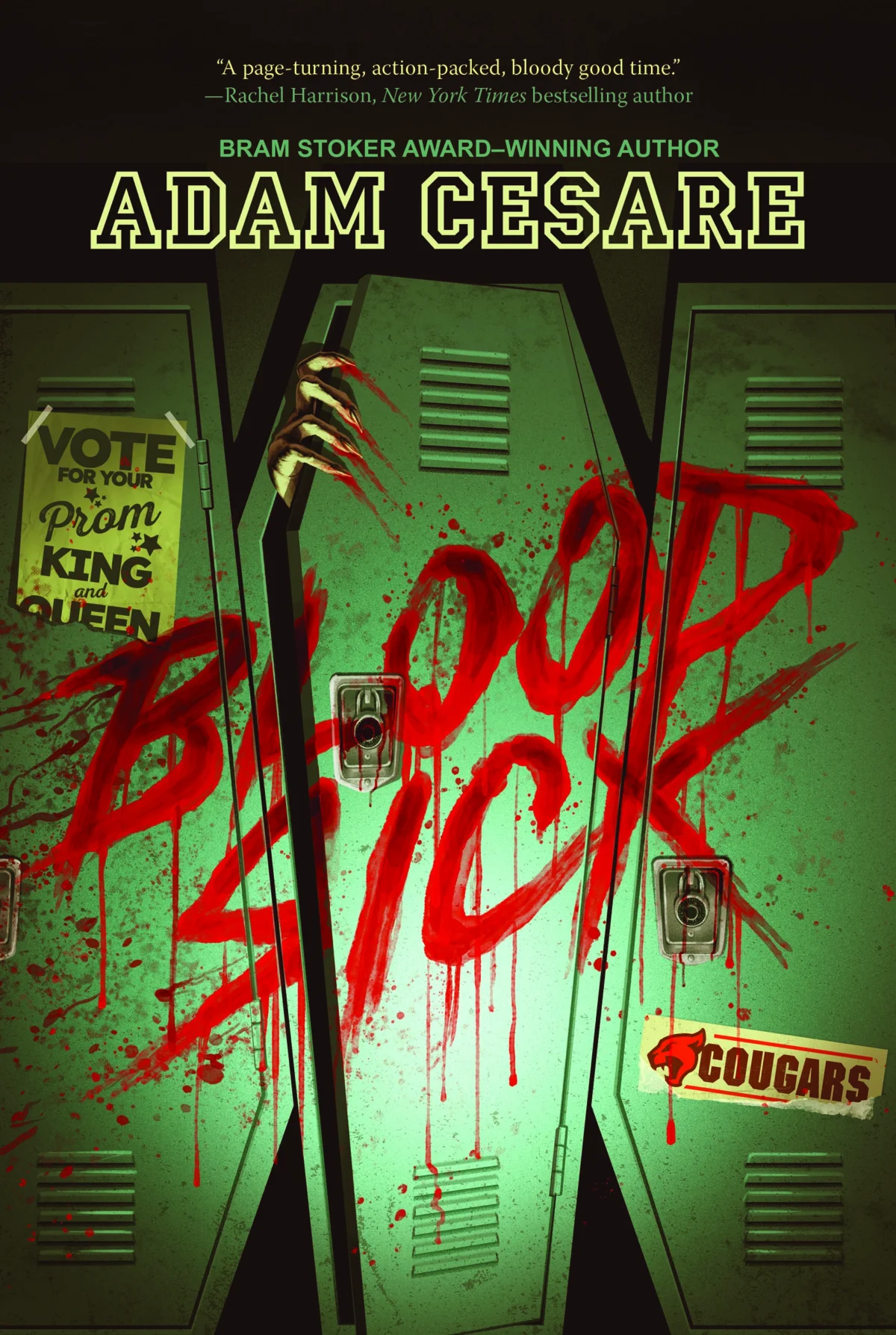
The landscape of contemporary horror literature is set for a seismic shift this winter. On January 19, 2027, Union Square & Co. will release Bloodsick, the highly anticipated new novel from award-winning author Adam Cesare. Known for his revitalization of the slasher subgenre through the Clown in a Cornfield series, Cesare is pivoting to a darker, more visceral exploration of the undead. Bloodsick promises to marry the classic tropes of vampirism with the gritty, uncomfortable realities of modern American adolescence, set against the backdrop of a working-class Massachusetts town teetering on the edge of extinction.
The Premise: A Three-Century Awakening
At the heart of the novel is a terrifying catalyst: a vampire, dormant for over 300 years, claws its way out of the earth. This is not a romanticized creature of the night, but a starving, ancient entity. Its emergence serves as "ground zero" for a plague of undeath that quickly consumes the town.
The infection begins in an unlikely, yet quintessentially suburban location: a high school party house. As the contagion spreads through the student body, the narrative focuses on Ava—a senior grappling with the emotional disconnect of her relationship with a local football star—and Nick, her best friend, who occupies the difficult space of a confidant harboring deeper feelings. Together, they must navigate a landscape where their classmates are no longer peers, but predators.
Chronology of the Infection
The narrative structure of Bloodsick unfolds with a brutal, clockwork precision, moving from the initial, quiet awakening of the entity to the chaotic dissolution of societal order.

- The Pre-Dawn Awakening: The entity emerges from a crypt, its physical state a grotesque testament to its long hibernation. It is malnourished and desperate, driven by an imperative that transcends mere survival; it is a biological necessity. It tracks the sound of music—a hallmark of the suburban landscape—leading it directly to the residence of Jamie Scally.
- The Catalyst at the Garage: The novel’s opening act depicts the aftermath of a post-Thanksgiving party at the Scally residence. Through the perspective of Jamie and his sister Megan, the reader witnesses the arrival of the entity. The encounter is not a slow-burn mystery, but a violent, intimate confrontation that serves to illustrate the entity’s sheer, unnatural strength.
- The Viral Spread: Following the initial incident at the Scally garage, the plague moves rapidly through the high school ecosystem. By leveraging the social connectivity of teenagers, the infection moves from the periphery into the heart of the town, turning the familiar halls of academia into a slaughterhouse.
- The Call to Arms: Ava and Nick, initially isolated by their own personal dilemmas, are forced into an alliance with an unlikely survivor. The narrative trajectory suggests that their survival depends not just on physical prowess, but on their ability to understand the nature of the "hunger" that mirrors their own internal adolescent turmoil.
Supporting Data: The Body Horror of Adolescence
What separates Bloodsick from standard genre fare is Cesare’s commitment to "body horror." The author posits that the physical and emotional changes of the teenage years—the confusion, the heightened sensitivity, the sudden, uncontrollable impulses—are fundamentally horrific.
In the novel, the vampire’s hunger is a dark mirror held up to the hormonal intensity of high school life. The text draws parallels between the consumption of blood and the performative, often confusing nature of teenage relationships. As Cesare notes, the hunger is "an imperative." By grounding the supernatural threat in the visceral reality of human biology, the author creates a sense of dread that feels both alien and intimately recognizable to anyone who has navigated the complexities of youth.
Official Responses and Authorial Intent
Adam Cesare has been vocal about his motivations for Bloodsick, describing it as a passion project years in the making. Despite his success with slasher novels, Cesare identifies vampires as his "favorite thing" in horror.
"I’ve written over a dozen novels and novellas since my debut, none of them containing vampires," Cesare explained in a recent press statement. "I’ve been saving all that undead enthusiasm for just the right book. Bloodsick is that novel. I’m so goddamn proud of it. I think you’re going to be scared, disgusted, exhilarated, and hopefully fall in love with our cast of (mostly doomed) characters."

Industry insiders have already begun comparing the work to the seminal 1987 film The Lost Boys, as well as the contemporary, socially conscious horror writing of Andrew Joseph White and Kalynn Bayron. The consensus among advance reviewers is that Cesare has "sharpened the genre’s fangs," successfully transitioning from the stylized tropes of the slasher to the more atmospheric and decaying aesthetics of classic gothic horror.
Implications for the Horror Genre
The publication of Bloodsick arrives at a pivotal moment for horror literature. As audiences move away from the "elevated horror" trends of the early 2020s, there is a growing appetite for stories that are unabashedly violent, character-driven, and structurally tight.
- Reclaiming the Vampire: By stripping away the aristocratic, brooding tropes popularized by Victorian-era gothic, Cesare returns the vampire to its roots: a plague-bringer, a scavenger, and a force of nature. This "dirtbag vampire" archetype serves as a rejection of the romanticized undead.
- The Intersection of Class and Horror: The setting of a working-class Massachusetts town provides more than just a backdrop; it provides the stakes. In many modern horror novels, characters have the resources to flee or call for help. In Bloodsick, the setting is claustrophobic. The characters are stuck in a cycle of economic and social limitations that make the arrival of an external, supernatural threat feel all the more insurmountable.
- The "Teenage Experience" as Slasher/Horror: By continuing to mine the trauma and intensity of the American high school experience, Cesare solidifies his role as the voice of a new generation of horror readers. He does not treat the teenage protagonists as mere victims, but as active participants in their own survival—and their own downfall.
As January 19, 2027, approaches, the buzz surrounding Bloodsick continues to intensify. With its mix of high-stakes action, profound psychological underpinnings, and a refreshing, visceral take on the most famous monster in history, Adam Cesare’s latest effort appears poised to become a landmark title in the horror canon. Whether readers are drawn to the gore, the character dynamics, or the encroaching, suffocating atmosphere of a town being consumed from within, Bloodsick is, by all accounts, a bloody good time.


 Nana Wu