Nila Kartika Wati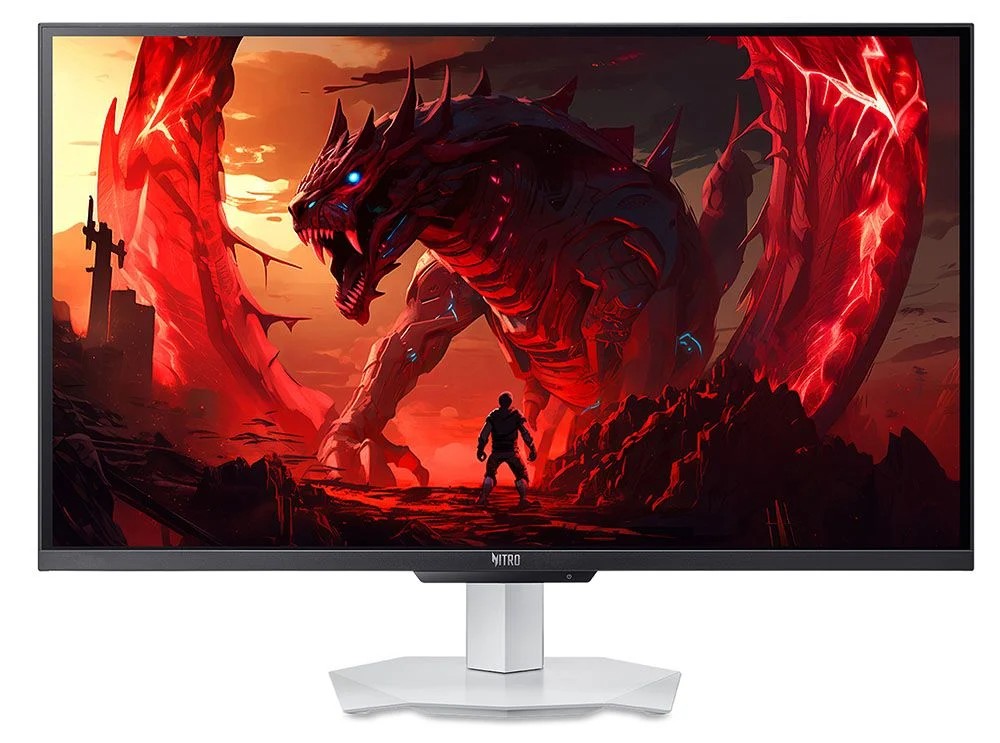
In the world of high-performance gaming hardware, the number 1,000 has long served as a mythological threshold. In the automotive industry, 1,000 horsepower signifies a vehicle that has transcended standard engineering to enter the realm of the supercar. In audio amplification, 1,000 watts represents a level of power reserved for concert-grade setups. Now, in the competitive sphere of display technology, 1,000 Hz—or 1 kHz—has officially become the new plateau.
While the average consumer is still adjusting to the standard 60 Hz television experience, the competitive gaming sector is pushing boundaries that were considered science fiction only a decade ago. Enter the Acer Nitro XV273U F5, a monitor that does not merely attempt to climb the ladder of speed; it aims to rewrite the rules of engagement.
Main Facts: A New Benchmark in IPS Technology
The Acer Nitro XV273U F5 is a 27-inch powerhouse that bridges the gap between high-fidelity resolution and extreme motion clarity. At its core, the monitor utilizes an advanced IPS panel, a technology often favored for its superior color reproduction and wide viewing angles. Historically, IPS panels struggled to keep pace with the raw refresh rates of TN (Twisted Nematic) or OLED displays. Acer, however, has effectively closed this gap.
The headline feature—its 1,000 Hz mode—positions the monitor as a "holy grail" for esports professionals. Even when excluding the specialized high-speed mode, the monitor boasts a native 540 Hz refresh rate at a QHD (2560×1440) resolution. This is a significant achievement; most high-speed gaming monitors force users to sacrifice resolution to reach high refresh rates. The XV273U F5 manages to maintain crisp, high-definition visuals while providing frame-delivery speeds that feel instantaneous.
Beyond the refresh rate, the monitor is equipped with VESA Adaptive-Sync certification, ensuring that the display remains tethered to the GPU’s output, effectively eliminating screen tearing and stutter. With HDR 600 support and a wide color gamut, the monitor ensures that the visual experience is as vibrant as it is responsive.
The Chronology of Speed: From 60 Hz to the Kilohertz Era
To understand the magnitude of the Acer Nitro XV273U F5, one must look at the historical trajectory of monitor technology. For decades, the standard for computing was the 60 Hz refresh rate, which effectively mapped to the power grid frequency and was sufficient for productivity and basic multimedia.
- The Early 2010s: The gaming industry began to push for 120 Hz and 144 Hz displays. This was the first "arms race," where gamers realized that doubling or tripling the refresh rate fundamentally changed the "feel" of a mouse movement.
- The 240 Hz Breakthrough: Mid-decade, 240 Hz monitors became the professional standard for competitive shooters like Counter-Strike and Overwatch.
- The 360 Hz – 500 Hz Jump: In the last four years, manufacturers like ASUS, Alienware, and Acer have pushed into the 360 Hz and 500 Hz territory. These monitors were primarily LCD-based, often relying on TN panels to achieve the necessary pixel response times.
- The 1,000 Hz Horizon: 2024 marks the dawn of the 1,000 Hz era. The Acer Nitro XV273U F5 arrives not just as a proof of concept, but as a retail-ready solution for the most demanding competitive players.
This progression reflects a deeper understanding of human-computer interaction. As input latency is reduced through better switches, faster sensors, and higher-polling-rate mice, the display must keep pace to ensure the visual information presented to the user matches their physical input in real-time.
Supporting Data: Why 1,000 Hz Matters
Critics often argue that the human eye cannot perceive the difference between 500 Hz and 1,000 Hz. However, this argument ignores the "system latency" chain. The goal of a 1,000 Hz monitor is not necessarily to provide a flicker-free image—the eye sees a smooth image at 144 Hz—but to minimize the time between an action (a mouse click) and the reaction (a pixel changing color on the screen).
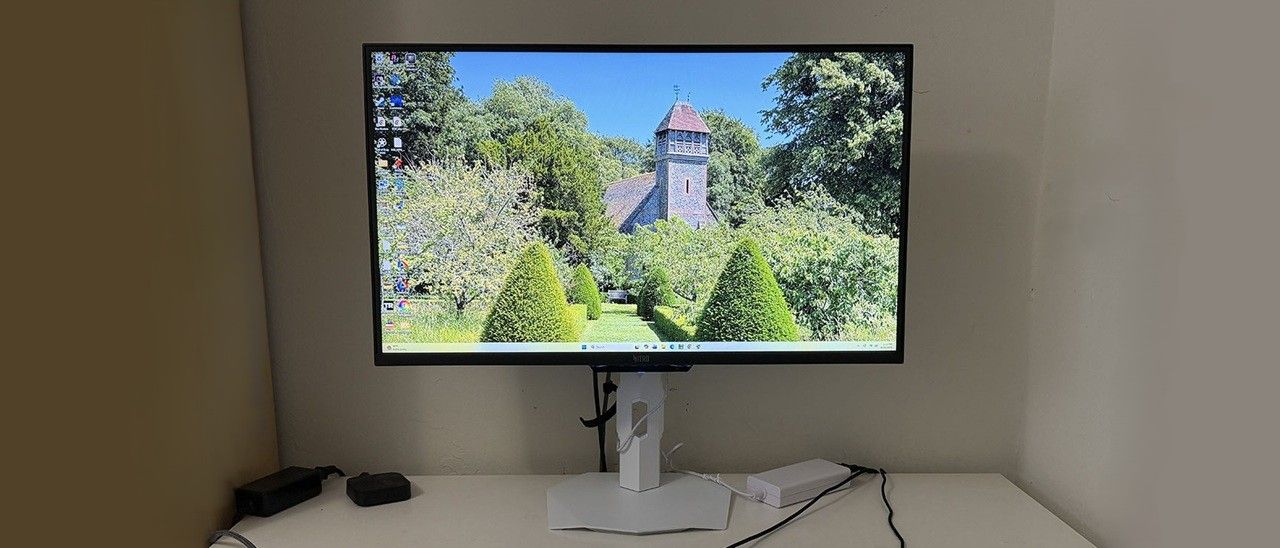
When a monitor refreshes at 1,000 Hz, it updates every 1 millisecond. In a competitive environment where a professional player is flick-aiming, this reduction in latency provides a tangible advantage. The XV273U F5’s IPS panel manages to sustain this speed without the "ghosting" or "smearing" artifacts that plagued earlier generations of high-speed LCDs.
By maintaining QHD resolution, the monitor offers a pixel density of roughly 109 PPI (pixels per inch). This balance is critical; it is sharp enough for competitive gaming where identifying distant targets is vital, yet it does not demand the extreme GPU overhead of a 4K display, which would negate the benefits of a 1,000 Hz refresh rate.
Official Responses and Industry Positioning
Acer has positioned the Nitro XV273U F5 as a flagship within its enthusiast-focused Nitro lineup. While the "Predator" brand usually houses Acer’s most experimental tech, the decision to launch this under the Nitro banner suggests that Acer intends to bring extreme performance to a broader market segment.
"The goal with the XV273U F5 was to eliminate the compromise between image quality and speed," an Acer spokesperson noted during the product’s internal development phase. By integrating high-contrast IPS technology with a 540 Hz native refresh rate and the specialized 1,000 Hz mode, Acer is directly challenging the dominance of OLED panels. While OLEDs have superior black levels, the XV273U F5 offers a sustained brightness and color consistency that appeals to gamers who spend hours in competitive training sessions where burn-in risks might be a concern.
Implications for the Future of Display Tech
The release of the Acer Nitro XV273U F5 has several long-term implications for the monitor market:
- The Death of the TN Panel: With IPS technology now capable of reaching these extreme speeds, the primary reason to choose a TN panel—speed—has largely vanished. We are likely to see TN panels relegated to niche budget applications or disappearing entirely from the enthusiast market.
- GPU Requirements: Pushing 1,000 Hz requires massive computational power. Even at lower graphics settings, reaching 1,000 frames per second in modern titles is a feat that will force developers to optimize their engines further and pressure hardware manufacturers to increase the throughput of display interfaces (such as DisplayPort 2.1).
- Standardization: As we reach the 1 kHz threshold, the industry will likely shift focus toward color accuracy and HDR peak brightness, as the "refresh rate war" reaches a point of diminishing returns for the average user.
Conclusion: A New Standard for Enthusiasts
The Acer Nitro XV273U F5 is not for the casual player who wants a cinematic experience in a single-player RPG. It is a precision instrument designed for the professional and the enthusiast. By delivering the gaming feel and quick response of an OLED in a high-contrast IPS package, Acer has created a device that feels like a glimpse into the future.
While the 1,000 Hz mode may be considered a "trick" by some—a specialized mode for extreme scenarios—the monitor’s base performance at 540 Hz is enough to secure its place at the top of the leaderboard. It is a testament to how far display technology has come: from the humble 60 Hz flicker of early PCs to the ultra-smooth, hyper-responsive reality of today’s kilohertz-capable displays. For those who live for the competitive edge, the Nitro XV273U F5 is not just a peripheral; it is a competitive advantage.

 Nana Wu
 Layla Zulfa