

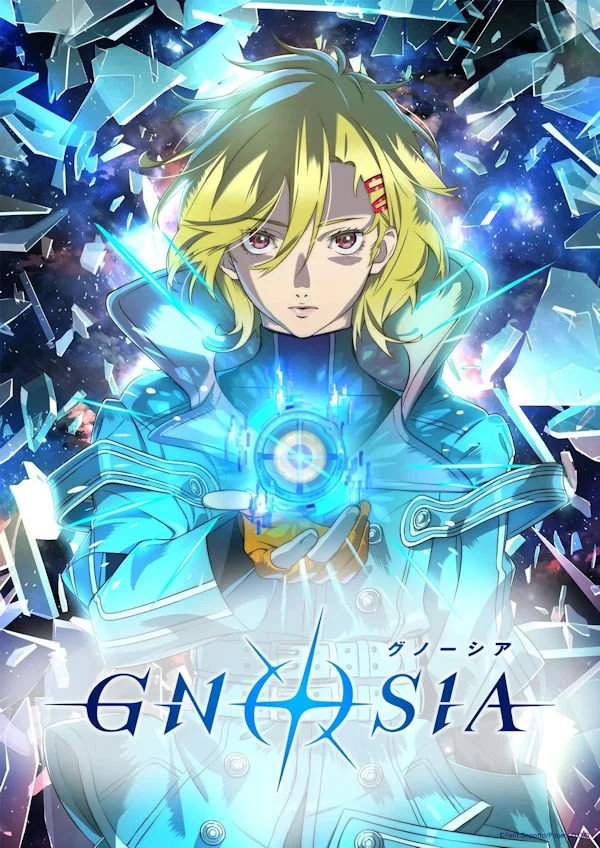
My quarterly anime watchlist is usually a chaotic, overflowing stack. Between the return of long-standing mainstays and the deluge of new titles, curating a concise list is an exercise in futility. It is nearly impossible to resist the siren call of every series that boasts an intriguing premise or a striking key visual. Last autumn, one particular title managed to slip through the cracks of my initial sweep, despite the fervent recommendations from my inner circle of anime aficionados. It wasn’t until the quiet of winter that I finally cleared a slot to see what all the fuss was about.
I intended to watch a few episodes to get a feel for it. Instead, I found myself completely ensnared, binge-watching the entire series in a feverish, late-night sprint.
The Anomaly: Breaking the Videogame Adaptation Curse
Historically, I approach videogame-to-anime adaptations with a profound sense of skepticism. All too often, these projects fall into the trap of over-relying on superficial spectacle. They are frequently glutted with repetitive, hollow battle sequences, stagnant plotlines that fail to translate from interactive media, and character archetypes that feel lifted from a bargain-bin trope repository. For me, most videogame adaptations simply do not work.
However, the autumn 2025 release of Gnosia serves as a rare, shining exception to the rule. Adapted from the 2019 cult-classic visual novel and social deduction RPG of the same name, Gnosia succeeds because it understands the core of its source material: it is not a story about combat, but a high-stakes, claustrophobic game of psychological warfare.
The Core Premise: A Sci-Fi Whodunnit
At its heart, Gnosia is a "whodunnit"—or, more accurately, a "who’s-gonna-do-it." Much like the classic social deduction game Werewolf or the 2018 digital phenomenon Among Us, the central tension lies in identifying an invisible, lethal threat hidden among a group of potential allies.
The protagonist, Yuri—a nonbinary individual who wakes from a medical pod with a disorienting case of amnesia—finds themselves on a derelict, aging spaceship. The ship’s AI, LeVi, delivers the grim news: the vessel has been infiltrated by the "Gnosia," a malevolent, virus-like infection that turns humans into murderous imposters. The crew must identify the infected and send them to "cold sleep" before the Gnosia reach a critical mass that would allow them to seize control of the ship.
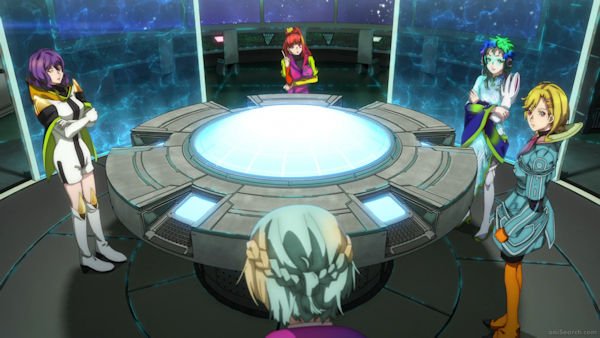
The narrative introduces a compelling cast of characters who serve as both allies and potential suspects. There is Setsu, a stoic military officer and Yuri’s closest confidant; Racio, a brilliant but prickly "tsundere" whose abrasive attitude often lands them in cold storage; Jina, a soft-spoken flight traffic controller; and SQ, a bubbly, hyper-social character who flirts with everyone, effectively masking their true intentions.
Chronology of Chaos: The Mechanics of the Time Loop
The narrative structure of Gnosia is its most audacious feature. When Yuri inevitably fails to identify the infiltrator in the first episode, they are not met with a standard "Game Over." Instead, they are plunged into a recurring time loop.
This is not a traditional time-travel story; rather, it is a series of fragmented realities. In each loop, the identities of the infected shift. The person who was your staunchest ally in one iteration might be the cold-blooded killer in the next. This creates a devastating emotional toll for Yuri, who retains memories of past loops that the other characters do not. Watching Yuri attempt to form genuine connections, only to see those people unmasked as the very thing they are trying to destroy, is a masterclass in narrative tension. The revelation that Setsu—Yuri’s emotional anchor—could be a Gnosia is genuinely heart-wrenching.
While I have traditionally been averse to time-loop narratives, Gnosia utilizes the mechanic to explore the nature of trust. It forces the audience to question: if someone’s personality and allegiances change based on the timeline, is there an "objective" truth to their character?
Supporting Data: Complexity and Inclusivity
Beyond the core premise, the show leans into its RPG roots with tactical depth. The inclusion of specific "jobs"—Engineer, Doctor, Guardian Angel—introduces variables that dictate the flow of the investigation. These roles prevent the show from becoming repetitive; every time Yuri gains a footing, a new mechanic or a new crewmate shifts the balance.
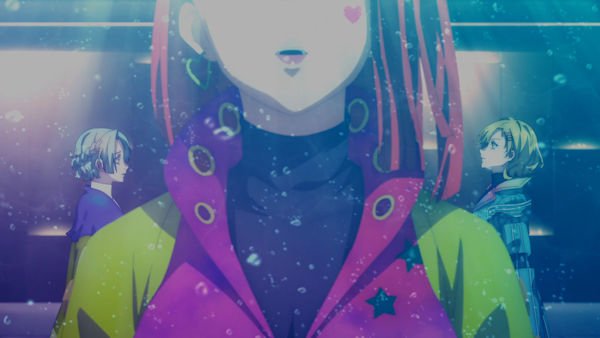
The roster of characters expands as the series progresses, moving from a tight-knit group of five to a complex web of fifteen individuals. Characters like Otome, a sentient Beluga whale, and the mute, enigmatic doll Kukrushka, add layers of sci-fi intrigue that elevate the show beyond mere "human vs. imposter" tropes.
Furthermore, the series deserves recognition for its progressive approach to character design. From the very first episode, the show features three nonbinary characters out of a core group of five, including one who identifies as asexual. In an industry that often relies on rigid, binary gender archetypes, Gnosia feels like a breath of fresh air. It presents a future where gender is fluid and secondary to the immediate, desperate need for survival.
Implications and Critical Reflection
Despite its strengths, Gnosia is not without its minor flaws. The series occasionally brushes against plot holes—for instance, the question of why the Gnosia are restricted to a single kill per "night" during hyperspace travel remains unanswered, though one could argue this is a necessary concession to maintain the game’s pacing.
Additionally, the 21-episode run leaves the audience wanting more. While the pacing is tight, certain supporting characters feel like ciphers, and a major antagonist introduced in the final act feels underdeveloped. A full 24-episode season would have allowed for deeper exploration of these backstories and a more satisfying conclusion to the antagonist’s arc.
However, the animation quality is consistently lush, and the character designs are distinct and memorable. The sound design, particularly the punchy opening theme and the haunting, atmospheric score, creates an immersive sense of dread. It successfully evokes the feeling of being trapped in a metal coffin in the middle of deep space.
Conclusion: A Must-Watch for the Genre-Defying Viewer
Gnosia is a remarkable achievement. It manages to translate the frantic, analytical nature of a social deduction game into a coherent, emotionally resonant, and genuinely chilling science fiction anime. It respects the intelligence of its audience, inviting us to play along, guess the culprit, and suffer the consequences of our miscalculations right alongside Yuri.
For fans of cyberpunk, psychological horror, and high-concept sci-fi, Gnosia is an essential watch. It breaks the mold of what we expect from game adaptations, proving that if the underlying mechanics of a story are strong enough, the transition to the screen can be nothing short of transcendent. Investing the time to watch Yuri reach the end of their final loop is, without a doubt, one of the most rewarding experiences in recent animation history. It is a haunting, clever, and inclusive journey that lingers in the mind long after the credits roll.











No comments yet. Be the first to join the conversation!