

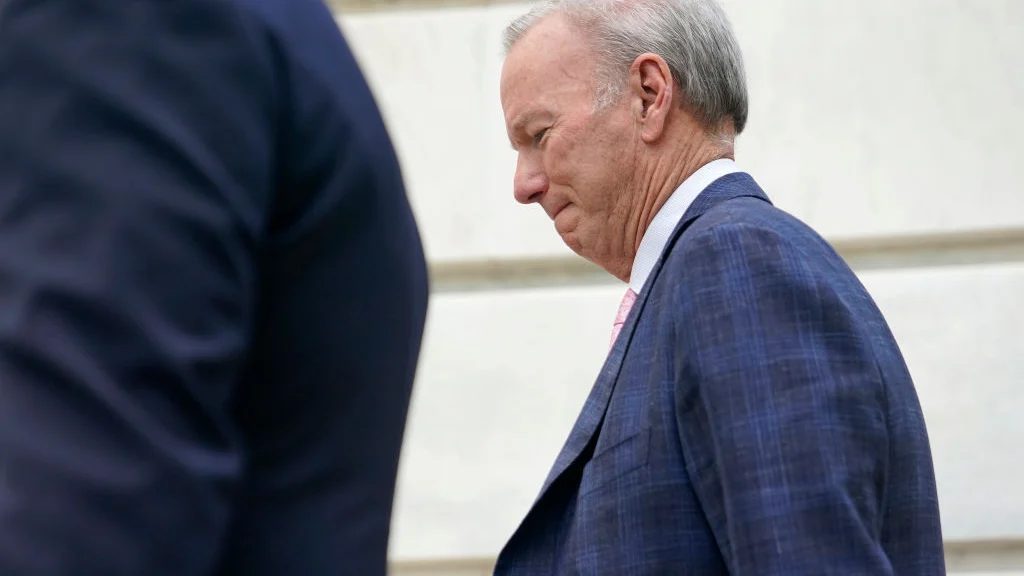
The traditional commencement speech, once a hallowed ceremony of inspiration and future-facing optimism, has recently transformed into an unexpected venue for cultural and economic friction. Over the past weekend, a wave of graduation ceremonies across the United States saw prominent industry leaders—most notably former Google CEO Eric Schmidt—met with vocal dissent, jeers, and outright protests. The primary trigger for this hostility? An unwavering, often dismissive, endorsement of Artificial Intelligence by speakers to an audience of graduates who are increasingly anxious about their professional viability in an AI-dominated economy.
The University of Arizona Incident: A Snapshot of Discontent
Eric Schmidt, who guided Google through its most explosive years of growth, stood before thousands of graduates at the University of Arizona expecting, perhaps, a standard reception for a tech luminary. Instead, he encountered a hostile environment.
As Schmidt pivoted his address to the topic of Artificial Intelligence—a technology he continues to champion as a foundational pillar of the next century—the auditorium erupted in protests. The interruption was so significant that the former executive was forced to pause his address.
"I know what many of you are feeling about that. I can hear you. There is a fear," Schmidt acknowledged, attempting to pivot toward empathy. He addressed the collective anxiety of the Class of 2024, noting that the fear that their "future has already been written" by algorithms and automated systems was, in his words, "rational." Yet, his core message remained unshaken: AI is an inevitable force that will reshape the world, and it is the burden and privilege of this generation to guide that transition. For many students in attendance, this "get-on-board" rhetoric felt less like wisdom and more like an erasure of their genuine concerns regarding job displacement and the devaluing of human expertise.
A Growing Trend: The Disconnect Between Leadership and Labor
The incident at the University of Arizona is not an isolated event. It is part of a broader, systemic disconnect between the architects of the digital age and the demographic entering the workforce during the most volatile technological shift in history.
At the University of Central Florida, Gloria Caulfield, a high-ranking executive in property development, faced similar jeers when she framed AI as the "next industrial revolution." The audience response was immediate and visceral, reflecting a growing sentiment among the youth that "industrial revolution" is a euphemism for the automation of entry-level roles that once provided a foothold in the middle class.
Similarly, at Middle Tennessee State University, music industry executive Scott Borchetta attempted to frame the disruption of the arts and production sectors through AI as a reality that students simply needed to "deal with." The dismissive tone of such advice, delivered by individuals who have already cemented their careers, proved to be a catalyst for the audience’s negative reaction. The common thread among these incidents is a clash of perspectives: corporate leaders see a "tool for efficiency," while graduates see an existential threat to their livelihoods.
Chronology of the AI Anxiety Surge
To understand why these commencements have become protest sites, one must look at the rapid acceleration of AI integration over the last 18 months:
- Late 2022: The public release of ChatGPT triggers a global paradigm shift, moving AI from academic research into the hands of the general public.
- Early 2023: Corporate America begins aggressive integration of Generative AI, with companies like Google, Microsoft, and Meta announcing significant pivots toward "AI-first" business models.
- Mid-2023: Initial layoffs in creative and technical sectors begin, with executives explicitly citing AI as a factor in restructuring.
- Late 2023 – Early 2024: Economic reports begin to highlight that, unlike previous technological revolutions, the current AI wave is impacting white-collar, creative, and entry-level knowledge work first.
- Spring 2024: Commencement season arrives, and the disparity between the "tech-optimist" narrative of speakers and the "career-anxiety" reality of students reaches a breaking point.
Supporting Data: The Economic Reality Behind the Boos
The reaction from the students is rooted in data that suggests their concerns are far from unfounded. Recent reports from firms like Goldman Sachs have suggested that AI could automate up to 300 million full-time jobs globally. While advocates argue that this will lead to the creation of new, higher-value roles, the transition period—the exact period these graduates are entering—is fraught with uncertainty.
Furthermore, a study by the Pew Research Center highlights that nearly 60% of young workers feel "concerned" or "anxious" about how AI will influence their specific career paths over the next five years. This is not just a fear of machines; it is a fear of the speed of adoption. In past decades, technological shifts like the introduction of the PC or the early internet allowed for a decade or more of workforce adaptation. AI, by contrast, has scaled its capabilities in months, leaving the educational system struggling to keep pace.
The Institutional and Official Response
When confronted with the protests, most institutions and speakers have struggled to find a coherent response. The universities involved have largely remained silent, attempting to balance the rights of students to protest with the traditional decorum of a commencement ceremony.
On the industry side, the response has been characterized by a doubling down on the "inevitability" argument. Industry leaders like Schmidt argue that the technology is already out of the bottle and that the focus should be on "responsible AI" and "human-in-the-loop" systems. However, this argument often fails to address the immediate economic pain points of the graduates. The "official" corporate line—that AI will augment human potential—is increasingly viewed by the younger generation as a convenient shield for cost-cutting measures that prioritize shareholder value over workforce stability.
Implications: A New Era of Professional Skepticism
The fallout from these graduation speeches has significant implications for the future of corporate-university relations and the broader labor market.
1. The Death of the "Tech-Optimist" Keynote
Universities may begin to rethink their invitation lists. Inviting high-profile tech executives to give commencement addresses—once considered a prestigious coup—has now become a PR risk. Institutions may shift toward speakers who offer more nuanced, human-centric perspectives on the future of work rather than those who are viewed as the primary architects of digital displacement.
2. A Shift in Workforce Expectations
The current generation of graduates is entering the workforce with a high degree of professional skepticism. They are less likely to accept corporate narratives at face value and more likely to demand transparency regarding how AI is being deployed within their organizations. We may see a rise in organized labor movements within tech and media companies that specifically target AI ethics and usage.
3. The Need for Educational Reform
The protests underscore a growing gap between what students are being taught and what the labor market actually requires. If students are terrified of AI, it suggests that the current curriculum is not preparing them to wield the technology, but rather positioning them as passive subjects to it. Universities will face increasing pressure to provide training that emphasizes human-AI collaboration rather than just theoretical knowledge.
Conclusion
The boos heard at the University of Arizona and other campuses are more than just a momentary display of youthful frustration. They are a signal of a profound shift in the social contract. The "cathedral of knowledge" that Eric Schmidt spoke of is no longer being built by human hands alone; it is being automated, optimized, and algorithmically curated.
For the Class of 2024, the promise of the future has been clouded by the rapid, often chaotic, implementation of technologies that threaten the very career paths they have spent years studying for. Until industry leaders can bridge the gap between their abstract, optimistic projections and the harsh, immediate economic reality facing the next generation, they should expect to find that their welcome on campus is, at best, a thing of the past. The students are no longer just listening; they are pushing back, and they are demanding a seat at the table where their futures are being decided.











No comments yet. Be the first to join the conversation!