Nana Wu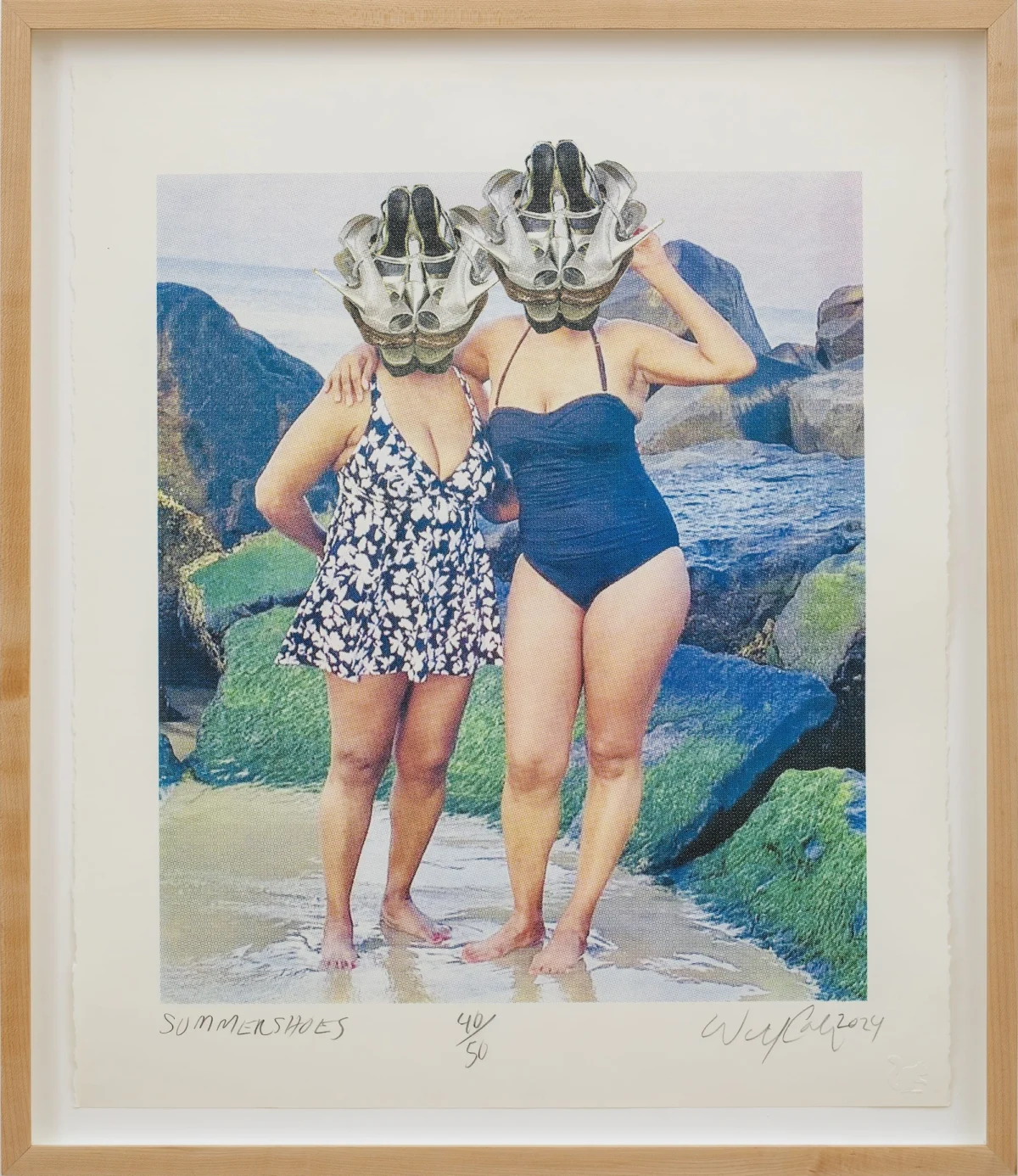
In the contemporary art landscape, few figures possess the transformative vision of Willie Cole. By elevating the mundane—discarded stilettos, single-use water bottles, and rusted musical instruments—Cole orchestrates a profound dialogue between the discarded debris of modern consumerism and the enduring weight of history. His latest exhibition, Mind, Body, and Soul, currently on view at Sargent’s Daughters in New York, serves as a poignant retrospective and a forward-looking statement, challenging viewers to reconsider the spiritual and social resonance of the objects that populate our daily existence.
Main Facts: The Intersection of History and Discarded Material
At the heart of Cole’s practice is the act of recontextualization. By stripping objects of their original utility, he forces an encounter with their latent symbolism. His work is not merely an assemblage of parts; it is a meticulous investigation of human history, labor, and the environment.

Mind, Body, and Soul offers a comprehensive look at this philosophy, featuring a curation of works that span two decades alongside brand-new creations. The exhibition highlights Cole’s ability to move fluidly between genres. He manages to weave threads of African masking traditions into the sharp, aggressive silhouettes of modern high heels, or transform the domestic drudgery represented by the ironing board into a totem of cultural memory. His work is a meditation on the dichotomy between the disposable nature of the 21st-century lifestyle and the permanent, sacred value we assign to historical artifacts.
A Chronological Evolution of an Artistic Vision
To understand the gravity of Cole’s current work, one must trace the trajectory of his creative output, which has consistently pushed the boundaries of sculpture and conceptual art.

Early Foundations and The Power of the Mundane
Since the early 2000s, Cole has been recognized for his ability to see the "spirit" inside inanimate objects. Early in his career, he focused heavily on household appliances, most notably the iron. He recognized that the steam iron was a surrogate for the domestic labor historically tied to Black women in the United States. By repeatedly using the iron as a stencil or a physical component in his work, he transformed a tool of servitude into a complex icon of historical labor.
The Rise of the Stiletto Assemblages
As his practice matured, Cole began exploring the shoe—specifically the high-heeled stiletto—as a primary medium. In works like Fly Girl (2016) and the more recent Tiger Lilly (2025), he uses wire and repurposed footwear to construct intricate, almost organic figures. These works often evoke the imagery of traditional African fertility figures or ceremonial masks. By using the mass-produced, gendered, and often sexualized object of the high heel to replicate the aesthetics of sacred tribal art, Cole forces a confrontation between Western commodity culture and the spiritual depth of the African diaspora.

Contemporary Interventions: Plastic and Survival
In his most recent work, such as the Survivors Series I (2026), Cole has shifted his focus toward the environmental crisis. By utilizing hundreds of crushed single-use plastic water bottles to create large-scale wall reliefs, he addresses the physical byproduct of modern "survival." This series serves as a stark commentary on the Great Pacific Garbage Patch and the unsustainable nature of global consumerism.
Supporting Data: The Scale of Consumption
The urgency behind Cole’s work is grounded in staggering real-world statistics that highlight why his choice of materials is so potent.

- The Plastic Crisis: According to data from environmental organizations, the world produces over 380 million tons of plastic every year, a significant portion of which is single-use packaging. Cole’s use of water bottles in his Survivors Series acts as a visual manifestation of this accumulation. By aggregating these individual pieces of waste into a cohesive artwork, he makes the scale of our environmental impact visible, moving it from a theoretical statistic to a visceral experience.
- Fast Fashion and Labor: The fashion industry is responsible for approximately 10% of global carbon emissions and is a significant contributor to global waste. By repurposing thousands of shoes, Cole highlights the "fast fashion" cycle—where items are purchased, worn briefly, and discarded. His work invites a critique of the labor practices inherent in this cycle, as the shoes he uses are often mass-produced in factories that mirror the dehumanizing conditions of historical labor systems.
Official Perspectives and Critical Analysis
The gallery, Sargent’s Daughters, has framed Mind, Body, and Soul as a definitive statement on the artist’s versatility. In an official statement regarding the exhibition, the gallery noted: "His practice transcends specific media or subject matter, moving fluidly across genres and iconographies to explore history, consumerism, and environmentalism."
Art critics have long praised Cole for his "alchemy." By taking a pile of rusted saxophones and crafting them into the likeness of a bird, or by casting a stiletto-based sculpture in bronze to immortalize it as a museum-grade artifact, Cole elevates the "junk" of the world to the status of high art. This elevation is not merely aesthetic; it is a political act. He is telling the viewer that history is not just found in museums, but is constantly being written in the waste we leave behind.

Implications: The Ethics of Consumption and Memory
The implications of Mind, Body, and Soul extend far beyond the white walls of the gallery. Cole’s work asks fundamental questions about the future of human legacy:
- What defines an artifact? If we are what we consume, what will our current culture look like to future generations? By using materials that are destined for landfills, Cole creates a "time capsule" of our current consumption habits.
- The Spiritual Reclaiming of Material: By referencing traditional African masking, Cole suggests that the objects of our modern world are not spiritually neutral. They are charged with the energy of the people who made them, the people who wore them, and the people who discarded them. He attempts to reclaim the "soul" of these items, acknowledging their history rather than letting them disappear into the anonymity of waste.
- The Environmental Imperative: The exhibition forces the viewer to consider the physical toll of our lifestyle. The Survivors Series is a haunting reminder that while the objects we discard are "disposable," they are, in fact, permanent in their impact on the planet.
Conclusion: A Call to Consciousness
Willie Cole’s Mind, Body, and Soul is more than an exhibition; it is an interrogation of the modern experience. By bridging the gap between the ancestral and the industrial, the sacred and the profane, Cole provides a roadmap for understanding our place in a globalized world. As we navigate an era defined by climate instability and the rapid acceleration of consumer culture, his work offers a necessary pause—a moment to reflect on the weight of the objects we touch, the history they carry, and the footprint we leave behind.

The exhibition remains on view at Sargent’s Daughters in New York through July 10. For those who cannot witness the work in person, the artist continues to document his evolving process and the philosophy behind his assemblages on his Instagram platform, providing a window into the mind of a creator who is continuously finding the extraordinary in the remnants of the ordinary. In a world that is obsessed with the new, Willie Cole reminds us that there is a profound, soul-stirring truth waiting to be reclaimed in the old, the broken, and the discarded.

 Dwi Wanna
 Asro
Asro