In the labyrinthine narrative of Anne Rice’s The Vampire Chronicles, few relationships have captured the collective imagination of the fandom quite like "Devil’s Minion"—the complex, often volatile, and deeply haunting romance between the ancient vampire Armand and the human journalist Daniel Molloy. As AMC’s The Vampire Lestat series unfolds, the question of whether this iconic pairing is a reality or a fabrication has become the show’s most tantalizing mystery. While fans of the source material know the story well, the television adaptation is weaving a far more complicated tapestry, one that blurs the lines between memory, manipulation, and genuine affection.

Main Facts: Defining the "Devil’s Minion" Dilemma
At the heart of the debate is a simple, yet profoundly difficult question: Did Armand and Daniel share a romantic history in the decades before their current timeline? In the novels, specifically The Queen of the Damned, the romance is explicit and well-documented. Armand turns Daniel into a vampire while the latter is still young, cementing their bond. However, the show has deviated significantly; Daniel has reached old age as a human, and his memories of his younger years are fragmented, at best.

The current series establishes that Armand has been a silent, stalking observer in Daniel’s life since their initial 1973 encounter in San Francisco. Yet, a relationship requires two participants. If Daniel has no recollection of their shared past, can it truly be called a relationship? The show presents a duality: "Present Devil’s Minion" appears to be gaining momentum as the two navigate their complicated power dynamic, but "Past Devil’s Minion"—a theoretical, erased history of love—remains the series’ most guarded secret.

A Chronology of Influence: Tracking 52 Years of Shadowing
To understand if a secret past exists, one must analyze the timeline Armand himself has provided. During the fifth episode of The Vampire Lestat, Armand admits to a persistent, obsessive presence in Daniel’s life. He recounts a series of interventions—ranging from the mundane to the miraculous—that spans over half a century.

- 1973: The initial, catalytic meeting in San Francisco. Armand attempts to turn Daniel, is interrupted, and finds himself inexplicably fascinated by the mortal man.
- 1990: Armand’s first detailed confession. He admits to observing Daniel at a reading in Amherst, Massachusetts, and subsequently manipulating a violent encounter in a parking garage to ensure Daniel’s safety and silence.
- 2002: A moment of profound emotional intimacy. Daniel, estranged from his daughter, visits the Rothko Chapel in Houston. Armand claims to have been present, guiding Daniel’s path to grief and ensuring he could mourn in peace.
- 2025: The present-day confrontation. Armand confesses his love, promising to make "profound amends" for his interference.
The glaring omission in this timeline is the stretch between 1973 and 1990. In the books, this is precisely when the "Devil’s Minion" arc occurs. By leaving this nearly two-decade gap wide open, showrunner Rolin Jones and his team have created a narrative vacuum that invites speculation. It is entirely possible that this era was not a vacuum, but a period of intense, albeit erased, domesticity between the two.

Supporting Data: Memory Manipulation and Artistic Clues
The strongest argument for the existence of "Past Devil’s Minion" lies in Armand’s established history of psychological manipulation. Throughout Interview with the Vampire and The Vampire Lestat, we have seen Armand repeatedly alter the memories of those around him. He famously scrubbed Louis de Pointe du Lac’s memory of the Paris trial and the tragedy of Claudia. If he can manipulate a vampire as powerful as Louis, a human mind like Daniel’s would be a trivial task for him.

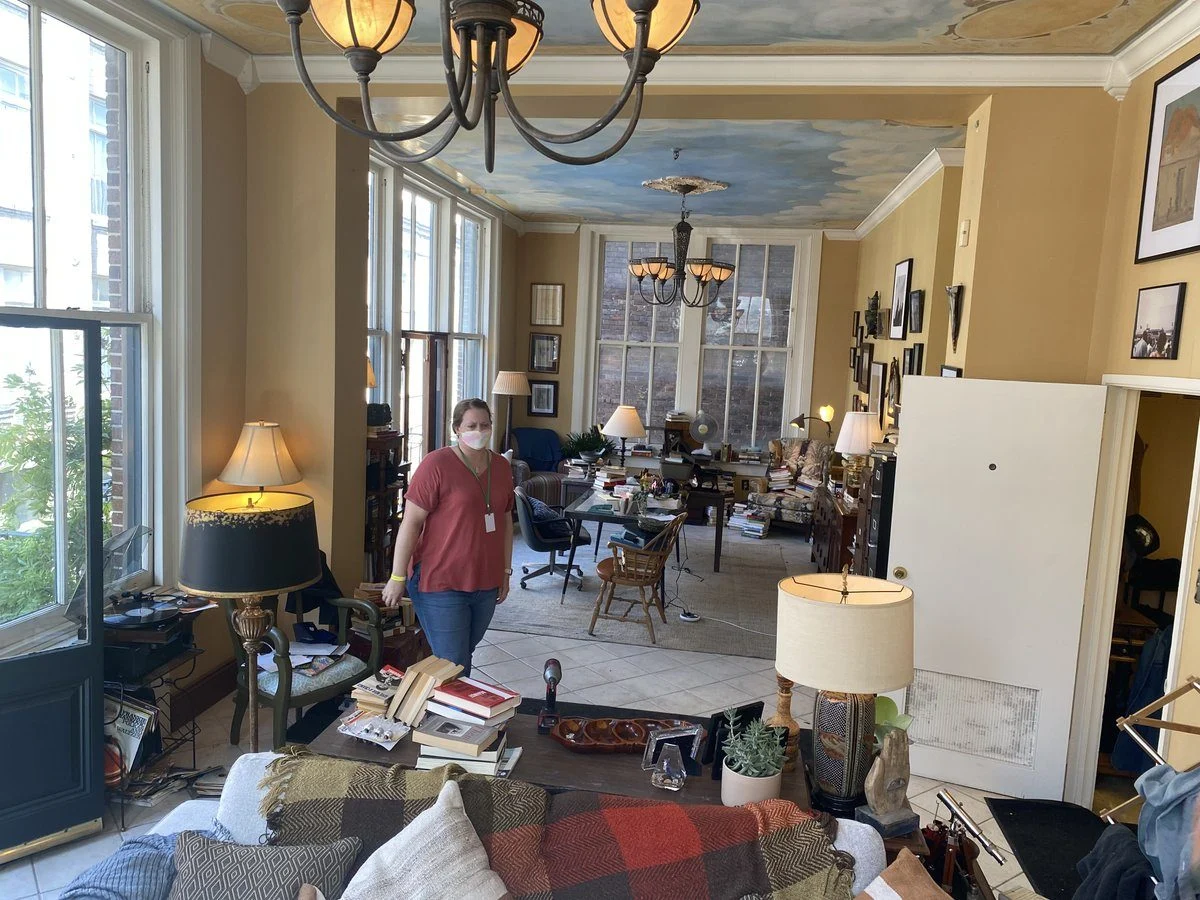
Furthermore, the production design of the series offers subtle, "environmental" evidence. Daniel’s original New York apartment features a ceiling painted with blue skies—a direct, canonical reference to Armand’s documented obsession with Renaissance-style depictions of the heavens. In the source material, the couple lived together in New York for an extended period. While skeptics might argue this is merely an aesthetic choice, in the meticulous world of Anne Rice adaptations, such details are rarely coincidental.

The "blackout years at Knight Ridder" also serve as a potential linguistic clue. Daniel’s cryptic mention of these years, combined with the fact that the show’s "Night Island" complex is situated in Miami—the former headquarters of the Knight Ridder media empire—suggests a geographic and temporal overlap that Daniel may be subconsciously blocking out.

Official Responses: What the Cast and Crew Reveal
The actors themselves have leaned into the ambiguity, providing fuel for fan theories. Assad Zaman, who portrays the enigmatic Armand, has stated in interviews that Armand’s "elaborate lies are often laced with some truth." Zaman suggests that Armand’s fascination with Daniel is, and has always been, more profound than his connection to Louis.

Eric Bogosian, who brings an acerbic, weary humanity to the older Daniel Molloy, has hinted at the psychological toll of this dynamic. "You get told things like ‘this guy has been part of your life for 50 years,’" Bogosian noted. "It causes a kind of deep corrosion in your personality." This "corrosion" is a key indicator that Daniel is reacting to trauma he cannot fully articulate, further supporting the idea that there is a history waiting to be unearthed.

Showrunner Rolin Jones has confirmed that Luke Brandon Field, who plays the younger Daniel, will return to the series. Given the narrative trajectory, his return is almost certainly linked to the visual representation of those "lost" years. If the series intended for those years to be empty, there would be no need for the younger actor to reappear.

The Implications: A New Canon for the Immortal Universe
The potential confirmation of "Past Devil’s Minion" would be a seismic shift for the show. If Armand is not merely an observer, but a former partner who systematically erased himself from Daniel’s history, it paints his current "love confession" in a much darker light. It implies that Armand’s pursuit of Daniel is not a new romantic endeavor, but a desperate attempt to reclaim a life he destroyed or hid.

This also ties into the upcoming Night Island project. If Night Island explores the history of that sanctuary, it will likely serve as the definitive lens through which we view the past relationship between these two characters. It could transform the series from a story of a vampire stalking a human into a tragic, multi-generational romance about two souls who have repeatedly forgotten—and found—each other.

Ultimately, the ambiguity is the point. By keeping the audience in the dark, the show forces us to experience the same cognitive dissonance as Daniel. We are left to wonder: Is it better to be loved by a monster who has rewritten your life, or to live in a reality where the most important chapter of your existence never actually happened? As The Vampire Lestat continues to air, one thing is certain—the truth, when it finally surfaces, will likely be as painful as it is transformative. Whether or not "Past Devil’s Minion" is currently real in the timeline, its shadow looms over every scene, turning every interaction into a dance of half-truths and long-buried desires.