

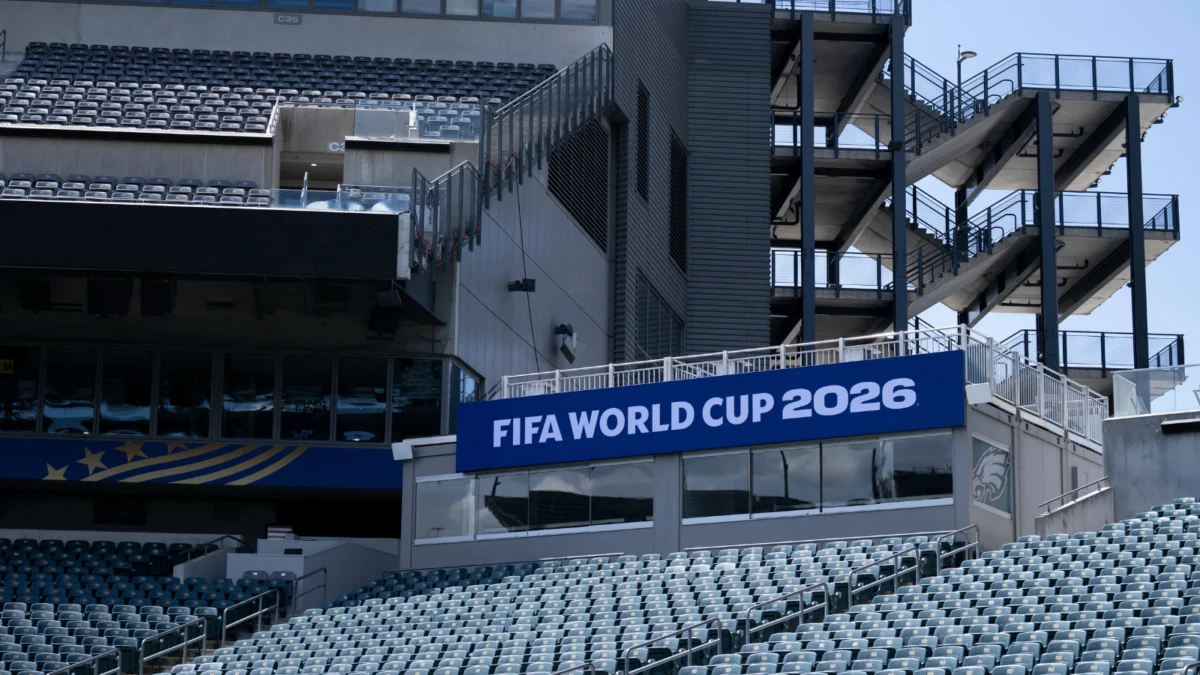
As the global countdown to the 2026 World Cup intensifies, the intersection of populist politics and high-stakes sports economics has reached a fever pitch. At the center of the controversy is a fundamental question of accessibility: Is the world’s most prestigious sporting event becoming an exclusive playground for the affluent, effectively pricing out the very fans who have historically defined the spirit of the game?
The Catalyst: A Presidential Critique
The debate gained significant momentum last month following an exclusive interview between President Donald Trump and the New York Post. During the discussion, the President expressed genuine shock upon discovering that entry-level tickets for the tournament were retailing for approximately $1,000.
"If people from Queens and Brooklyn and all of the people that love Donald Trump can’t go, I would be disappointed," the President stated. "I would like to be able to have the people that voted for me to be able to go. I wouldn’t pay it either, to be honest."
This remark, while characteristic of the President’s populist rhetoric, struck a nerve within the sports marketing and tourism industries. It highlighted a growing disconnect between the elite tier of international sporting events and the domestic fan bases they are hosted within. For organizers, the ticket prices represent a necessary byproduct of soaring operational costs and stadium infrastructure investment; for the average fan, they represent a barrier to entry that threatens to alter the cultural landscape of the tournament.
Chronology of the Controversy
To understand how the tournament arrived at this point of contention, one must look back at the trajectory of FIFA’s hosting strategy over the last decade.
2022–2023: The Planning Phase
Following the selection of the United States, Canada, and Mexico as joint hosts, FIFA and the local organizing committees set out to maximize revenue. The goal was twofold: to break all previous attendance records and to generate the highest commercial revenue in World Cup history. Analysts projected that the sheer scale of American stadiums—many of which hold over 80,000 spectators—would allow for a tiered pricing strategy that balanced profitability with accessibility.
2024: The Inflationary Surge
As preparations moved into high gear, global inflation and rising security costs began to impact the bottom line. Hotel rates in host cities, private transportation, and stadium maintenance surged, leading organizers to adjust their revenue targets upward. By early 2025, the initial "base" ticket price projections were quietly revised, creeping toward the four-digit threshold that would eventually trigger the current backlash.
May 2026: The Public Outcry
The revelation of $1,000 entry-level tickets—coupled with the President’s critique—served as a tipping point. The timing was particularly sensitive, as the final phases of marketing campaigns were underway, aimed at international travelers and high-net-worth individuals.
Supporting Data: The Economic Disconnect
While the organizers maintain that the tournament will be a financial triumph, the underlying data reveals a more complex narrative regarding the composition of the audience.
The "International Visitor" Gap
One of the core promises of the 2026 bid was the massive influx of international tourists. Projections suggested that millions of fans from Europe, South America, and Asia would descend upon North American cities. However, current booking data suggests that the volume of international arrivals is significantly lower than initial boosters had forecasted.
Several factors contribute to this:
- Currency Fluctuations: The strength of the U.S. dollar against foreign currencies has made travel to the U.S. prohibitively expensive for many middle-class fans from emerging markets.
- Visa and Logistics: Navigating the complex logistical requirements for traveling to three different host nations has proven daunting for international supporters.
- Price Elasticity: The high cost of admission is forcing many potential international visitors to choose between attending a single match or covering the costs of a multi-week trip, leading many to opt for local viewing events instead.
The Domestic Shift
With international numbers lagging, the burden of filling these massive stadiums falls on the domestic market. However, the $1,000 entry point places the event well outside the reach of the median American household, whose discretionary income is already being squeezed by broader economic pressures. The result is a potential paradox: record-breaking attendance figures driven by corporate ticket buyers and wealthy enthusiasts, rather than the grassroots fan base that typically provides the atmosphere of the World Cup.
Official Responses and Industry Defense
In response to the growing criticism, various stakeholders have attempted to defend the pricing model while offering potential concessions.
FIFA’s Stance
FIFA spokespeople have reiterated that the World Cup is a unique global asset with demand that far outstrips supply. "We are operating in an environment of unprecedented demand," a statement read. "Our pricing strategy is designed to ensure the financial sustainability of the tournament while investing in grassroots football programs globally."
The Local Organizing Committee
Local committees have pointed to the complexity of security and the necessity of high-tech infrastructure as key cost drivers. They have hinted at the potential introduction of "community-access" ticket blocks—lower-cost tickets specifically reserved for residents of host cities—as a potential olive branch to mitigate the political fallout.
Marketing and Brand Implications
Industry experts at forums like Brandweek have noted that the situation presents a branding risk. For sponsors and partners, the World Cup is intended to be a celebration of inclusivity. If the public perceives the event as an exclusive, exclusionary luxury product, the brand equity of both FIFA and its corporate partners could suffer in the long term.
Implications for Future Mega-Events
The current controversy over ticket prices carries significant implications for how mega-events—from the Olympics to the Super Bowl—will be handled in the future.
1. The Rise of "Pop-Up" Fan Zones
As stadiums become less accessible, the value of public "Fan Zones" and official viewing parties will likely skyrocket. We are already seeing a shift in how cities prepare for these events, with massive investments in public spaces designed to host tens of thousands of fans who are priced out of the stadium but still wish to participate in the collective experience.
2. Political Scrutiny of Sports Economics
President Trump’s intervention marks a shift toward higher political scrutiny of major sporting events. Future hosts may find themselves negotiating with local and national governments regarding "access mandates," where a certain percentage of seats must be priced at an affordable level as a condition of public funding or stadium usage.
3. Revenue Diversification
Organizers are now forced to rethink their reliance on ticket sales as the primary revenue driver. Expect to see an increase in digital-first revenue streams—such as exclusive streaming content, augmented reality fan experiences, and digital memorabilia—as a way to monetize the global audience that cannot physically attend the matches.
Conclusion: The Soul of the Game
The 2026 World Cup stands at a crossroads. While the organizers are likely to achieve their goal of record-breaking financial returns, the cost of this success may be the alienation of the traditional football fan. The President’s comments, regardless of one’s political affiliation, have tapped into a genuine frustration felt by millions: the fear that the world’s most beloved sport is being detached from its roots and transformed into an elite commodity.
As the tournament approaches, all eyes will be on whether FIFA and its partners can strike a balance between fiscal responsibility and the democratic ideal of sport. For now, the $1,000 ticket stands as a silent sentinel—a reminder that in the modern economy, the price of admission to global culture is rising, and the consequences of that climb are only just beginning to be felt.












No comments yet. Be the first to join the conversation!