

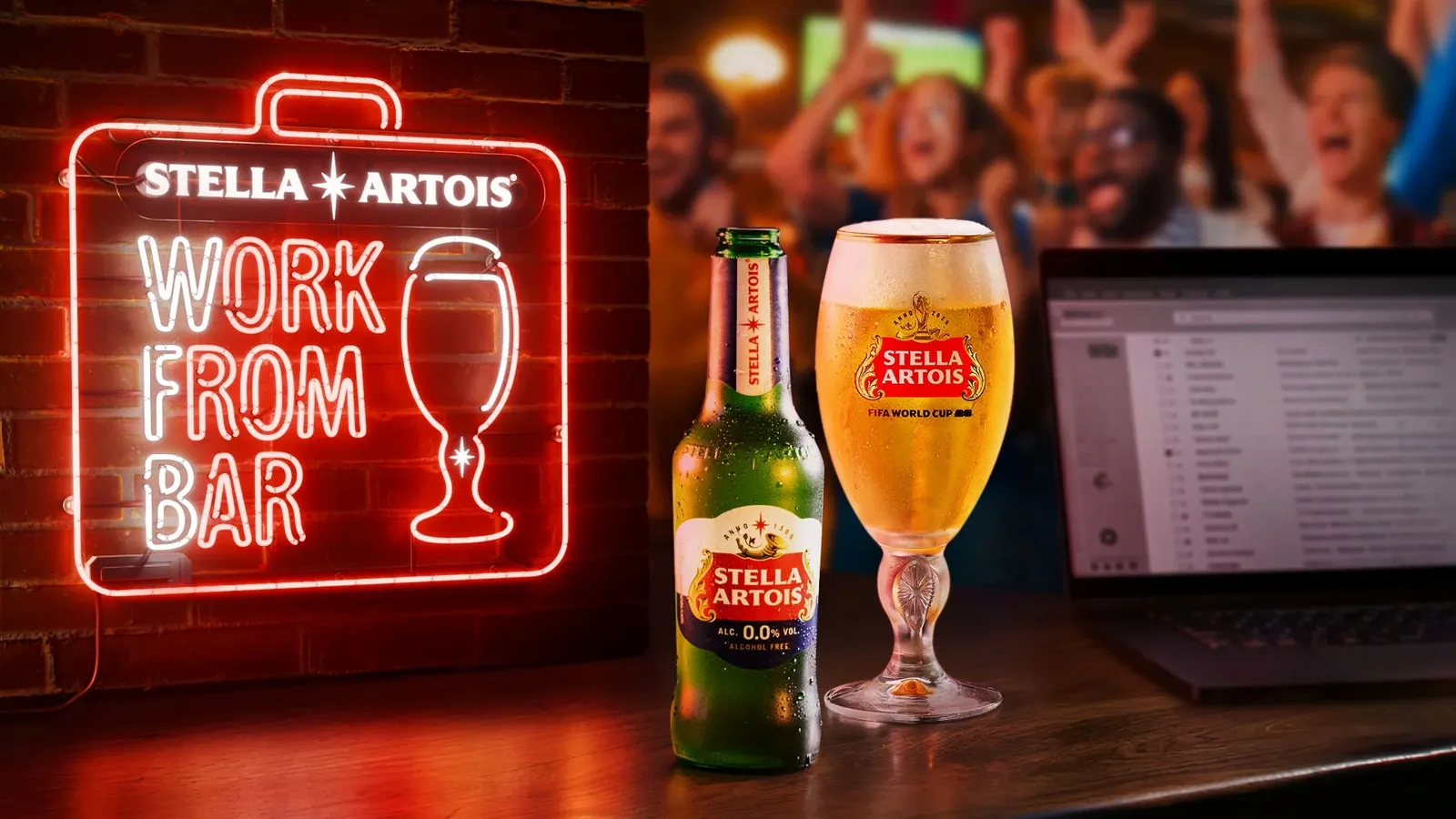
As the 2026 World Cup approaches, the global marketing landscape is bracing for a massive shift in consumer behavior. With the tournament scheduled to kick off on June 11, brands are scrambling to align their messaging with a global workforce that is increasingly prioritizing leisure and community over traditional office hours. Among the most creative responses to this shift is Stella Artois’s new "Work From Bar" initiative, a strategic push designed to reclaim the workday for the premium beer brand.
Main Facts: The "Work From Bar" Concept
The "Work From Bar" program is an ambitious on-premise activation centered on a simple, provocative premise: encouraging fans to abandon their cubicles and home offices in favor of a bar stool. According to data cited by the brand, approximately 86% of the weekday World Cup matches are scheduled between 9 a.m. and 5 p.m. across the four primary U.S. time zones. Stella Artois identified this as a critical opportunity to convert "dead time" into premium consumption.
The centerpiece of the campaign is a physical "Work From Bar HQ" pop-up, scheduled to open on June 28 in the heart of New York City’s Brookfield Place. Designed as a hybrid space, the pop-up will feature a fully equipped sports bar environment complete with high-speed Wi-Fi, device charging stations, and dedicated "conference rooms" that can be reserved by fans looking to balance their professional responsibilities with the excitement of the knockout rounds.
The initiative is a direct extension of the brand’s "Taste Worth More" platform, which debuted in 2024 to bolster the brand’s on-premise footprint. By framing the bar as a legitimate—and perhaps more sophisticated—place to conduct business, Stella Artois is attempting to destigmatize daytime drinking during sporting events, positioning itself as the premier choice for the modern, flexible professional.
Chronology of the Strategy
The road to this activation began long before the first whistle blows. Stella Artois has been systematically building its World Cup narrative throughout the year:
- April 2026: Stella Artois rolls out a campaign featuring global brand ambassador David Beckham. The creative, which focused on the communal experience of the game, encouraged fans to seek out bars to watch the matches rather than viewing them in isolation.
- June 4, 2026: Official announcement of the "Work From Bar" initiative, detailing the New York City pop-up and the underlying logic regarding time-zone constraints for U.S. workers.
- June 11, 2026: The official start of the World Cup tournament, marking the beginning of the peak consumption window.
- June 22, 2026: Reservation portals for the "Work From Bar HQ" conference rooms open to the public.
- June 28, 2026: The launch of the physical "Work From Bar HQ" at Brookfield Place in Manhattan.
Supporting Data: The Productivity Paradox
The marketing urgency surrounding the World Cup is not merely speculative; it is grounded in significant economic data. A recent Reuters report suggests that the 2026 tournament could cost the global economy as much as $17 billion in lost productivity. This figure is driven by the reality that 37% of the global workforce plans to adjust their schedules to accommodate match viewings.
For alcohol brands, this "productivity loss" is a goldmine. The AB InBev Q1 2026 earnings report provides the context for why this segment is so vital. The company reported a total revenue of $15.27 billion—a 12.03% year-over-year increase. Notably, Stella Artois outperformed many of its peers, seeing a 14% revenue increase outside of its home market. This surge has been instrumental in growing AB InBev’s broader premium portfolio by 11%. By capturing the professional demographic during the workday, Stella Artois is aiming to sustain this momentum through the remainder of the fiscal year.
Industry Implications and Competitive Landscape
Stella Artois is not operating in a vacuum. The competition for the "World Cup fan" is fierce, and brands are utilizing a variety of strategies to secure mindshare.

Heineken, for instance, has taken a more corporate-social-responsibility-aligned approach. The brand has been actively encouraging fans to leverage their "Volunteer Time Off" benefits to watch matches while simultaneously participating in local community service. This strategy seeks to provide workers with a guilt-free way to claim time off, effectively turning the World Cup into an opportunity for both social good and brand engagement.
Meanwhile, other beverage giants are leveraging celebrity and cultural humor. Molson Coors, for example, leaned into the linguistic quirkiness of the sport, with Coors Light temporarily elongating its brand name in honor of the iconic sportscaster Andrés Cantor. Diageo’s Buchanan’s brand has taken a music-forward approach, tapping artist Rauw Alejandro for a campaign that seeks to bridge the gap between stadium culture and club culture.
The overarching takeaway is that the 2026 World Cup has become a primary battlefield for "moment-based" marketing. Brands are moving away from traditional mass-media spots and toward experiential marketing that fits into the daily lives of the consumer—whether that means "working" from a bar, using volunteer hours, or engaging with musical ambassadors.
Official Stance and Brand Vision
The "Taste Worth More" platform is more than just a tagline; it is an evolution of Stella Artois’s market positioning. By emphasizing the "premium" nature of the experience, the brand is moving away from the "cheap beer" association often found in sports advertising. Instead, the focus is on quality and the social value of being together.

Anheuser-Busch InBev has made it clear that its premium portfolio is the engine of its future growth. By investing heavily in activations like the "Work From Bar" HQ, the company is betting that the modern consumer values the experience of the match as much as the match itself. As the lines between work and leisure continue to blur in the post-pandemic era, Stella Artois is positioning itself as the bridge between the two, suggesting that even in the middle of a workday, a premium beer is a reward that justifies the effort.
The Future of "Office-Adjacent" Marketing
As the tournament progresses through its knockout rounds, the success of the "Work From Bar" program will likely serve as a case study for future sports marketing. If Stella Artois successfully converts Manhattan professionals into "daytime patrons," it may signal a shift in how alcohol brands target the Monday-through-Friday demographic.
The implications are clear: sports events are no longer restricted to weekends or evenings. For the beverage industry, the challenge—and the opportunity—lies in meeting the consumer where they are, even if that is a bar located mere steps from their office. As the World Cup continues, all eyes will be on whether this "Work From Bar" experiment can effectively turn a productivity crisis into a profitable, premium engagement.
By strategically aligning its brand with the flexibility of the modern workforce, Stella Artois has not only created a buzz-worthy event but has also demonstrated a keen understanding of the shifting cultural tides. Whether the "Work From Bar" HQ becomes a staple of future sports tournaments remains to be seen, but the intent is clear: Stella Artois is intent on ensuring that when the goals are scored, the fans are not alone at their desks, but together, glass in hand.












No comments yet. Be the first to join the conversation!