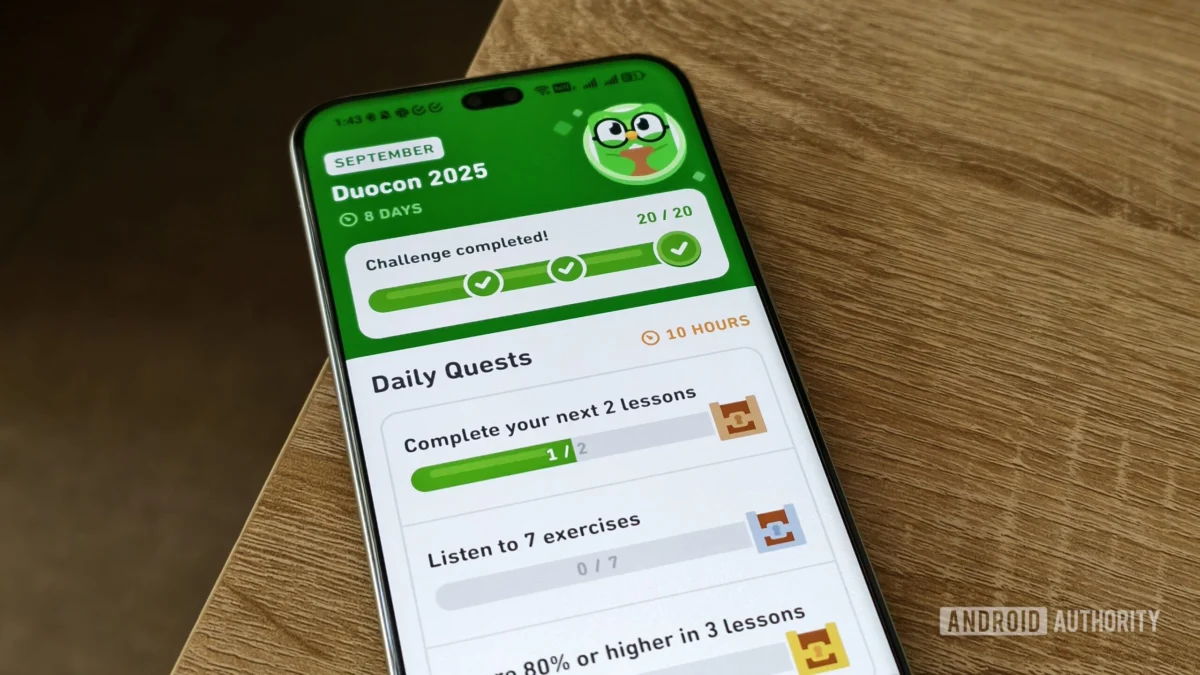
For years, Duolingo has stood as the titan of language learning apps, utilizing gamified interfaces and the relentless encouragement of a green owl mascot to keep millions of users engaged. However, recent structural changes to the app’s curriculum have sparked a wave of intense frustration among its dedicated user base. What was intended to be an ambitious expansion of course depth has, for many, resulted in a disjointed, confusing, and occasionally demoralizing experience.
The Core Issue: A Disrupted Path
The primary grievances center on significant "shuffles" within the app’s learning paths. Users across multiple language courses—most notably Italian, Japanese, German, and Spanish—have reported that their progress has been forcibly reorganized.
In many cases, the update has effectively reset the learner’s position within the curriculum. A user who was comfortably navigating advanced conversational grammar may find themselves suddenly prompted to identify basic vocabulary, such as "cat," "tree," or "sugar." This regression is not merely an inconvenience; it disrupts the psychological flow of learning, causing users to question the validity of their previous time investment.
Conversely, other users have reported the opposite problem: they have been thrust into advanced modules without the necessary foundational lessons, or have had entirely new units retroactively injected into their completed milestones. This leaves learners in a state of pedagogical limbo, where the app assumes prior knowledge of topics that were never actually introduced, forcing users to either struggle through incomprehensible material or manually reset their entire course—a move that carries its own set of administrative burdens.
A Chronology of the Discontent
To understand how this situation escalated, one must look at the recent timeline of Duolingo’s development strategy:
- April 2025: Duolingo announced a significant expansion for nine of its primary language courses (Spanish, French, German, Italian, Japanese, Korean, Chinese, Portuguese, and English). The company touted these updates as a move toward reaching a Duolingo Score of 129, aligning with the B2 level on the Common European Framework of Reference for Languages (CEFR).
- Late Summer 2025: As these updates rolled out globally, the first ripples of dissatisfaction appeared on community forums. Early complaints focused on "missing" progress and the sudden appearance of new, unmastered lessons in sections previously marked as "completed."
- September 2025: The situation reached a boiling point. Subreddit threads dedicated to Duolingo saw an influx of long-term users reporting that their progress had been effectively mangled by the latest app update.
- Present Day: The discourse has shifted from simple confusion to active dissatisfaction, with many users openly discussing the cancellation of their "Super Duolingo" subscriptions or the abandonment of the platform entirely in favor of competing services.
Supporting Data: The Voice of the Community
The scale of the frustration is visible in the active engagement across community platforms. On the r/duolingo subreddit, multiple threads have gained traction, serving as a repository for user grievances. One particularly vocal user, who had been studying Italian for several months and reached level 50, described the jarring transition from complex sentence structures back to elementary noun identification as a "major blow to motivation."
The friction is compounded by the app’s "Energy" system (or "Hearts" system). For free-tier users, the inability to move through the curriculum efficiently is a known barrier. When an update forces a user to repeat lessons they have already mastered—or forces them to redo units due to technical glitches—the energy cost creates a bottleneck that feels punitive.
Furthermore, the introduction of a new "Unit Review" system involving strict, unforgiving flashcards has become a flashpoint. Users report that the speech recognition software utilized for these flashcards is often overly sensitive or inaccurate. When a user provides a correct pronunciation only to be marked wrong by the software, the resulting frustration—coupled with the app’s condescendingly cheerful feedback—creates an environment that feels more like a gauntlet than an educational tool.
The Philosophy of "Learning by Algorithm"
At the heart of the current controversy lies a fundamental tension between educational structure and algorithmic optimization. Duolingo’s model relies on a "Path" system designed to move users through a linear progression of content. When that path is modified—even for the noble goal of adding more advanced content—the algorithm must reconcile the user’s old data with the new structure.
The current implementation appears to be failing at this reconciliation. By treating retroactively added lessons as "completed" for some users and "incomplete" for others, the system has created a lack of transparency. When an app suddenly changes the rules of the game without providing a clear pathway for the user to "bridge the gap," the sense of trust between the learner and the platform erodes.
In the eyes of many, the "little green owl" has transformed from a supportive coach into an unpredictable obstacle. The lack of an "opt-out" feature for these curriculum reshuffles leaves power-users feeling like they are subjects in a perpetual A/B test rather than students in a stable classroom.
Implications for Duolingo’s Future
The implications of this backlash are significant for Duolingo, both as an educational tool and a publicly traded company.
- Retention Rates: If users feel that their progress is not permanent, they are less likely to maintain the "streaks" that fuel the app’s retention metrics. If a user loses their sense of accomplishment, the gamification model collapses.
- Subscription Value: The shift toward stricter, less effective testing methods (such as the contentious flashcard system) diminishes the perceived value of paid subscriptions. Users who pay for a premium experience expect a level of pedagogical quality that feels intuitive and fair.
- Brand Loyalty: A vocal minority is currently driving the conversation, but if the sentiment persists, it risks becoming the consensus. The "meme-ification" of Duolingo’s aggressive notification style was once a brand asset; if it becomes synonymous with "unreliable progress," the company may find itself struggling to attract new, serious language learners.
Official Stance and Potential Paths Forward
While Duolingo has not issued a formal apology or a "rollback" of these features, the company’s stated goal remains the improvement of pedagogical outcomes. The push toward B2 proficiency on the CEFR scale is, on paper, a commendable objective. It suggests that Duolingo is attempting to shed its reputation as an "app for casual hobbyists" and become a more serious academic contender.
However, the execution of these updates suggests a disconnect between the developers’ data-driven goals and the human experience of the user. To mitigate the current crisis, the company might consider:
- Implementation of a "Bridge Assessment": Allowing users to take a placement test if their path is significantly altered by an update, allowing them to skip back to their actual skill level.
- Transparency: Providing a clear "Update Log" that explains why a course has been changed and what new material is being introduced.
- Flexibility: Allowing users to choose whether to adopt a new curriculum structure or stay on their current "path" until they finish their current unit.
Conclusion
The current frustration felt by the Duolingo community is a byproduct of the tension between rapid software development and the slow, linear nature of language acquisition. While expanding curriculum depth is essential for the long-term viability of the product, the cost of doing so cannot be the alienation of the platform’s most dedicated learners.
For now, the green owl remains in the center of the storm. Whether Duolingo chooses to listen to its users and refine its deployment strategy, or continues to force updates that prioritize algorithm over experience, will likely determine if the app remains the industry leader or begins to lose its grip on the market it effectively created. For those currently trapped in the "reshuffle," the only choice remains: to adapt to the new path, or to close the app and look elsewhere.