
In the landscape of contemporary independent cinema, tone is often the elusive element that separates a standard coming-of-age drama from a piece of enduring art. With her sophomore feature, Camp, writer-director Avalon Fast has achieved something rare: she has crafted a film that feels less like a narrative experience and more like a physical sensation—a disorienting, beautiful, and slightly dangerous stumble into a fairy ring.
While the film ostensibly occupies the genre of a summer-camp-set drama, it quickly discards the safety of convention, favoring a surreal, dream-logic approach to the architecture of trauma and the volatility of female friendship. As the industry currently celebrates films that utilize even a muted palette, Camp arrives as a visual outlier, glowing with the verdant intensity of its forest setting and the stark, painterly quality of its night sequences.
The Architecture of a Memory: Plot and Premise
The narrative foundation of Camp is, by design, whisper-thin. We are introduced to Emily (played by Zola Grimmer), a college student whose first year of higher education has been defined by two separate, life-altering tragedies. While she is not directly culpable in the malicious sense, her proximity to these events and the resulting consequences have left her hollowed out by grief.
In a performance of remarkable subtlety, Grimmer portrays a young woman trying to navigate the impossible question: How does one continue to function when the person who defined their existence is gone? Her father, a character defined by a grounded, paternal warmth, suggests a solution: a secluded summer camp up north. This facility is not a standard retreat; it is specifically designed for "troubled" youth, recruiting counselors who possess their own shadowed pasts to serve as mentors.
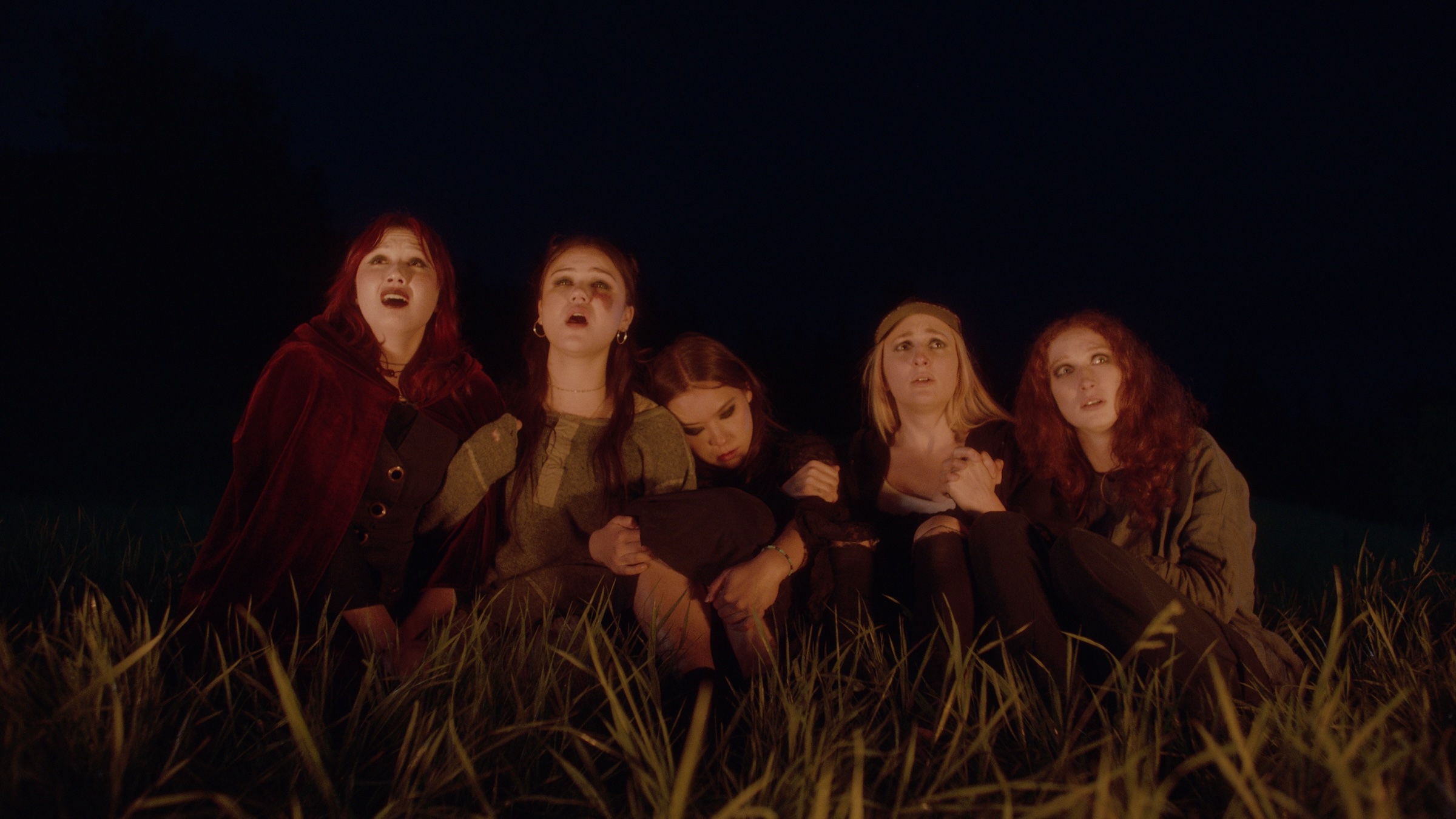
Upon arrival, Emily enters a microcosm of intense, almost claustrophobic feminine dynamics. She is folded into a group of girls whose collective affection is as intoxicating as it is dangerous. It is within this crucible of shared history and mutual support that Fast begins to peel back the layers of reality, introducing the supernatural not as a plot device, but as an extension of the internal states of her characters.
Chronology of a Liminal Summer
The experience of watching Camp is, in many ways, an exercise in tracking the dissolution of time. The film’s temporal structure is fluid; it dilates and contracts, mirroring the hazy, drug-and-alcohol-fueled reality of the counselors.
Arrival and Orientation
Emily’s journey to the facility is a masterclass in atmospheric setup. She arrives via a train that seems to exist outside of a specific epoch—a vehicle that echoes the aesthetics of a different century. The transition from her modern laptop to a rotary phone in a lavish, hotel-like sleeper car creates an immediate sense of displacement. When she wakes in a field, fully dressed with her luggage neatly arranged, the viewer is signaled that the rules of the "real" world no longer apply.
The Dynamics of the Coven
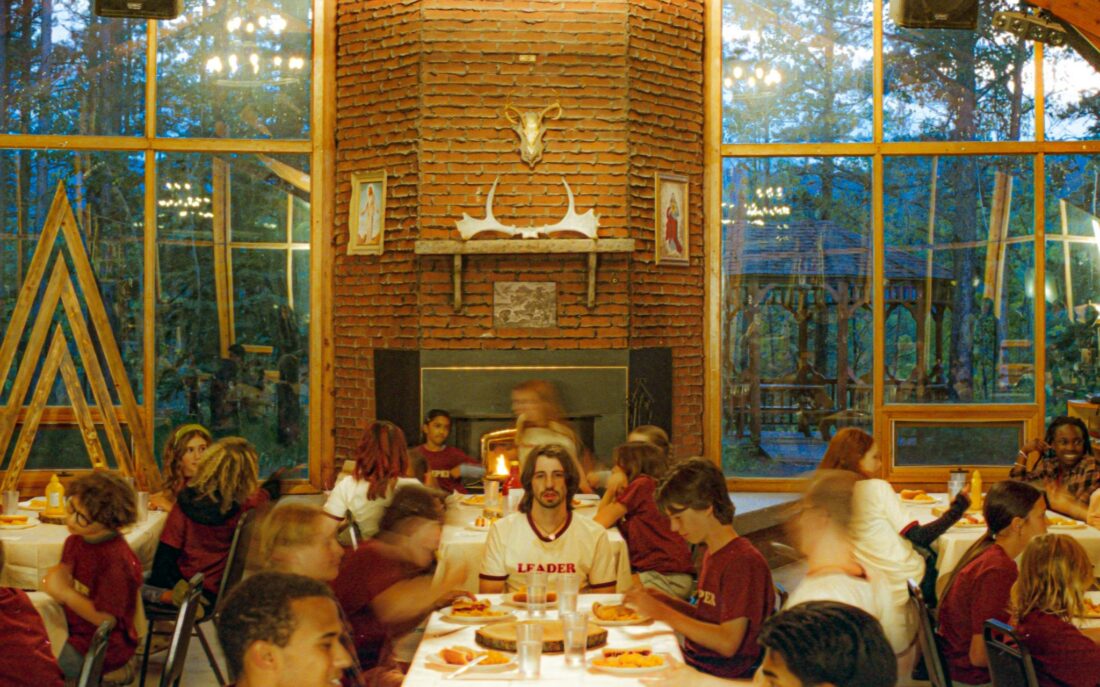
The social structure of the camp is rigid yet fragile. We meet the de facto leadership: Dan (Austyn Van de Kamp), the charismatic, overly pious leader, and Jo (Sophie Bawks-Smith), the guidance counselor whose kindness masks a frantic religiosity.
The core group—the "girls"—provides the emotional heartbeat of the film:
- Rosie (Cherry Moore): The wild, hedonistic roommate who seeks a partner in crime.
- Clara (Alice Wordsworth): The enigmatic, authoritative leader of the group.
- Nev (Lea Rose Sebastianis): A character who performs the "troubled" archetype with a haunting, desperate precision.
- Hope (Ella Reece): A figure whose quietude serves as a vessel for profound, unspoken despair.
The Descent into the Supernatural
As the narrative progresses, the "witchy" elements begin to manifest. However, Fast avoids the pitfalls of horror tropes. There are no jump scares or external monsters; instead, the magic is a slow-burn manifestation of the girls’ collective psychic energy. The film shifts from a character study into a meditation on the volatile nature of female bonds, exploring the thin line between nurturing one another and dragging one another into the abyss.

Supporting Data: Visuals and Directional Choices
The technical execution of Camp is inseparable from its thematic weight. Avalon Fast demonstrates a sophisticated understanding of visual storytelling, particularly in her use of mixed media.
The Palette of the Forest
The film utilizes natural light to ground the audience, but as the sun sets, Camp shifts into an entirely different aesthetic gear. The use of matte painting and animation creates a surreal environment where the sky feels heavy and the stars appear as physical, oppressive entities.
The Animation of Dream Logic
In one pivotal interior scene, the exterior sky erupts into a cascade of shooting stars, creating a visual feedback loop where the room itself seems to spin. Fast utilizes animation to punctuate moments of high emotional stakes, effectively blurring the lines between the characters’ perceptions and objective reality. This is not mere stylization; it is a visual representation of how grief can warp one’s perception of the physical world.
Official Responses and Industry Context
While Camp is a relatively recent addition to the cinematic canon, critical reception has highlighted its unique place in a lineage of "liminal" cinema. Critics have frequently drawn comparisons to the surrealist traditions of David Lynch and the modern, internet-age malaise captured by directors like Jane Schoenbrun.
Camp does not attempt to "spoof" the 1990s or the horror-camp subgenre. Instead, it enters into a sophisticated conversation with those forms. It gestures toward the expected shapes of a coming-of-age story—the summer romance, the "bad boy" conflict, the rebellion against authority—only to deliberately dismantle them. The result is a film that feels both nostalgic and utterly alien.
"The film is an exploration of the destructive potential of empathy," one industry analyst noted in a recent roundtable. "Fast treats the ‘troubled kid’ trope not as a narrative hurdle to be cleared, but as an identity that, when clustered together, produces a psychic feedback loop."
Implications: The Legacy of the "Goth Sleepover"
The ultimate strength of Camp lies in its refusal to provide easy catharsis. It asks the audience to sit with the ambiguity of the ending, recognizing that some traumas do not resolve—they simply change shape.
The Evolution of Female Friendship
The film’s most profound implication is its interrogation of the "bestie" dynamic. Fast explores the specific, often toxic devotion that occurs when young women find each other in the wreckage of their own lives. When do you support your friend, and when do you pull back? How much of your own soul are you required to sacrifice for the sake of the collective?
Future Impact
As Camp finds its audience through streaming and festival circuits, its legacy is likely to be that of a "cult classic." It is a film that begs for repeat viewings, not to solve its plot—which remains intentionally opaque—but to bathe in its atmosphere. It is, quite simply, a movie that understands the allure of the whispering voice in the woods, even when that voice promises nothing but trouble.
In a cinematic landscape often cluttered with sequels and safe bets, Camp stands as a testament to the power of a singular, uncompromising vision. It is a haunting, neon-soaked, and deeply empathetic piece of work that will likely remain a staple of late-night screenings and dorm-room projectors for years to come. Avalon Fast has not just made a film; she has carved out a space, and those who enter it may find it difficult to leave.