

In an era defined by the "subscription economy," the average digital consumer is often trapped in a cycle of "subscription creep." From streaming services to productivity suites and cloud storage, monthly recurring charges quietly siphon off hundreds of dollars annually. For many, these costs become background noise, forgotten until a bank statement triggers a moment of fiscal reckoning.
I recently decided to perform a radical audit of my digital life. After months of evaluating my usage patterns, I made a conscious choice to abandon several high-profile services, including Google’s Gemini, Headspace, Todoist, and YouTube Music. My goal was simple: prioritize utility, security, and long-term value. Today, I am down to just three core subscriptions that serve as the foundation of my digital workflow.
The Financial Reality of Modern Productivity
The decision to cull my subscription list was not born out of a simple desire to save money, though the financial benefits are clear. It was a strategic decision to consolidate my digital footprint. By moving away from a bloated list of disparate tools, I have streamlined my daily routine.
The three services that survived the purge represent a total monthly expenditure of $38. While this may seem like a significant amount, these tools provide an unparalleled return on investment through improved productivity, data sovereignty, and robust privacy features.
1. Claude: The AI Powerhouse
Artificial Intelligence has become the cornerstone of modern content creation and problem-solving. While I previously subscribed to Gemini and experimented with various LLMs, I have settled exclusively on Claude as my AI companion of choice.
Why Claude Outperforms the Competition
Claude distinguishes itself through a "less is more" philosophy. It is remarkably direct, often acting as a critical partner rather than a simple chatbot. While many AI models are prone to "hallucinations" or sycophantic agreement, Claude is willing to push back, challenge my assumptions, and refine my ideas. This critical engagement is essential for professional brainstorming, fitness tracking, and even culinary planning.
The Power of "Projects"
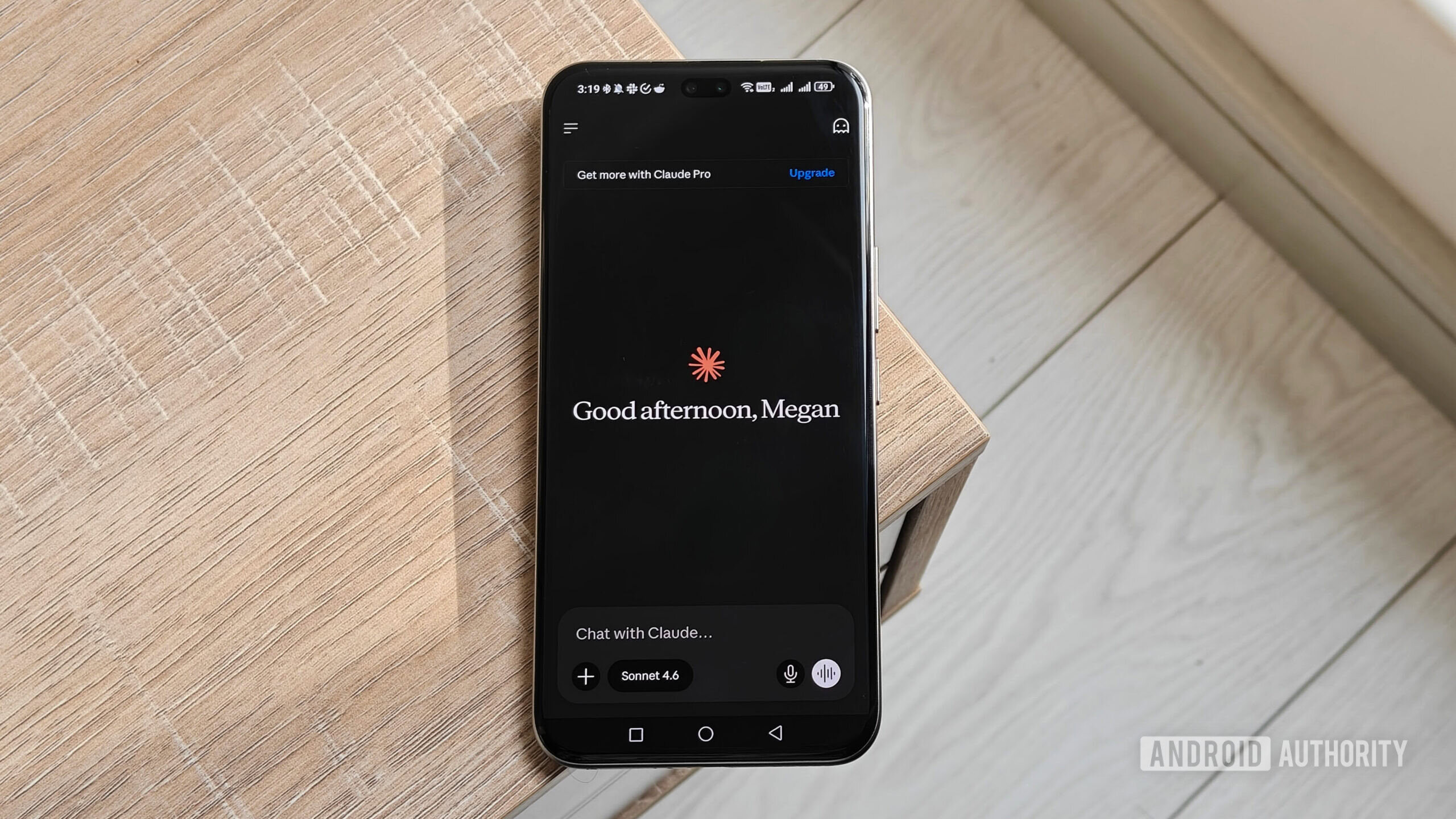
The standout feature that justifies the $20 monthly premium is the "Projects" functionality. Unlike competitors—such as Gemini Gems—which often feel like static configurations, Claude’s Projects allow for a deep, iterative relationship with specific data sets. By anchoring my chats to specific project files, I ensure that the AI retains context over long periods, making it an invaluable asset for complex, multi-week tasks.
Furthermore, Claude’s coding capabilities are formidable. I have used it to prototype functional applications based solely on natural language voice prompts. While it still lacks integrated image and video generation tools—a deficiency that keeps me tethered to other services occasionally—its pure logical reasoning and code generation are currently unmatched.
Room for Improvement
Despite its brilliance, Claude is not without limitations. The most glaring issue is the aggressive usage limit. It is frustrating to hit a "message limit" wall mid-task, a problem I rarely encountered with Gemini. If Claude wants to remain the premium choice for power users, it must address these throughput constraints.
2. Obsidian: The Fortress of Knowledge
Moving from Notion to Obsidian was a significant shift in my workflow. For years, Notion served as my digital brain, but the sheer complexity and cloud-dependent nature of the platform eventually led to "feature fatigue."
Privacy as a Priority
Obsidian operates on an "offline-first" model. Because my notes are stored locally as simple Markdown files, I retain absolute ownership of my data. There is no risk of a company indexing my private thoughts for advertising or model training. This is a critical departure from the "Big Tech" philosophy that governs services like Google Keep or Notion.
The Case for Obsidian Sync
While the core Obsidian app is free, I pay for the $5/month "Obsidian Sync" service. This subscription is not just a convenience; it is a commitment to security. Obsidian Sync employs end-to-end encryption (E2EE), ensuring that even the developers of the platform cannot access my notes.
In a digital landscape where data harvesting is the default, paying for a service that specifically guarantees the inaccessibility of my data to others is, in my view, the ultimate luxury. It provides peace of mind that no cloud-based notes app can truly replicate.
3. Proton Unlimited: The Privacy Suite
The final pillar of my digital infrastructure is the Proton Unlimited subscription ($13/month). This is not just one app, but an entire ecosystem designed to replace the Google suite.
Replacing the Google Monopoly
My transition away from Gmail and Google Drive was motivated by a desire to reclaim my privacy. Proton Drive has become my primary repository for sensitive files and photos. While it lacks the lightning-fast performance of Google’s server infrastructure, the trade-off is superior data protection. My files are encrypted before they ever leave my device.
The Ecosystem Advantage
- Proton Mail: I find the interface superior to Gmail for managing subscriptions and newsletters. The ability to deploy "self-destructing" emails is a practical security feature for sensitive correspondence.
- Proton Pass: Having previously used Bitwarden, I found the transition to Proton Pass seamless. It solves the "autofill friction" issues I encountered with other password managers, integrating natively across my devices.
- Proton VPN & Authenticator: These are the "glue" that holds my security stack together, providing encrypted browsing and robust multi-factor authentication (MFA) without the need for third-party, ad-supported tools.
Implications of a Curated Digital Stack
By consolidating my subscriptions into these three services, I have moved from a model of "convenience-first" to "privacy-first."
The Chronology of My Digital Audit
- Phase 1 (The Assessment): Tracking every monthly charge for three months to identify "zombie" subscriptions.
- Phase 2 (The Migration): Exporting years of notes from Notion to Obsidian and migrating emails from Gmail to Proton.
- Phase 3 (The Optimization): Learning the nuances of Claude’s "Projects" to maximize my $20 investment.
Supporting Data and Trade-offs
My current monthly spend of $38 is objectively lower than the combined cost of the 10+ subscriptions I held a year ago, which totaled over $100 per month. However, the trade-offs are real. I have lost the high-speed synchronization of Google Drive, the massive image-generation capabilities of the Gemini ecosystem, and the seamless integration of a single-vendor "ecosystem" (like Apple or Google).
Yet, the implication of this shift is profound: I am no longer the product. By paying for these services directly, I am a customer, not a data point.

Conclusion: The Value of Intentionality
The subscription economy is designed to make us complacent. It relies on the consumer’s inability to track small, recurring charges. My experience has shown that by being intentional, we can not only save money but also reclaim our digital autonomy.
Claude provides the intelligence I need to work, Obsidian provides the secure environment to think, and Proton provides the protected infrastructure to live online. For me, that combination is worth every cent.
How many apps do you pay for, and have you audited them lately? The answer might surprise you—and your bank account.












No comments yet. Be the first to join the conversation!