

The landscape of personal audio has undergone a seismic shift over the last decade. For years, the industry’s primary objective was the "black hole" of noise cancellation—the desire to isolate the listener entirely from their environment. However, a counter-movement has emerged, prioritizing situational awareness, comfort, and the seamless integration of digital sound into our physical reality. At the forefront of this movement are open-ear earbuds, a category that has long struggled to balance the "transparency" of the outside world with the high-fidelity expectations of modern audiophiles.
With the announcement of the OpenDots 2, Shokz—a company long synonymous with bone-conduction technology—is attempting to redefine what "open-ear" means. By addressing the historical shortcomings of the form factor, such as thin bass response and sound leakage, the OpenDots 2 represents a significant leap forward in wearable ergonomics and acoustic engineering.
Main Facts: The Tech Specs and Design Philosophy
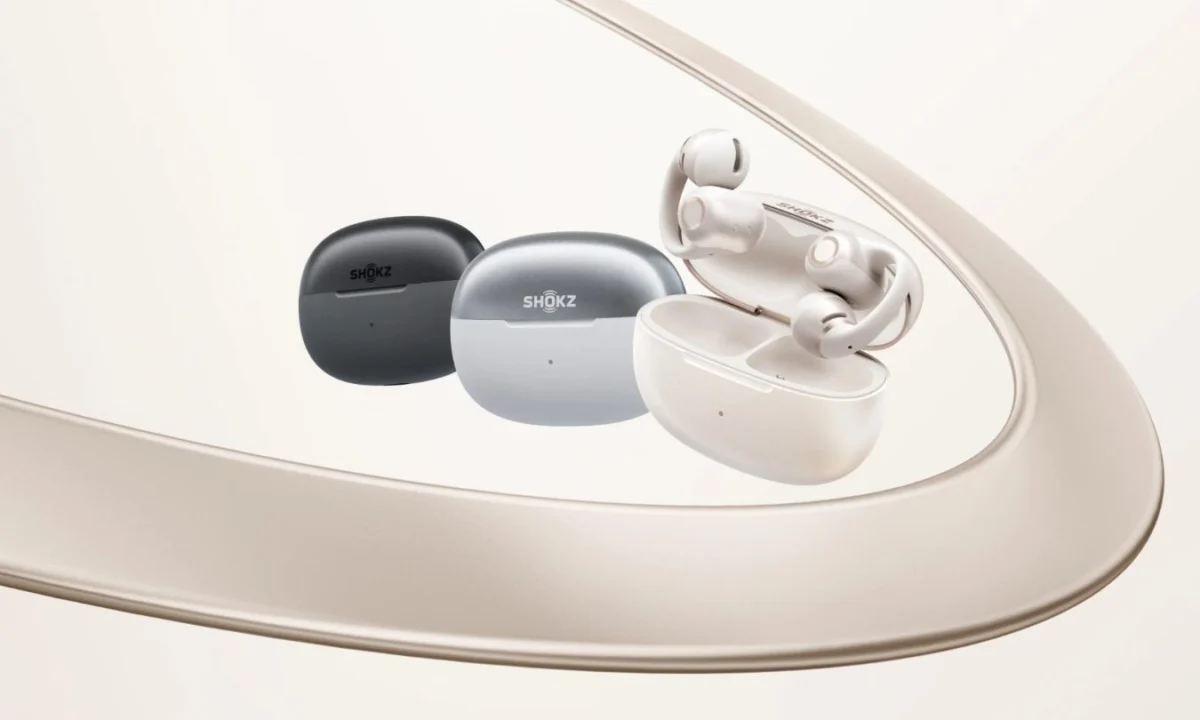
The Shokz OpenDots 2 are not merely a minor refresh of their predecessor; they are a fundamental rethink of how open-ear devices should interact with the user. The primary engineering challenge of an open-ear design is the lack of a seal; without a physical barrier to the ear canal, bass frequencies often dissipate before they reach the eardrum.
To combat this, Shokz has introduced "Bassphere 2.0." This system utilizes dual 11.8mm drivers, which the company claims effectively mimic the sonic output of a 16mm speaker. By redesigning the diaphragm, Shokz engineers have reportedly achieved a 70% reduction in harmonic distortion. Furthermore, the inclusion of Dolby Audio support provides an expansive soundstage that compensates for the lack of acoustic isolation, allowing for a more immersive listening experience without requiring the user to "plug" their ears.
The hardware is equally ambitious. Each bud weighs just 6.4 grams, supported by a flexible nickel-titanium "JointArc" frame. This frame is wrapped in medical-grade silicone, designed to distribute pressure evenly across the outer ear, preventing the fatigue often associated with long-term wear.
Chronology: From Niche Sportswear to Daily Driver
To understand the trajectory of the OpenDots 2, one must look at the evolution of the Shokz product line.

- The Early Years: Shokz began by targeting marathon runners and cyclists who required bone-conduction technology to hear traffic. These devices were rugged and utilitarian, but they were never intended for high-fidelity music listening.
- The Shift to Consumer Audio: With the release of the original OpenDots, Shokz moved into the mainstream market. The goal was to maintain the situational awareness of their fitness line while providing a sound profile suitable for podcasts, office work, and commuting.
- The "One" Iteration: The first-generation OpenDots proved that consumers wanted the form factor, but feedback highlighted a need for better waterproofing and more intuitive controls.
- The Current Announcement: The OpenDots 2 launch, occurring in mid-2026, marks the brand’s transition from a "fitness accessory" company to a serious contender in the general-purpose, open-ear headphone space. By improving the IP ratings of both the buds and the case, Shokz is signaling that these devices are designed to survive not just a gym session, but the unpredictability of daily life.
Supporting Data: Why "Open" No Longer Means "Compromised"
The primary concern for any open-ear user is sound leakage. There is a fine line between a personal soundstage and a device that acts as a miniature speaker for the entire train carriage. Shokz addresses this with "DirectPitch" technology. This directional acoustic system focuses audio waves toward the ear canal, minimizing the sound footprint that escapes into the surrounding environment.
For users working in sensitive environments, the companion app now includes a "Private Mode." This software-based adjustment modulates the frequency output to ensure that even at higher volumes, audio leakage is kept to an absolute minimum.
Key Technical Specifications:
- Driver Configuration: Dual 11.8mm drivers (Bassphere 2.0).
- Weight: 6.4g per earbud.
- Durability: IP57 (Earbuds), IP54 (Charging Case).
- Battery Life: 40 hours total (including case); 5-minute quick charge provides 2 hours of playback.
- Connectivity: Bluetooth 6.1 with multipoint pairing, Google Fast Pair, and Microsoft Swift Pair.
- Microphone Array: Dual air-conduction mics per side, complemented by a bone-conduction sensor for enhanced voice isolation.
The shift from touch-capacitive sensors to physical force sensors is a major quality-of-life improvement. Anyone who has ever attempted to adjust their earbuds during a workout only to accidentally pause their music or skip a track will appreciate the precision of a physical click.
Official Responses and Engineering Goals
In discussions regarding the development of the OpenDots 2, Shokz engineers have emphasized "frictionless interaction." The most notable feature in this regard is the elimination of "Left" and "Right" designations. Using advanced spatial sensors, the OpenDots 2 automatically detects which ear they are placed in and adjusts the stereo channels accordingly. This is a small, seemingly simple change that fundamentally alters the user experience, allowing for one-handed, mindless insertion.
Regarding the acoustic performance, Shokz spokespeople have noted that the goal was not to replicate the isolation of noise-canceling headphones, but to create a "layered audio experience." By utilizing Dolby Audio, the company aims to provide a sense of depth that allows users to distinguish between the background hum of an office and the clear, crisp details of their music or voice calls.

Implications: The Future of the "Always-On" Listener
The release of the OpenDots 2 carries significant implications for the wearable tech industry. As we move toward a future of augmented reality and ambient computing, the need for devices that keep us connected to our digital lives without severing our link to the physical world will only grow.
1. The Death of the "Blocked" Ear
If the OpenDots 2 succeeds, it may mark the beginning of the end for the traditional, deep-insert earbud. While isolation has its place (such as on long-haul flights), the majority of our time is spent in environments where total silence is either impossible or dangerous. A device that can perform as well as the OpenDots 2 while remaining comfortable for 8+ hours a day is a significant threat to the status quo.
2. The Rise of the Multi-Functional Wearable
By integrating Find My Earbuds, Qi wireless charging, and advanced microphone arrays, Shokz is positioning the OpenDots 2 as a comprehensive communication tool. These are no longer just for music; they are for the Zoom caller, the student listening to a lecture, and the pedestrian navigating a city.
3. The Unresolved Question of Price
Despite the impressive feature set, the missing piece of the puzzle remains the market position. Without an official price point, it is difficult to determine if these will challenge the premium segment (like Bose’s Ultra Open Earbuds) or if they will remain a mid-market alternative. However, given the rapid iteration of the technology, it is clear that the competition in the open-ear sector is intensifying.
Final Thoughts
The Shokz OpenDots 2 arrives at a pivotal moment. The consumer appetite for "plausible deniability"—the ability to listen to content while appearing fully attentive to the world—is at an all-time high. By solving the persistent issues of bass response, charging case durability, and control frustration, Shokz has created a compelling argument for why our next pair of headphones shouldn’t go inside our ears at all.
Whether these earbuds will satisfy the most demanding audiophiles remains to be seen, but for the average user, the OpenDots 2 offer a glimpse into a future where audio is a persistent, non-intrusive layer of our daily existence. The "open-ear" category has graduated from a niche curiosity to a legitimate competitor in the high-stakes world of personal audio.












No comments yet. Be the first to join the conversation!