

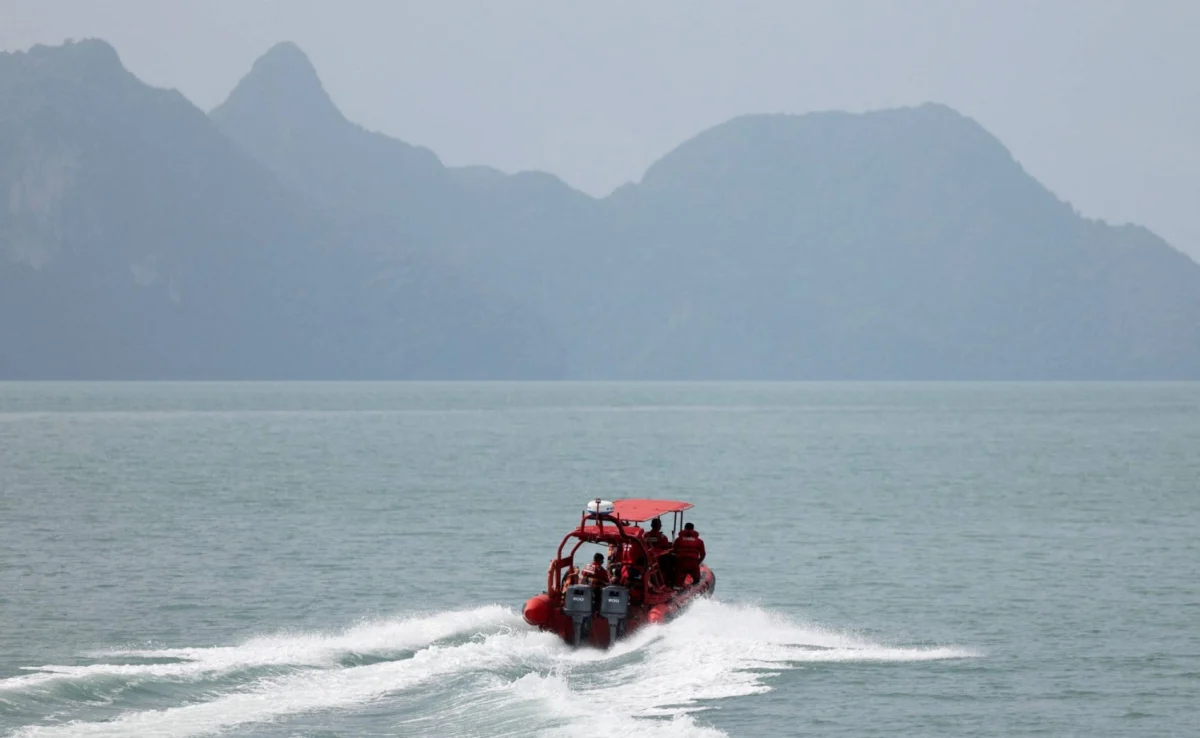
GENEVA – A profound humanitarian catastrophe is unfolding in the Andaman Sea and the Bay of Bengal, as international aid agencies confirm that more than 500 people are feared dead following the reported capsizing of two vessels carrying Rohingya refugees. The tragedy, which occurred off the coast of Myanmar, marks one of the deadliest episodes in recent years for a minority group already subjected to systemic persecution and forced displacement.
In a rare joint statement released on Thursday, the United Nations’ International Organization for Migration (IOM) and the UNHCR, the UN Refugee Agency, expressed deep alarm over the fate of the passengers. Preliminary investigations suggest that the boats, which departed from the volatile Rakhine State in late June, succumbed to the treacherous maritime conditions common to the region during monsoon season.
The Anatomy of a Humanitarian Crisis
The Rohingya, a predominantly Muslim ethnic minority from Myanmar, have for years undertaken perilous sea journeys to escape the suffocating restrictions of their homeland. In Rakhine State, the population faces severe limitations on their freedom of movement, limited access to healthcare and education, and the persistent threat of communal and state-sponsored violence.
For many, the ocean is the only perceived path to survival, despite the harrowing reality of "death boats" operated by human trafficking syndicates. These vessels are frequently overcrowded, structurally unsound, and lack the most basic life-saving equipment. The recent incident appears to follow a familiar, tragic pattern: refugees, driven by desperation, place their lives in the hands of smugglers, only to be abandoned or left to face the elements when the vessels falter.
Chronology of the Disaster: A Timeline of Despair
The events of late June 2026 represent a dark milestone in the ongoing displacement crisis. While official reports remain subject to confirmation, the following timeline reconstructs the incident based on preliminary intelligence provided to international observers:
- Late June 2026: Multiple vessels depart from the coastal regions of Rakhine State. Reports indicate that these boats were heavily laden with men, women, and children seeking refuge in neighboring Southeast Asian nations.
- Early July 2026: Communication with the vessels is severed. Local maritime monitoring groups begin to receive distress signals from families onshore who have lost contact with relatives.
- Mid-July 2026: Initial reports of debris and potential sightings of wreckage emerge. Search and rescue operations are hampered by adverse weather conditions, which have been intensified by the seasonal monsoon, creating high swells and poor visibility in the Bay of Bengal.
- July 16, 2026: The IOM and UNHCR issue a joint statement confirming that they are investigating reports of two boats carrying over 500 people that may have capsized.
Supporting Data: The Scale of the Migration
To understand the magnitude of this tragedy, one must look at the statistical trends surrounding Rohingya migration. Since the 2017 military crackdown in Myanmar, which forced hundreds of thousands of Rohingya to flee to Bangladesh, the secondary displacement of refugees from camps in Cox’s Bazar and from Rakhine State itself has accelerated.
Data from regional maritime monitoring organizations suggest:
- Rising Numbers: The number of sea arrivals in Indonesia, Malaysia, and Thailand has seen a marked increase year-over-year. 2025 saw a significant spike in maritime departures, often linked to reduced aid rations in refugee camps and increased instability within Myanmar.
- The Human Cost: According to the UNHCR, 2024 and 2025 were among the deadliest years for Rohingya refugees at sea. An estimated 1 in 8 people attempting the journey do not survive, though this figure is likely an underestimation due to the clandestine nature of the voyages.
- Seasonal Vulnerability: The period between November and June is often cited as the "sailing season" due to calmer seas. However, departures that extend into the monsoon season—as seen in this recent case—dramatically increase the risk of capsizing.
Official Responses and the Failure of Regional Protection
The international community has responded with familiar calls for action, yet experts argue that the lack of a coordinated regional maritime policy remains a critical failure.
"This is a wake-up call for regional leaders," said a spokesperson for a Geneva-based human rights watchdog. "The search for safety should not be a death sentence."

The United Nations has urged neighboring countries to prioritize the safety of those at sea, calling for proactive search and rescue operations and, crucially, for the implementation of non-refoulement policies—ensuring that refugees are not pushed back into the danger they fled.
However, the response from regional powers—specifically Thailand, Malaysia, and Indonesia—has historically been inconsistent. While these nations have occasionally provided temporary shelter, they have also engaged in "push-back" operations, citing concerns over sovereignty and the strain on domestic resources. The burden of this crisis continues to fall heavily on a handful of nations, leaving a glaring gap in the regional legal framework regarding the protection of asylum seekers at sea.
The Wider Implications: A Crisis of Impunity
The tragedy off the coast of Myanmar is not merely a maritime accident; it is the physical manifestation of a political stalemate. The situation in Rakhine State remains one of the world’s most intractable conflicts. Without a political solution in Myanmar that addresses the root causes of discrimination and statelessness, the flow of refugees will inevitably continue.
1. The Role of Human Traffickers:
The reliance on criminal networks to facilitate these journeys exposes the refugees to extreme exploitation. Traffickers are known to hold passengers for ransom, demand additional payments mid-journey, and discard passengers at the first sign of maritime patrol presence. The deaths of these 500 individuals highlight the need for a crackdown on the transnational syndicates that profit from human misery.
2. The Failure of International Aid:
While the UNHCR and other NGOs provide essential services, their reach is limited by lack of funding and political access. The "donor fatigue" currently affecting many global crises is particularly acute in the Rohingya context, where the focus of the international community has been diverted by conflicts in Ukraine, the Middle East, and beyond.
3. The Geopolitical Stasis:
ASEAN (the Association of Southeast Asian Nations) has faced intense criticism for its "non-interference" policy regarding the Myanmar crisis. Analysts argue that this stance has effectively paralyzed any regional efforts to create a unified search-and-rescue mechanism or to facilitate a dignified solution for those displaced by the conflict.
Conclusion: A Call for Humanity
As the search for survivors continues, the families of those lost remain in a state of agonizing limbo. The loss of 500 lives is a staggering figure, but it is also a reminder of the thousands of individual stories that end in the dark waters of the Bay of Bengal every year.
The disaster serves as a grim indictment of the world’s indifference. For the Rohingya, the choice between the violence of their homeland and the uncertainty of the ocean is a choice between two forms of death. Until the international community moves beyond the issuance of joint statements and toward a tangible, coordinated effort to guarantee the safety and human rights of the Rohingya, the sea will continue to serve as a graveyard for the world’s most vulnerable people.
The tragedy of late June 2026 is not an anomaly; it is a symptom of a systemic failure that demands an immediate, unified response to prevent further loss of life on the high seas.











