Evan Lee Salim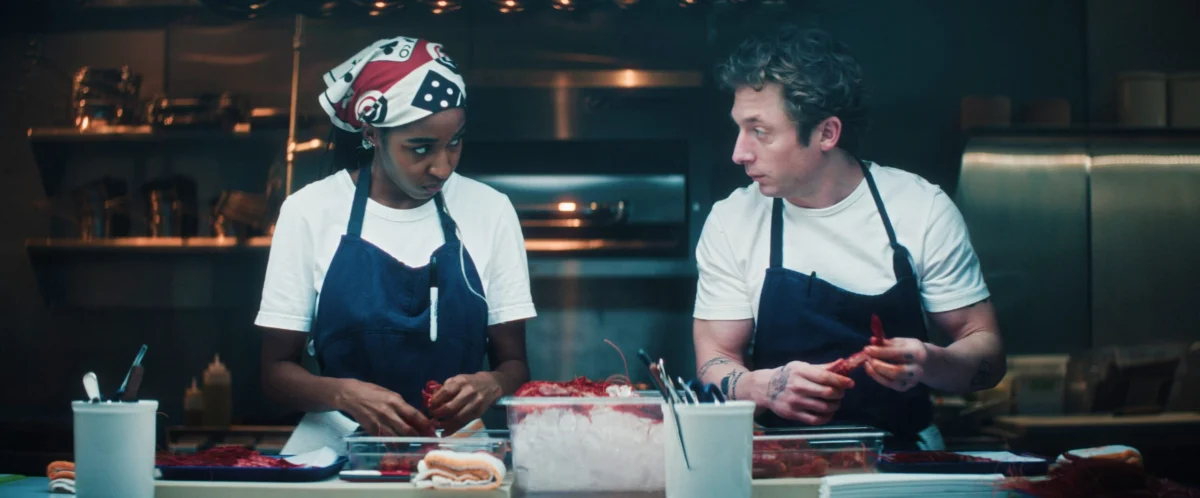
SPOILER ALERT: This article contains comprehensive spoilers for “The Original Beef of Chicagoland,” the series finale of the critically acclaimed FX/Hulu series “The Bear.”
After years of high-pressure kitchen kinetics, panic attacks, and the relentless pursuit of culinary perfection, the curtains have finally closed on “The Bear.” The series, which transformed the landscape of television drama by mirroring the visceral, sweat-soaked reality of professional cooking, concluded its run on Hulu this past Thursday. While the show was often defined by its frantic pace and the clatter of pans, its finale offered a surprisingly meditative conclusion, suggesting that for all the Michelin-starred ambition, the true "original beef" was the makeshift family forged in the fires of a professional kitchen.
The Climax of Chaos: A Restaurant at the Precipice
To understand the serenity of the finale, one must first revisit the turbulence that preceded it. The penultimate episode served as a pressure cooker of narrative tension, thrusting Carmy (Jeremy Allen White), Sydney (Ayo Edebiri), Richie (Ebon Moss-Bachrach), and their resilient staff into a service that nearly broke them. Faced with a mounting thunderstorm, severe supply chain disruptions, and an overwhelming volume of reservations, the team was pushed to the absolute brink of professional failure.
Compounding the external pressures were the internal financial realities. Uncle Jimmy (Oliver Platt), the stoic financier who provided the capital to pivot the establishment from a gritty sandwich shop into an elite fine-dining venue, had reached his limit. Having liquidated personal assets—including his prized watch collection—to keep the lights on, the restaurant’s survival remained precarious. The stakes could not have been higher: for the team at The Bear, this was not just a service; it was a final stand.
Chronology of Resolution: From the Line to the Future
In a refreshing departure from the show’s signature single-night narrative structure, the finale gracefully spans the aftermath of that chaotic service. It serves as a tapestry of conclusions, tracking the individual trajectories of a staff that has finally learned to operate as a cohesive unit.
The transition begins with a shift in personnel and purpose. Natalie (Abby Elliott) takes on the mantle of leadership in her own right, facilitating a pivotal moment for Richie by securing him a spot at an international hospitality seminar in Japan. For a character who spent the early seasons struggling to find his identity, the image of Richie—a man who had never before stepped foot on a plane—boarding a flight to broaden his professional horizons marks a profound arc of maturation.
Simultaneously, the kitchen undergoes a structural reorganization. Ebraheim’s (Edwin Lee Gibson) long-gestating plan to franchise "The Beef"—the profitable sandwich window that serves as the restaurant’s soul—is finally greenlit by Carmy. This move ensures the financial viability of the brand while allowing the fine-dining side of the establishment to evolve under new leadership. With Marcus (Lionel Boyce) bidding a poignant farewell to his mentor Luca (Will Poulter) at the airport, and Tina (Liza Colón-Zayas) stepping into the role of Chef de Cuisine under Sydney, the hierarchy is reset. The torch has been passed, and the kitchen is, for the first time, not dependent on Carmy’s singular, obsessive presence.
The Michelin Moment: A Passing of the Spatula
The defining moment of the series arrives with a phone call. After repeated attempts to reach him, Carmy answers a call from Peter Clark—the "Star Man"—to receive the industry’s highest honor: The Bear has been awarded two Michelin stars.
The subsequent scene between Carmy and Sydney is a masterclass in understated emotional weight. When Sydney asks if they earned a star, Carmy’s correction—"You got two"—is a pivotal admission. It acknowledges his total abdication of the head chef role. Throughout the season, Carmy had positioned himself as a subordinate, allowing Sydney to lead while he focused on the design and execution of the plates. Their reaction is not the explosive celebration one might expect, but a quiet, almost disoriented processing of the news. It is only minutes later, in a burst of vulnerability, that Sydney rushes to embrace Carmy, marking the definitive closure of their professional and personal partnership.
Supporting Data: The Philosophical Shift
The show’s pivot toward the future is best exemplified by Carmy’s interview with a mysterious contact named Sue (Bonnie Hunt). In a sequence featuring guest star John Mulaney as Stevie, we see a transformed Carmy: suited, composed, and ready to exit the culinary world entirely.
In this "therapy session" of an interview, Carmy reflects on the final service with clarity. He admits that had he remained in charge, he would have likely exacerbated the chaos. His decision to leave, he explains, was not a surrender but a realization that he had successfully built a machine that no longer required his destructive perfectionism to function. He pivots to an internship at an architectural firm, a career choice that reflects his long-standing obsession with the geometry, color, and structural integrity of food. He is taking the principles of the kitchen and applying them to the foundation of buildings.
Official Responses and Character Arcs
While fans may note the lack of explicit closure regarding Carmy’s romance with Claire, the finale prioritizes the broader themes of the show. The narrative focus shifts instead to communal joy. A surprise birthday party for Richie’s daughter, Eva, serves as a poignant reminder of why the restaurant existed in the first place. With cameos from the likes of Bob Odenkirk, Josh Hartnett, and Molly Gordon, the scene underscores the "family" aspect that Luca described in his farewell.
Romance, however, is not entirely absent. The "will-they, won’t-they" dynamic between Richie and his colleague Jess (Sarah Ramos) reaches a definitive conclusion when Jess appears on Richie’s flight to Japan, offering a comforting hand as he departs. It is a quiet, hopeful note that suggests the characters are finally allowing themselves to seek happiness outside the kitchen.
Implications: The Legacy of "The Bear"
The final frame of the series is both simple and profound. Carmy sits at his new desk, white tee and apron still present as a reminder of his origins. He sends a final, short text to his late brother, Mikey (Jon Bernthal): "All good."
The implication is clear: the trauma that fueled the series has been metabolized. Carmy’s closing of his eyes to picture the restaurant is not an expression of longing to return, but an acknowledgment of what he has achieved. He built a place where people belong, where talent is nurtured, and where his "people" are safe.
"The Bear" concludes not with a dramatic collapse or a triumphant conquest, but with the quiet stability of a life recalibrated. It leaves the viewer with the realization that excellence is not found in the searing of a scallop or the plating of a dish, but in the people who stand beside you when the service gets tough. As the series fades to black, the message remains: the kitchen was merely the setting; the family was the story. The Bear has finally found its rest, and in doing so, it has cemented its place as one of the most honest depictions of human connection ever brought to the screen.


 Suro Senen
 Nana
Nana