Nana Muazin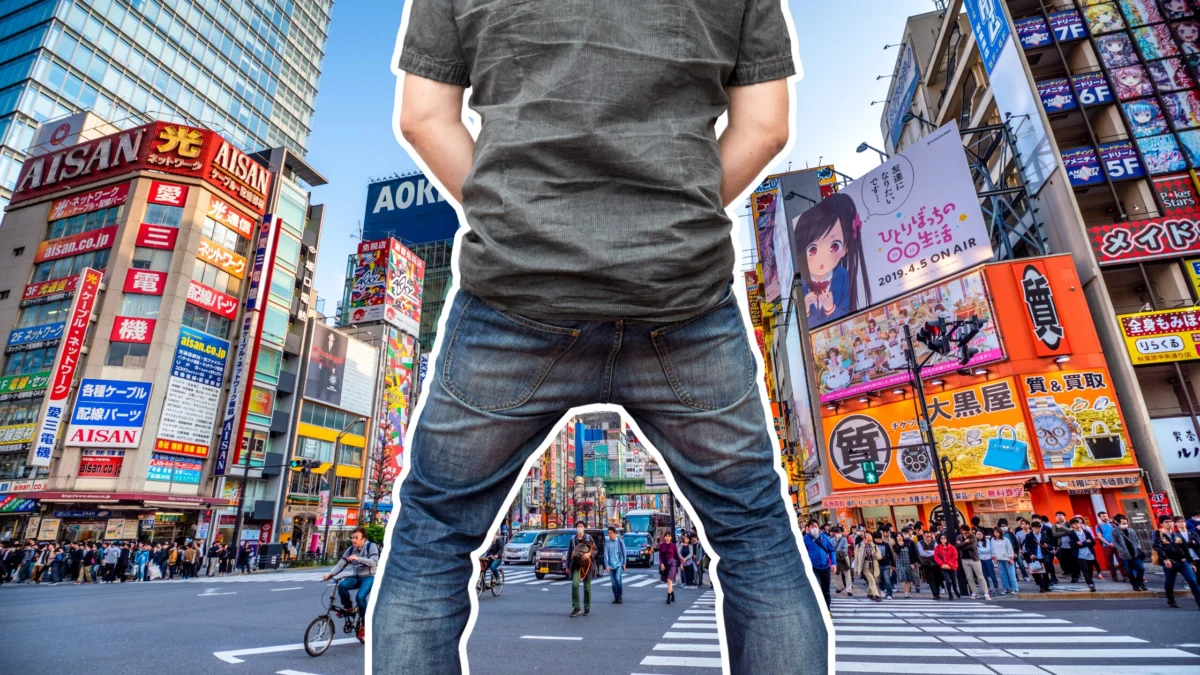
The image of Japan held by the international community is one of meticulous order. From the famously spotless streets of Tokyo to the hushed, polite decorum of its public transit, the nation is often framed as a society defined by wa (harmony) and a near-fanatical adherence to social rules. Yet, for any observant expatriate or long-term traveler walking through the concrete underpasses of Meguro or the narrow alleys of Shinjuku, a glaring contradiction persists. Taped to damp walls, often peeling and weathered, are blunt, imperative signs in Japanese: Tachi-shōben kinshi (Public urination forbidden).
These signs, devoid of English translation, serve as a curious testament to a struggle between tradition and modernization. Why does a nation so supposedly committed to rule-keeping require signage to discourage an act most would consider basic common sense? The answer lies not in a lack of civic pride, but in a fascinating, often overlooked history that bridges the gap between Edo-era agriculture and the rapid, sometimes chaotic urbanization of the 20th century.
The Edo Paradox: Where Waste Was Gold
To understand why Japan once normalized public urination, one must look back to the Edo Period (1603–1868). During these 265 years of relative isolation under the Tokugawa shogunate, Japan operated as a closed, self-sustaining ecosystem. In an era before chemical fertilizers, the survival of the nation depended entirely on organic soil replenishment.
In this context, human waste—known as shimogoe (literally "bottom manure" or "night soil")—was not a public health hazard; it was a high-value commodity. Farmers from the surrounding countryside would venture into the densely populated streets of Edo (modern-day Tokyo) specifically to harvest this resource. It was a lucrative enterprise. Landlords often factored the collection of tenant waste into their rental agreements, earning a tidy sum of 1–2 ryō annually—a significant amount of money that could be worth thousands of dollars in today’s currency.
The demand for fertilizer was so high that it incentivized the creation of public urinal buckets, or shōben-oke. By 1784, the city of Edo featured over 160 designated collection points in hubs like Nihonbashi and Asakusa. By 1872, the logistics of this "circular economy" were so advanced that over 1,500 river boats were dedicated solely to transporting human waste to rural farms. In the Edo mindset, urinating in public wasn’t just a tolerated quirk; it was an act of economic contribution.
![[Insider] Urine Nation: Japan’s 150-Years-Long War Against Peeing in Public](https://media.unseen-japan.com/wp-content/uploads/2026/06/Urine-Nation-Peeing-in-Public.jpg)
The Meiji Transition: The Civilizing Mission
The collapse of the Tokugawa shogunate and the dawn of the Meiji Era (1868–1912) brought an aggressive push toward Westernization and "civilization." As Japan sought to stand as an equal to European powers, the government began viewing the country’s scatological habits as an international embarrassment.
The government implemented the Ishiki Kaii (Ordinance on Manners) in 1878, a series of regulations designed to sanitize the public image of Japanese cities. Article 49 of these ordinances explicitly prohibited public urination. To communicate this to a largely illiterate or traditional population, the government commissioned woodblock prints depicting the "correct" way to behave. These prints, which today serve as historical artifacts, illustrated the shift in social norms: a man urinating in the street was no longer a provider of fertilizer, but a social deviant.
However, these laws were not met with immediate compliance. The habit of using the streets had been ingrained for centuries, and the transition to modern indoor plumbing was slow and expensive. For decades, the authorities fought a quiet, persistent war against the persistence of "natural" habits in urban spaces.
The Showa Era: Torii Gates and Urban Design
The most peculiar chapter in this history occurred during the mid-20th century, specifically the post-war Showa era. As Japan entered its "bubble economy," rapid urban expansion led to the construction of dark, labyrinthine underpasses and quiet side streets that became prime spots for late-night revelers to relieve themselves.
Faced with the challenge of policing thousands of dark corners, municipalities and neighborhood associations turned to a unique cultural deterrent: the torii gate. In Shinto tradition, a torii marks the boundary between the mundane and the sacred. By placing small, miniature torii gates at the base of walls or in corners prone to public urination, local residents hoped to invoke a sense of spiritual taboo. The logic was simple: a citizen might be willing to break a city ordinance, but they would be significantly more hesitant to desecrate a sacred boundary.
![[Insider] Urine Nation: Japan’s 150-Years-Long War Against Peeing in Public](https://media.unseen-japan.com/wp-content/uploads/2026/06/image-13-7.jpg)
This creative use of religious architecture highlights a core theme in Japanese urban management: the blending of secular law with deep-seated cultural anxieties.
Modern Implications: Why the Signs Persist
Today, Japan is one of the safest and most technologically advanced nations on earth. Public restrooms are ubiquitous, clean, and often feature high-end technology. Yet, the tachi-shōben kinshi signs remain. Their presence is a paradoxical reminder of the "human" element in a society often stereotyped as robotic.
1. The Nightlife Factor
The persistence of these signs is largely tied to Japan’s nightlife culture. In districts like Kabukicho, the sheer volume of alcohol consumption in dense, labyrinthine environments creates a scenario where the nearest restroom might be several minutes away, or hidden within a locked commercial building. The signs are a reactive measure by building owners who are tired of the resulting sanitation issues and the lingering, unpleasant odors.
2. The Limits of "Common Sense"
While the Japanese public generally adheres to social harmony, the "common sense" of the individual often clashes with the "common sense" of the community. These signs are a form of public communication—a way for neighbors to set boundaries without needing a police presence. They function as a final, desperate plea for decency in areas where surveillance is low and human impulse is high.
3. The Persistence of "Old Japan"
Perhaps the most interesting takeaway is that these signs are rarely updated. They are often laminated, taped-on, and faded, representing a low-tech solution to a persistent, messy human reality. They suggest that despite the Shinkansen, the advanced robotics, and the global reputation for perfection, the struggle between the private body and the public space is a universal human tension.
![[Insider] Urine Nation: Japan’s 150-Years-Long War Against Peeing in Public](https://media.unseen-japan.com/wp-content/uploads/2026/06/uj-pee-2-hiroshige-naito-shinjuku-1857.jpg)
Conclusion
The history of public urination in Japan is not merely a chronicle of bad manners; it is a reflection of a nation in constant transition. From the Edo period, where urine was a literal lifeblood for the agricultural sector, to the Meiji government’s attempt to project a "civilized" front, to the modern-day battle between local residents and late-night revelers, the story remains the same: human behavior is rarely as uniform as a society’s reputation suggests.
The next time you see a tachi-shōben kinshi sign tucked away in a quiet corner of Tokyo, don’t view it as a failure of Japanese order. View it as a historical relic—a marker of where the needs of the modern, sanitary city collide with the messy, inconvenient, and deeply historical habits of the people who walk its streets. The signs exist precisely because the human impulse to disregard the rules—even in a country as orderly as Japan—is just as strong as the impulse to enforce them.


 Neng Nana
 Asro
Asro